Greenland sharks- Age before beauty

by Matthew Norton

Getting older can be a daunting prospect for some people. It would certainly explain the popularity of  beauty products that claim to make you ‘look younger’. The same can be said for some marine animals, except they can actually slow down their biological clock and extend their lifespan, rather than just delaying the effects of the ageing process.

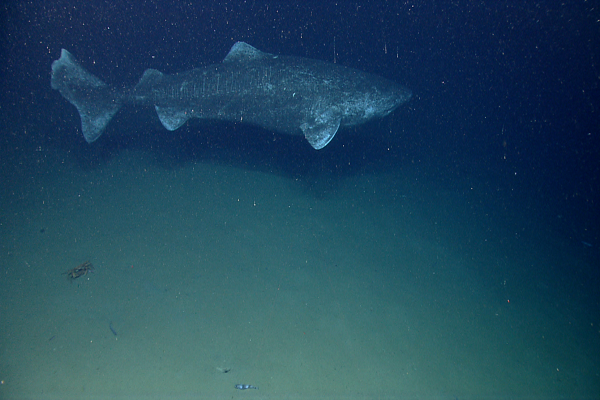
The Greenland shark is an excellent example because they have the longest lifespan of any vertebrate animal on earth (that we know of). We don’t know exactly how long they can live for with estimates ranging between 272 and 512 years old although the halfway figure of 400 years is often the reported figure in newspapers. But even at the ‘younger’ maximum age of 272 years, Greenland sharks still outlive any other animal with a backbone, even the impressively long lived bowed whale.

greenland shark image 1
A common way to age an animal is to count the ‘growth rings’ in their hard parts  (e.g. the tooth of an orca), but the Greenland shark is too squishy for this to work. A group of scientists got around this problem by instead looking at a set of crystal-like proteins in their eyes which remain exactly the same throughout the shark’s life and provide vital clues of what the water chemistry was like when they were born. The results can be difficult to interpret and convert into a date of birth, which is why there is a 240 year margin of error for the estimated maximum age of Greenland sharks.

Greenland sharks typically live in the cold, deep waters of the Arctic and North Atlantic Ocean. These ice cold surroundings tend to slow everything down biologically speaking, including the ageing process. But even compared to their equally chilled out neighbours, their lifespan is way too long to be fully explained by their environment. Their mysterious biology must play a part somewhere in all this.

However they manage it, the ability of Greenland sharks to stay ‘young’ for decades is nothing short of incredible.  But there are drawbacks to taking an excruciatingly long time to reach adulthood. By only gaining about 1cm in length per year it will be a long time before they can grow big enough to know no fear from predators and make baby sharks of their own. It is estimated to take them around 130-150 years old to reach sexual maturity and such a slow reproductive cycle could put the species at a serious disadvantage if their circumstances suddenly change.

Greenland sharks are also incredibly slow and sluggish in the water, but let us not forget that they are impressively large animals who can grow to over five metres in length. This puts them well within the size range of great white sharks and are just as feared among the local wildlife. Analyses of their stomach contents have confirmed their ability to hunt, or at least scavenger, on a variety of animal prey, some of whom are fierce predators in their own right. Thankfully, there is no record of a Greenland shark ever attacking a human.

greenland shark image 2
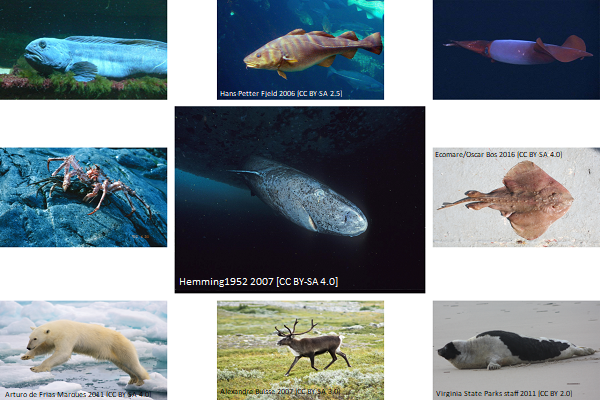
Greenland sharks (centre) have an incredibly varied diet that includes (clockwise from top left) wolfish, cod, squid, skates, harp seals, reindeer, polar bears and spider crabs.

Size is also a significant advantage for Greenland sharks against other strangely long lived creatures, such as the 500 year old Icelandic Cyprine clam and the appropriately named immortal jellyfish. In comparison, a large shark has fewer enemies to fear and a greater chance of watching the centuries pass by and making lots of baby sharks along the way. However, for reasons that will soon become apparent, this ‘slow and steady’ approach may not work as well as it once did.

From a human perspective

Extending your life by a couple of centuries may be an attractive prospect, especially after seeing so many lives tragically cut short in recent months. But as I said before, there are drawbacks to living longer and ageing more slowly. And these drawbacks are multiplied once you introduce human beings into the equation. With their fantastically slow reproduction rate it is going to be difficult for them to withstand everything we can throw at them.

One would hope that their existence in cold, deep and often isolated waters would keep them out of harm’s way, but this has not been the case. For centuries, we have hunted them for their meat which today is usually marketed as an Icelandic delicacy called ‘Hákarl’. To be fair, this is just one of many examples of a fishery targeting a large, slow growing species. The scale of this particular fishing operation is also considerably smaller and far less wasteful than the worldwide slaughter of sharks for their fins.

But, Greenland sharks must be among the least capable of replenishing their numbers to keep up with demand and it probably wouldn’t take much to put them in genuine peril. Frankly, I’m surprised that they are only classified as ‘Near Threatened’ by the International Union for Conservation of Nature. Although, the most recent assessment was in 2006 and a lot can change in 14 years.

greenland shark image 4
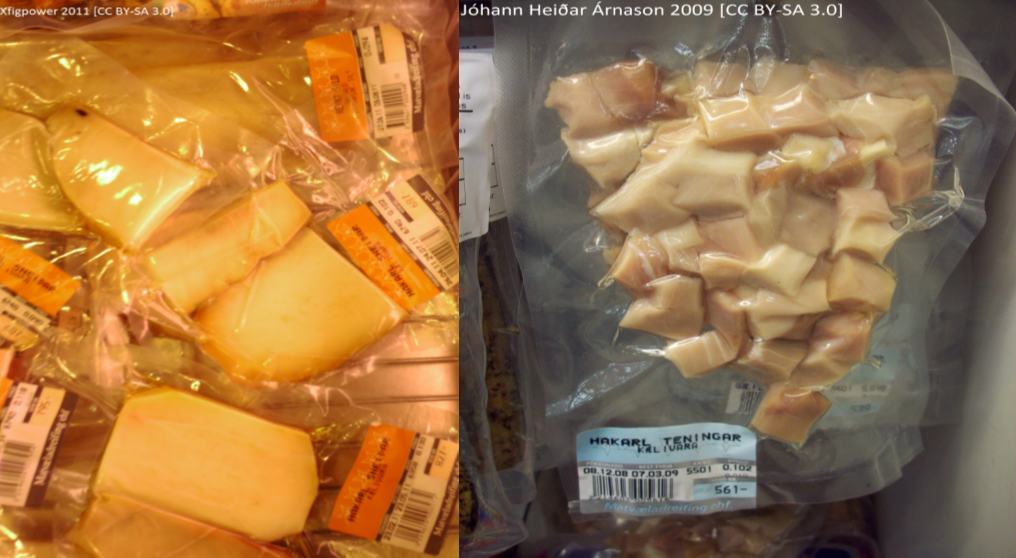
Hákarl is made from the meat of Greenland sharks, and some of their close relatives. Putting aside the ethical and ecological concerns for a moment, the taste of this ‘delicacy’ leaves much to be desired and has had some scathing reviews from critics. American TV chef Anthony Bourdain ranked it as one of his worst food-related experiences in the world and Gordon Ramsey spat it out into a bucket. Even so, there are probably still tourists out there looking for a culinary challenge.

Then there a potential health risks for the human consumer. The meat from any top ocean predator, a title that any large shark would qualify for, could be contaminated with the pollutants that they were exposed to before reaching the dinner plate. Any animal can be exposed to pollution in the water, but those at the top of the food chain will accumulate more of these toxic chemicals from the animals they eat in a process called ‘bioaccumulation’. 

Consuming the meat of a Greenland shark may exacerbate this risk further simply because they can live longer than any other fish and have more opportunities to accumulate a variety of different toxins. Studies have already been conducted and have reported the presence of several pollutants in their flesh including PBDE’s, SCCPs and PCBs. The use of the latter has been banned for decades, but it still persists in the sea and its inhabitants. The younger Greenland sharks in the sea today could end up acting as unwilling time capsules in 200 years time for all the crap we are currently pumping into the ocean.

There is however, one chemical that accumulates naturally in the the bodies of Greenland sharks, but is toxic to us in high doses. Trimethylamine N-oxide (TMAO) helps Greenland sharks to cope with the high water pressure they experience in the ocean depths, but if ingested by human beings it can increase the risk of certain heart conditions.

Icelandic settlers got around this problem a long time ago by devising a simple, but effective method for processing the meat and removing as much of  this chemical as possible. However, human nature often dictates that mistakes will be made on occasions and patrons may end up consuming improperly processed Hákarl. Though sometimes people consume the raw meat of a Greenland land on purpose to get  ‘shark drunk’. The experience has been compared to drinking a ridiculous amount of alcohol, or taking hallucinogenic drugs. Not something I would recommend.   

greenland shark image 5
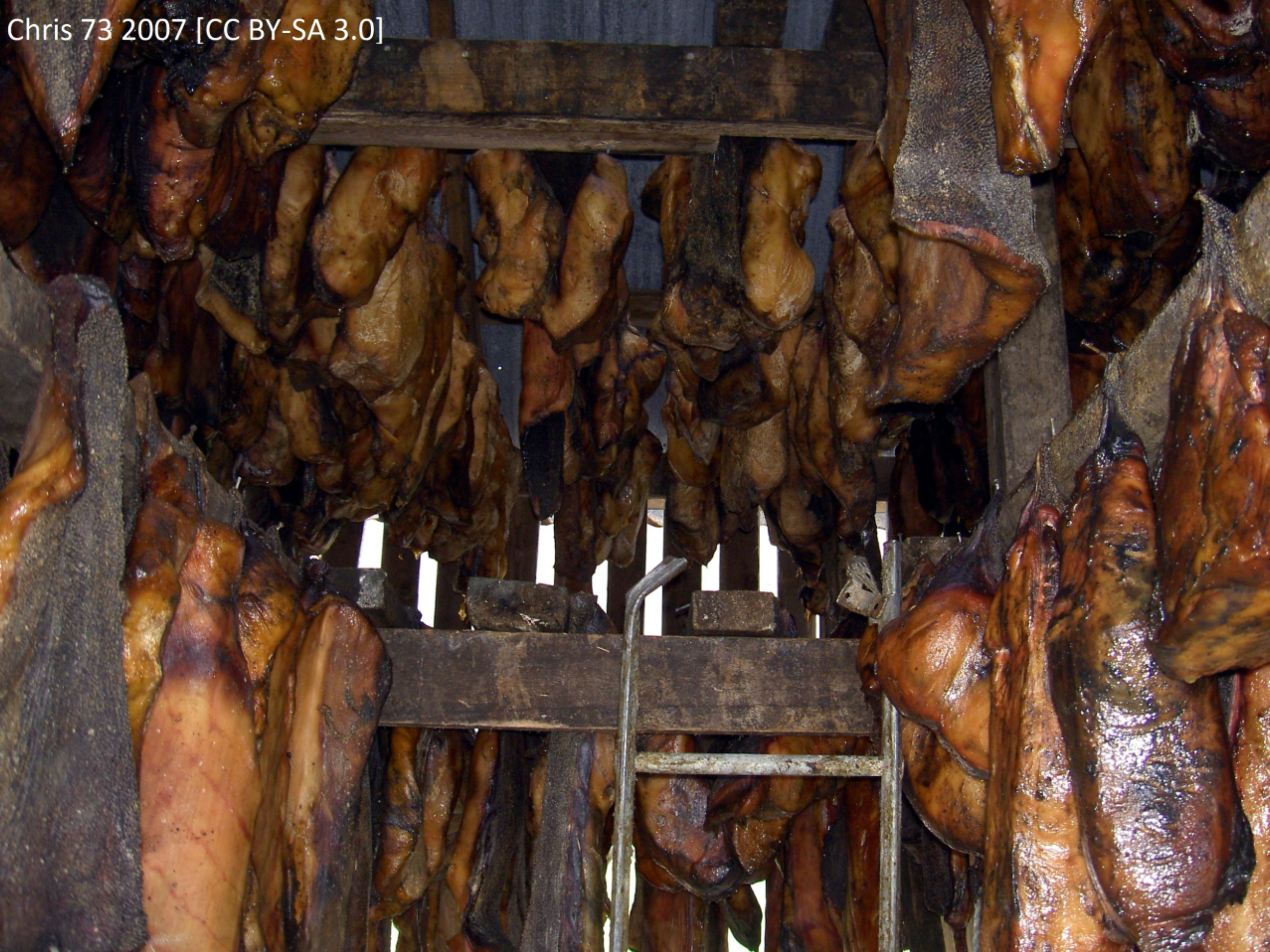
Processing Greenland shark meat is a long and rather unpleasant process. First the head is removed and thrown away before the decapitated body is buried, or sealed in a closed container, and left to ferment in its own fluids for six-twelve weeks. Upon exhumation, the body is cut into strips and hung to dry in specially built shacks for several months (as depicted in the above photo). The exact time of the process might depends on weather, time of year and possibly on the technique of the person doing the preparation. Apparently, you know its ready for eating when it starts to smell like rancid cheese.

So why do people still eat Hákarl at all? Just like whaling, the hunting of Greenland sharks is often justified on cultural grounds and the importance of this fishery to the survival of the country’s first settlers. This argument is understandable to some degree, but history is full of traditions and practices that would not be acceptable in the 21st century. Also, given the current state of the oceans, now is as good a time as any to be asking serious questions about this practice and try to at least work out a compromise between culture and conservation.

This was actually alluded to in an article about the culinary adventures of the late TV chef Anthony Bourdain in Iceland. Björn Teitsson, a cultural critic claimed that most Icelanders would only taste Hákarl during the annual Þorrablót celebrations. If true, this could be a good example of how we can strike a balance with the needs of the creatures of the sea. By scaling down the exploitation of Greenland sharks to (hopefully) sustainable levels, the species and its important role in Icelandic tradition wil survive for many years to come.

greenland shark image 6
Thanks for reading

Sources

Best Life Editors. 2017. 20 Easy Ways to Look a Decade Younger. https://bestlifeonline.com/ways-to-look-younger/. Last accessed 08/05/2020

Silberman and Adamiyatt. 2019. 36 Beauty Expert-Recommended Secrets to Looking Younger. https://www.townandcountrymag.com/style/beauty-products/g19410418/how-to-look-younger/. Last accessed 08/05/2020

Wikipedia. 2020a. https://en.wikipedia.org/wiki/Greenland_shark#cite_note-IUCN-1. Last accessed 22/04/2020

Kyne, P.M., Sherrill-Mix, S.A. & Burgess, G.H. 2006. Somniosus microcephalus. The IUCN Red List of Threatened Species 2006: e.T60213A12321694. https://dx.doi.org/10.2305/IUCN.UK.2006.RLTS.T60213A12321694.en. Downloaded on 22 April 2020.

Morelle. 2016. 400-year-old Greenland shark ‘longest-living vertebrate’. https://www.bbc.co.uk/news/science-environment-37047168. Last accessed 22/04/2020

Nielson et al. 2016. Eye lens radiocarbon reveals centuries of longevity in the Greenland shark (Somniosus microcephalus)

Eagle et al. 2019. Somniosus microcephalus. https://www.floridamuseum.ufl.edu/discover-fish/species-profiles/somniosus-microcephalus/. Last accessed 22/04/2020

Schrope. 2014. Mysterious giant sharks may be everywhere. http://www.bbc.co.uk/earth/story/20141028-the-mystery-shark-of-the-arctic. Last accessed 22/04/2020

Nielson et al. 2014. Distribution and feeding ecology of the Greenland shark (Somniosus microcephalus) in Greenland waters

Howden. 2008. Clash of the fiercest predators as shark eats polar bear. https://www.independent.co.uk/environment/nature/clash-of-the-fiercest-predators-as-shark-eats-polar-bear-891512.html. Last accessed 22/04/2020

Costantini et al. 2017. The Greenland shark: a new challenge for the oxidative stress theory of ageing?

O’Sullivan. 2017. Greenland sharks beginning to shed their secrets on longevity. https://www.irishtimes.com/news/science/greenland-sharks-beginning-to-shed-their-secrets-on-longevity-1.3144480. Last accessed 04/06/2020

BBC News. 2007. Ming the clam is oldest mollusc. http://news.bbc.co.uk/1/hi/sci/tech/7066389.stm. Last accessed 22/04/2020

Wikipedia. 2020b. https://en.wikipedia.org/wiki/Turritopsis_dohrnii. Last accessed 27/05/2020

Wikipedia. 2020c. https://en.wikipedia.org/wiki/H%C3%A1karl. Last accessed 22/04/2020

MacNeil et al. 2012. Biology of the Greenland shark Somniosus microcephalus

Serena. 2018. Hakarl — Iceland’s National Dish Is Basically Rancid And Toxic Shark. https://allthatsinteresting.com/hakarl. Last accessed 16/05/2020

Skara et al. 2015. Fermented and ripened fish products in the northern European countries

Morris. 2019. Hákarl: How Fermented Shark Became Iceland’s National Dish. https://theculturetrip.com/europe/iceland/articles/how-fermented-shark-became-the-national-dish-of-iceland/. Last accessed 16/05/2020

Icelandic Magazine. 2019. When Anthony Bourdain visited Iceland to eat the worst food he’d ever taste. https://icelandmag.is/article/when-anthony-bourdain-visited-iceland-eat-worst-food-hed-ever-taste. Last accessed 08/05/2020

The F Word. 2011. James May eats Bull’s Penis and Rotten Shark – Gordon Ramsay. https://www.youtube.com/watch?v=-xhfJRdwHnU. Last accessed 08/05/2020

Laxson et al. 2011. Decreasing urea∶ trimethylamine N-oxide ratios with depth in chondrichthyes: a physiological depth limit?

Tang et al. 2013. Intestinal microbial metabolism of phosphatidylcholine and cardiovascular risk

Qi et al. 2018. Circulating trimethylamine N‐oxide and the risk of cardiovascular diseases: a systematic review and meta‐analysis of 11 prospective cohort studies

Velasquez et al. 2016. Trimethylamine N-oxide: the good, the bad and the unknown

NOAA. 2020. What are PCBs? https://oceanservice.noaa.gov/facts/pcbs.html. Last accessed 13/05/2020

Strid et al. 2007. Dioxins and PCBs in Greenland shark (Somniosus microcephalus) from the north-east Atlantic

Strid et al. 2013. Brominated and chlorinated flame retardants in liver of Greenland shark (Somniosus microcephalus)

Anthoni et al. 1991. Poisonings from flesh of the Greenland shark Somniosus microcephalus may be due to trimethylamine

Strøksnes. 2017. My Hunt for the 400-Year-Old Shark Whose Flesh Gets You High. https://www.vice.com/en_us/article/ywz8eg/my-hunt-for-the-400-year-old-shark-whose-flesh-gets-you-high. Last accessed 29/04/2020

Fulton. 6 ÞORRABLÓT FOODS FOR THE CULINARILY BRAVE. https://www.nordicvisitor.com/blog/6-thorrablot-foods-for-the-culinarily-brave/. Last accessed 16/05/2020

Image sources

Hemming1952. 2007. [CC BY-SA 4.0 (https://creativecommons.org/licenses/by-sa/4.0)]. https://commons.wikimedia.org/wiki/File:Greenland_shark_profile.jpg

Hans-Petter Fjeld. 2006. [CC BY-SA 2.5 (https://creativecommons.org/licenses/by-sa/2.5)]. https://commons.wikimedia.org/wiki/File:Gadus_morhua_Cod-2b-Atlanterhavsparken-Norway.JPG

Ecomare/Oscar Bos. 2016. [CC BY-SA 4.0 (https://creativecommons.org/licenses/by-sa/4.0)]. https://commons.wikimedia.org/wiki/File:Ecomare_-_sterrog_(sterrog-2481-ogb).jpg

Virginia State Parks staff. 2011. [CC BY 2.0 (https://creativecommons.org/licenses/by/2.0)]. https://commons.wikimedia.org/wiki/File:Harp_seal_at_False_Cape_(cropped).jpg

Alexandre Buisse (Nattfodd). 2007. [CC BY-SA 3.0 (https://creativecommons.org/licenses/by-sa/3.0)]. https://commons.wikimedia.org/wiki/File:20070818-0001-strolling_reindeer.jpg

Arturo de Frias Marques. 2011. [CC BY-SA 4.0 (https://creativecommons.org/licenses/by-sa/4.0)%5D. https://commons.wikimedia.org/wiki/File:Polar_Bear_AdF.jpg

Xfigpower. 2011. [CC BY-SA 3.0 (https://creativecommons.org/licenses/by-sa/3.0)]. https://commons.wikimedia.org/wiki/File:H%C3%A1karl_in_store.jpg

Jóhann Heiðar Árnason. 2009. [CC BY-SA 3.0 (https://creativecommons.org/licenses/by-sa/3.0)]. https://commons.wikimedia.org/wiki/File:H%C3%A1karl.JPG

Chris 73. 2007. [CC BY-SA 3.0 (https://creativecommons.org/licenses/by-sa/3.0)]. https://en.wikipedia.org/wiki/File:Hakarl_near_Bjarnah%C3%B6fn_in_Iceland.JPG

All other images are public domain and do not require attribution

For more bitesize content and ocean stories why not follow ‘Our world under the waves’ on

🌊 Facebook 🌊 Bluesky 🌊 Instagram

Cichlids- Fish foodies

by Matthew Norton

Most animals need to overcome a number of challenges during their life, or else it’s going to be a very short life, and one of the big ones is getting enough food to eat. Achieving this herculean feat will require exceptional foraging skills and well designed tools and weapons, with a touch of good luck every now and then. Unfortunately, most other animals in the sea have exactly the same goal in mind and because there is rarely enough to go round, intense competition between species will ensue. This can be reflected in the evolution of many species (although there are always other factors at work) who are adapted to seeing off the competition, or avoiding it altogether.

Even among a single family of fish, such as the cichlids, evolving your way out of these intense contests for food can produce some remarkable and bizarre results. It is estimated that there are at least 3,000 cichlid species worldwide, with 2,000 in the Great Lakes of East Africa alone, with a diverse range of physical features such as size, body shape and colour pattern, as well as feeding strategy. I should make it clear at this point that there are factors at work apart from the demand for different food sources, but it does play a large role in explaining why there are so many species and why some of them are so weird. 

cichlid blog article image 1
The great lakes of East Africa are home to around 2,000 species of cichlid, many of them are found nowhere else on earth. There are so many species that throughout this article I will be calling some of them by their latin name because we haven’t had the time to come up with catchy nicknames for them all.

Let us start with the scale eating cichlid Perissodus microlepsis from Lake Tanganyika. As the name suggests, this particular species is a specialist in biting off the scales of other fish and are so committed to this lifestyle that their jaw is purposely twisted to one side so they can get a better grip on the side of their victim.

cichlid blog article image 2
Cichlids have developed a number of ways to get food from other fish, but  Perissodus microlepsis and other scale eaters have certainly found a strange way to go about it.

There are also species who target the eggs of other cichlids and employ a brutal technique to get them. Many cichlids are mouth brooders and by keeping their eggs inside their mouth (without swallowing) they are usually safe, that is until these egg hunters ram into the parent in the head and force them to unwillingly spit their precious young out to be devoured. Caprichromis orthognathus is one such egg hunter and they have developed the cunning trick of changing their body colour to blend in with their targets and line up a clear shot.

cichlid blog article image 3
A mouth breeding cichlid (you can just about see the eggs bulging out from the mouth) and a likely target for their head ramming cousins.

Sleeper cichlids, such as the Livingston’s cichlid, eat whole fish and also have a feeding strategy based on trickery. They lure unsuspecting scavengers to their doom by lying very still on the bottom and playing dead. To make the trap even more enticing they make their body appear bloated and blotchy, as if they were rotting away.

cichlid blog article image 4
This Livingston’s cichlid Nimbochromis livingstonii is a crafty ambush predator, just like other sleeper cichlids. Ironically, they are also a mouthbrooding species and so could be targeted themselves by head ramming, egg eating cichlids.

Finally, there is the Zebra mbuna Maylandia zebra, one of many cichlids who are highly skilled at utilizing the whole world around them for sustenance. They scrape through the thin layer of organic material that can be found on any hard surface below the water and is often rich in microscopic lifeforms as well as animal remains and tiny scavengers. It may not be the most glamorous feeding strategy, but not every species can afford to be picky with their meals and should this resource dry up M. zebra may start picking off floating plants and animals in the water as well.

Some of the feeding strategies mentioned here are not unique to cichlids, but getting them all, and then some, in this one family of fish is a testament to the incredible diversity they have achieved. It is also a family tree that is still expanding as new species are still being discovered and who knows what new secrets may be revealed.

From a human perspective

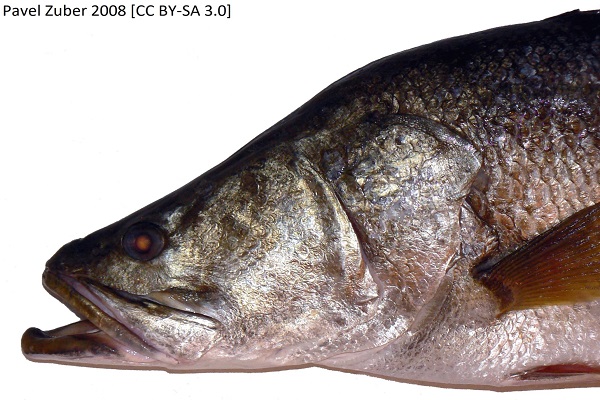
I have already mentioned that the Great Lakes of East Africa as being a hot spot for cichlid diversity and Lake Victoria is no exception, or at least it was. Cichlids did once flourish in this particular lake until we came along and introduced them to the savage Nile Perch Lates niloticus, a fish that does not belong there. It is always dangerous for native species when humanity introduces a new species into their environment, a species that they have not evolved with for the millions of years that are necessary to come up with adaptations to achieve some form of peaceful co-existence.

cichlid blog article image 5
Most invasive species introductions are by accident (e.g. stowaways in ocean going vessels and escapes from fish farms). But in the case of the Nile Perch, we were even more careless and decided it would be a good idea to bring them in deliberately in an attempt to boost fisheries in Lake Victoria. The true scale of this error was not realised until their populations exploded in the 1980s. From there it barely took a decade for this fish to cause irreversible damage to the lake’s ecosystem.

In the case of the Nile Perch, the consequences speak for themselves. This fish was first released into Lake Victoria in the 1950s and since then at least 200 species of cichlid have disappeared. The prevailing theory has been that the Nile Perch ate them all to extinction, but some have suggested that this invader may have out-competed some of them for food and drove them to starvation. Worse still, many of the survivors (around 300 species) are struggling to find a way of coexisting with their unwelcome neighbours.

Our carelessness with the underwater world can come back to haunt us if we start losing those species of cichlid that have value to us. Some cichlids are prized animals in the aquarium trade and for human consumption, but others provide humanity with ‘ecosystem services’ that keep us safer and more comfortable (often with little thanks). The snail eating cichlid Trematocranus placodon from Lake Malawi is a good example because they have a taste for aquatic snails that carry Schistosoma haematobium, a parasitic worm that causes Urinary Schistosomiasis (also known as bilharzia).

This condition causes relatively mild symptoms during the first few weeks of infection, but these parasites can remain in your body for years and do serious long term damage to your bladder, kidneys and other organs while also laying eggs that escape in your urine and faeces. Once hatched, these worms need a few weeks inside a snail host before they can go  on to infect another human and this is where our snail eating friends can help. With fewer snails to carry the worms through this intermediate stage, there will be fewer adult worms around to infect us. But not if we wipe out the fish that keep these snail populations under control.

cichlid blog article image 6
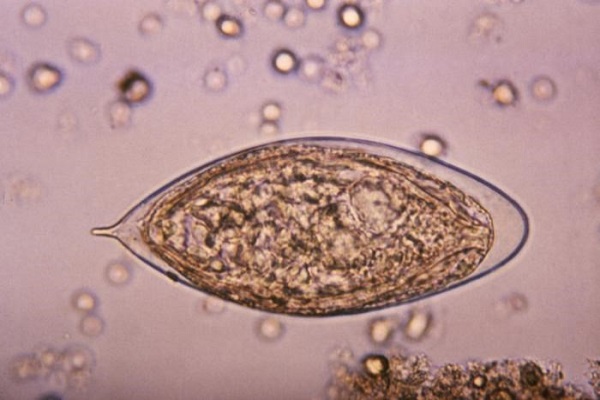
An egg from Schistosoma haematobium, also known as the urinary blood fluke, which has the potential to cause Urinary Schistosomiasis. The initial symptoms include coughing, fever, rashes, muscle and joint pain, diarrhea and abdominal pain. If diagnosed and treated at this stage then the damage is fairly minor. Alternatively, the symptoms will go away on their own, but the parasite can remain undetected for years.

In the interest of balance I should mention that cichlids can also become invasive species and have the potential to cause problems if they find their way to places where they don’t belong. For example, the Mozambique tilapia has spread far beyond the waters of the country it is named after. Unlike other cichlid species, they are very flexible with their diet and feeding habits and would easily be able to exploit their new surroundings at the expense of the natives.

cichlid blog article image 7
Oreochromis mossambicus, also called the Mozambique cichlid or Mozambique tilapia. All these names point to the fact that it should be living in Mozambique and yet here it is in the urban waterways of Queensland, Australia.

I admit this article has been a bit more doom and gloom than usual, but the threat posed by invasive species is serious. It is also likely to get worse if we carry on damaging the natural world that these animals live in and leave them more vulnerable to those species who will aggressively expand their borders if they get the chance. However, like any environmental issue, raising awareness of the damage it has done, and may continue to do, is the first step to finding the solutions. And finding solutions to very serious problems is one thing that we are very good at.

cichlid blog article image 8
Thanks for reading

Sources

Wikipedia. 2020. https://en.wikipedia.org/wiki/Cichlid

Kocher. 2004. Adaptive evolution and explosive speciation: the cichlid fish model

Brawand et al. 2014. The genomic substrate for adaptive radiation in African cichlid fish

Wagner et al. 2009. Diet predicts intestine length in Lake Tanganyika’s cichlid fishes

Madsen et al. 2010. Biology of the Molluscivorous Fish Trematocranus placodon (Pisces: Cichlidae) from Lake Malaŵi

Silva and Perera. 1983. Digestibility of an aquatic macrophyte by the cichlid Etroplus suratensis (Bloch) with observations on the relative merits of three indigenous components as markers and daily changes in protein digestibility 

Abraham, R. 2011. Etroplus suratensis. The IUCN Red List of Threatened Species 2011: e.T172368A6877592. https://dx.doi.org/10.2305/IUCN.UK.2011-1.RLTS.T172368A6877592.en. Downloaded on 25 March 2020.

Silva et al. 1984. Aspects of the biology of the euryhaline Asian cichlid, Etroplus suratensis

Konings, A. 2018. Metriaclima zebra. The IUCN Red List of Threatened Species 2018: e.T120778360A120778426. https://dx.doi.org/10.2305/IUCN.UK.2018-2.RLTS.T120778360A120778426.en. Downloaded on 26 March 2020.

Hori. 1993. Frequency-dependent natural selection in the handedness of scale-eating cichlid fish

McKaye and Kocher. 1983. Head ramming behaviour by three paedophagous cichlids in Lake Malawi, Africa

McKaye. 1981. Field observation on death feigning: a unique hunting behavior by the predatory cichlid, Haplochromis livingstoni, of Lake Malawi

Reebs. 2007. Fishes feigning death

Goldschmidt et al. 1993. Cascading effects of the introduced Nile perch on the detritivorous/phytoplanktivorous species in the sublittoral areas of Lake Victoria

Deweerdt. 2004. Dark secret of the lake. https://www.newscientist.com/article/mg18124365-300-dark-secret-of-the-lake/. Last accessed 31/03/2020

Rijssel and Witte. 2013. Adaptive responses in resurgent Lake Victoria cichlids over the past 30 years

UC Davis. 2016. Cichlid Extinction in Lake Victoria Due to Specialized Jaw. https://biology.ucdavis.edu/news/cichlid-extinction-lake-victoria-due-specialized-jaw. Last accessed 01/04/2020

NHS. 2018. Schistosomiasis (bilharzia). https://www.nhs.uk/conditions/schistosomiasis/. Last accessed 01/04/2020

Kramer et al. 2014. Drugs for treating urinary schistosomiasis. https://www.cochrane.org/CD000053/INFECTN_drugs-treating-urinary-schistosomiasis. Last accessed 01/04/2020

Silva et al. 2004. Tilapias as Alien Aquatics in Asia and the Pacific: A Review. FAO Fisheries Technical Paper 453. ISBN 92-5-105227-1

Fishkeeping World. 2018. The Ultimate African Cichlid Guide: Types, Tanks, Care and More. https://www.fishkeepingworld.com/african-cichlid/. Last accessed 31/03/2020 

Kefi et al. 2012. Prey selection under laboratory conditions by pond-bred Trematocranus placodon (Regan, 1922), a molluscivorous cichlid from Lake Malaŵi

Matipe and Silva. 1985. Switches between zoophagy, phytophagy and detritivory of Sarotherodon mossambicus (Peters) populations in twelve man‐made Sri Lankan lakes

Doupe and Knott. 2009. Rapid digestion of fish prey by the highly invasive ‘detritivore’Oreochromis mossambicus

Image sources

Envisat satellite. 2008. [CC BY-SA 3.0 (https://creativecommons.org/licenses/by-sa/3.0-igo)].  https://commons.wikimedia.org/wiki/File:Lakes_of_Africa.jpg

MellonDor. 2015. [CC BY-SA 4.0 (https://creativecommons.org/licenses/by-sa/4.0)].  https://commons.wikimedia.org/wiki/File:African_Great_Lakes.svg 

Henrik Kusche. 2010. [CC-BY 3.0 (https://creativecommons.org/licenses/by/3.0)]. https://commons.wikimedia.org/wiki/File:Perissodus_microlepis_1.jpg

Alexandra Tyers. 2010. [CC BY-SA 2.0 (https://creativecommons.org/licenses/by-sa/2.0)]. https://commons.wikimedia.org/wiki/File:Tropheops_brooding.jpg

Wen2li3. 2007. [CC-BY 2.5 (https://creativecommons.org/licenses/by/2.5)]. https://commons.wikimedia.org/wiki/File:Adult_male_livingstonii.png

Peter Corbett. 2015. [CC-BY 2.0 (https://creativecommons.org/licenses/by/2.0)]. https://commons.wikimedia.org/wiki/File:Etroplus_suratensis.jpg

Patrick Carnevale. 2015. [CC BY-SA 4.0 (https://creativecommons.org/licenses/by-sa/4.0)]. https://commons.wikimedia.org/wiki/File:Ulothrix_100x.jpg

Alexander Klepnev. 2019. [CC BY 4.0 (https://creativecommons.org/licenses/by/4.0)]. https://commons.wikimedia.org/wiki/File:%D0%94%D0%B8%D0%B0%D1%82%D0%BE%D0%BC%D0%BE%D0%B2%D0%B0%D1%8F_%D0%B2%D0%BE%D0%B4%D0%BE%D1%80%D0%BE%D1%81%D0%BB%D1%8C_Pinnularia.tif

Pavel Zuber. 2008. [CC BY-SA 3.0 (https://creativecommons.org/licenses/by-sa/3.0)]. https://commons.wikimedia.org/wiki/File:Lates_niloticus.jpg

John Robert McPherson. 2013. [CC BY-SA 4.0 (https://creativecommons.org/licenses/by-sa/4.0)]. https://commons.wikimedia.org/wiki/File:Oreochromis_mossambicus_Downfall_Creek_7th_Brigade_Park_Chermside_P1010504.jpg

All other images are public domain and do not require attribution

For more bitesize content and ocean stories why not follow ‘Our world under the waves’ on

🌊 Facebook 🌊 Bluesky 🌊 Instagram

Marine snow-Water wonderland

by Matthew Norton

The deep sea might look like a dark and desolate world but look closer and you will find that it is full of wonderfully weird creatures who have thrive in this environment despite the unique challenges they face. One particularly big problem is that there is not enough sunlight to support any plants, so the traditional food chain (plant → plant eater → animal eater) doesn’t work down there. Some species instead turn to alternative energy sources, such as the chemicals that leak out from hydrothermal vents and methane seeps, while others scavenge from the corpses of large animals. There is however a third option, which is to pick out the many smaller pieces of food that rain down from the surface as ‘marine snow’.

Marine snow article image 1
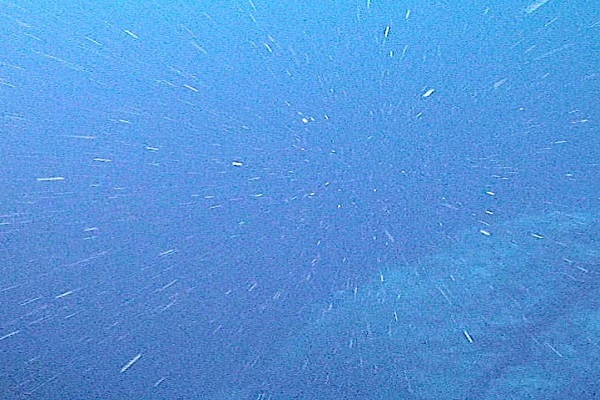
Each of these ’snow’ particles are held together with extrapolymeric substances (EPS), a goo found the cells of most organisms (from large animals to microscopic bacteria) that can leak, especially when these cells start breaking down.

Each particle of marine snow is made from numerous dead or dying organisms (detritus is the technical term) stuck together along with other bits and pieces, such as sand, dust and animal faeces poo. These particles can provide temporary oases for living microorganisms such as bacteria and protists, who live in much greater densities on marine snow than in the surrounding water. It’s almost a shame that at any moment a slightly larger animal could come along and eat it, and it will likely happen because these particles are easy meals that can’t run, hide, or fight back (unless there are toxic or disease-causing microorganisms in the mix). Should they reach the seafloor uneaten, these particles may still get dug out of the sand, or mud and gobbled down by various bottom dwelling animals. Very little goes to waste in the marine environment.

Marine snow article image 2
Krill (left) and the larvae of Japanese eels (right) are just two examples of small marine animals who benefit from having access to marine snow as a food source. There are probably many others that we don’t know about, especially in the ocean depths.

In theory, marine snow can be made of anything that was once alive in the sea, but there are some groups that make especially large contributions to making these particles. For example, phytoplankton leave behind large numbers of dead cells, especially in the aftermath of blooms (explosions in phytoplankton growth), along with the remains and faeces of animals that came to eat them. Larvaceans (tadpole-like animals) also leave behind ‘ready-made’ balls of marine snow when they dispose of their jelly-like ‘houses’. These houses, and all its inbuilt filters and funnels, are the key to their ability to filter out tiny pieces of food from the water, but they get clogged up very easily and the only solution is to get rid of them and start again. Still, this does leave behind plenty of food for other creatures in the water and a fair amount of slime to stick it all together.

Marine snow article image 3
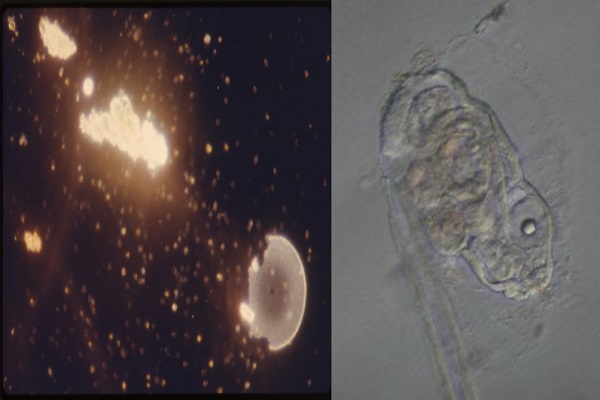
Part of a dead diatom cell surrounded by bacteria and other bits and pieces (left) and a larvacean (Oikopleura dioica) who has to abandon their clogged up house every few hours (right). Both scenarios are ideal for creating marine snow.

With so much marine snow raining down from the ocean surface it seems almost inevitable that some of it will reach the deepest parts of the ocean, but that doesn’t mean that those sunlit waters get nothing in return. Some of the oxygen and nutrients that build up in the deep sea (fewer animals down there to use them) is eventually carried back up to the surface by ocean currents in a process called upwelling. In some coastal regions, this process can provide the ideal conditions for the growth of the very phytoplankton that plays such a big role in creating marine snow in the first place. The ocean surface and deep sea are two very different worlds, but there is still a connection between them.

From a human perspective

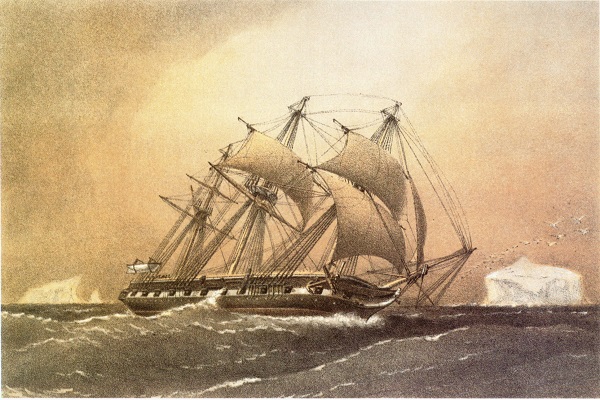
The idea that food rains down from the ocean surface has persisted almost as long as we have known that there was life down in the deep sea. As far as we know, the phenomenon was first suggested during the 1872-1876 voyage of the HMS Challenger which, like several voyages on other ships, recovered specimens from the deep sea by using a dredge attached to a very long steel cable. Apparently, at some point during the voyage someone suggested that those creatures survived, despite being isolated from the sun, by feeding on a ‘rain of detritus’ from the surface.

Marine snow article image 4
During its long voyage, the HMS Challenger collected a considerable amount of scientific data from the ocean which ranged from measuring environmental conditions (e.g. temperature, depth, salinity) as well as dredging the seafloor at various depths to collect samples and living specimens. The use of long cables made of steel made it possible to reach the dark depths and bring back its weird creatures.

However, no one actually saw this until William Beebe, an American naturalist and explorer (among other things), conducted a number of deep sea dives in the 1930s. He achieved this feat in a vehicle called the ‘bathysphere’, a diving bell suspended from a steel cable attached to a ‘mother’ ship (pretty basic, but you’ve got to start somewhere). From the porthole windows of the bathysphere, Beebe could see and identify various animals as they swam past and crucially, he could see those strange particles of which he called marine snow. It’s hard to imagine what that experience must have been like, to see the underwater world at such depths and relatively unaffected by humanity. This is a privilege that is becoming increasingly rare in the modern world.

Marine snow article image 5
William Beebe’s bathysphere suspended from its steel cable (left) and at its current home at the National Geographic museum in Washington DC (right). I would also recommend looking up the article that Beebe wrote for the National Geographic Society in exchange for funding his dives.

William Beebe was unlikely to see any plastic rubbish during his dives in the bathysphere, but now it is one of the biggest threats to marine animals in every corner of the ocean. Many animals get caught up in bags, discarded fishing lines and other plastic rubbish, and suffering deep cuts and broken bones from trying to break free and if they don’t succeed, they will either drown or starve. Some animals will also eat plastic (mistaking it for prey), which then gets stuck inside their stomach and leaves less room for real food. Often, the victim doesn’t realise they are starving because they still get that feeling of being full from all the plastic in their stomach as they waste away.

Marine snow article image 6
These are just a few examples of how plastic pollution is impacting our oceans. Abandoned fishing nets (left) which can be dragged by ocean currents and trap any creatures caught in its path, plastic bags (centre) which can be mistaken for food and eaten by certain sea creatures and microplastics (right) which can be eaten by tiny creatures and then move up the food chain and accumulate in large predators.

Even the deep sea is not safe with records of plastic rubbish along the seafloor and right down to the Mariana Trench as well as plastic being recovered from the guts of various animals including deep sea fish, lobsters, anemones and sea cucumbers. We can only hope that some of this rubbish gets buried so far down in the seafloor that it stays out of the reach of any living creature, human or otherwise. Who knows, in the far future these plastics may be discovered among the fossilised remains of animals who are alive today. Hopefully, such reminders of how reckless we used to be with the natural world will be rare.

Plastic pollution is a serious issue that requires urgent action and the deep sea is no exception. Frankly, this has been known for a long time, but the scientific evidence can easily go under the radar unless it is made accessible and communicated in a way that actually inspires people to take notice and do something about it. For example, there have been scientific papers about plastic pollution for decades and the threat of microplastics has been covered in the literature since at least 2004. The existence of rubbish in the sea was even casually depicted in a classic Tom and Jerry film from 1947 called “Saltwater Tabby” where Tom (the cat) is at the beach and accidently dives into a pile of rubbish that was hidden by the sea until the last second. Despite all this, the issue only got the worldwide attention it really needed when David Attenborough raised awareness of it in “Blue Planet 2”, which just goes to show that communication and reaching out to people is key to protecting the natural world.

Marine snow article image 7
Thanks for reading

Sources

NOAA. 2018. What is marine snow? https://oceanservice.noaa.gov/facts/marinesnow.html

Wikipedia. 2020a. https://en.wikipedia.org/wiki/Marine_snow

Lampitt et al. 1993. Marine snow studies in the Northeast Atlantic Ocean: distribution, composition and role as a food source for migrating plankton

Dilling et al. 1998. Feeding by the euphausiid Euphausia pacifica and the copepod Calanus pacificus on marine snow

Miller et al. 2013. A low trophic position of Japanese eel larvae indicates feeding on marine snow

Shanks and Walters. 1995. Feeding by a heterotrophic dinoflagellate (Noctiluca scintillans) in marine snow

Azam and Long. 2001. Sea snow microcosms

Wotton, R.S., 2004. The essential role of exopolymers (EPS) in aquatic systems

Eenennaam et al. 2016. Oil spill dispersants induce formation of marine snow by phytoplankton-associated bacteria

Alldredge and Gotschalk. 1988. In situ settling behavior of marine snow

Alldredge and Silver. 1988. Characteristics, dynamics and significance of marine snow

Lyons et al. 2005. Lethal marine snow: pathogen of bivalve mollusc concealed in marine aggregates

Simon et al. 1990. Bacterial carbon dynamics on marine snow

Silver. 2015. Marine Snow: A Brief Historical Sketch

Wikipedia. 2020b. https://en.wikipedia.org/wiki/Challenger_expedition

Rudd. 2014. https://www.nature.com/scitable/blog/saltwater-science/marine_snow_days/

Wikipedia. 2020c. https://en.wikipedia.org/wiki/William_Beebe

NOAA. 2019. https://oceanservice.noaa.gov/hazards/marinedebris/plastics-in-the-ocean.html

IUCN. 2020. https://www.iucn.org/resources/issues-briefs/marine-plastics

Chiba et al. 2018. Human footprint in the abyss: 30 year records of deepsea plastic debris

Anastasopoulou et al. 2013. Plastic debris ingested by deep-water fish of the Ionian Sea (Eastern Mediterranean)

Taylor et al. 2016. Plastic microfibre ingestion by deep-sea organisms

Turner. 2002. Zooplankton fecal pellets, marine snow and sinking phytoplankton blooms

Cundell. 1974. Plastics in the marine environment

Thompson et al. 2004. Lost at sea: where is all the plastic?

Imdb. 2020. https://www.imdb.com/title/tt0039796/?ref_=ttls_li_tt

Image sources

Russell R. Hopcroft, Institute of Marine Science, University of Alaska Fairbanks. 2005. [CC BY-SA (http://creativecommons.org/licenses/by-sa/3.0/)]. https://commons.wikimedia.org/wiki/File:Euphausia_gills.jpg

opencage. (unknown date). [CC BY-SA (https://creativecommons.org/licenses/by-sa/2.5)]. https://commons.wikimedia.org/wiki/File:Anguilla_japonica.jpg

Leo Wehrli. 1934. [CC BY-SA (https://creativecommons.org/licenses/by-sa/4.0)]. https://commons.wikimedia.org/wiki/File:ETH-BIB-Bathysphere_rigged_for_a_contour_drive-Dia_247-F-00745.tif

Mike Cole. 2009. [CC BY (https://creativecommons.org/licenses/by/2.0)]. https://commons.wikimedia.org/wiki/File:Bathysphere.jpg

U+1F360. 2018. [CC BY-SA (https://creativecommons.org/licenses/by-sa/4.0)]. https://commons.wikimedia.org/wiki/File:Plastic_Bag_Jelly_Fish.jpg

Clandon haverford. 2018. [CC BY-SA (https://creativecommons.org/licenses/by-sa/4.0)]. https://commons.wikimedia.org/wiki/File:Microplastic_sample.jpg

All other images are in the public domain and do not require attribution

For more bitesize content and ocean stories why not follow ‘Our world under the waves’ on

🌊 Facebook 🌊 Bluesky 🌊 Instagram

Bryozoans-Welcome to the colony

by Matthew Norton

Most of the time, natural selection is focused on how the individual can survive and reproduce, but not everyone can do it on their own. Some creatures are so dependent on other members of their species that they stick together, making it hard to work out where one individual ends and the next one begins.

Bryozoans are one such group of invertebrate animals that live together in colonies (with one exception). Each animal is joined together with its next-door neighbours with a series of tubes that carry resources, such as food, throughout the colony. These connections run so deep that each ‘individual’ animal is called a zooid because they are not independent enough to be recognised as individual animals. Bryozoans would probably find this insulting if they ever found out how we talk about them, but their lack of individuality does allow them to share the workload with each zooid playing its own role to keep the colony alive.

bryozoan blog image 1
Some examples of bryozoan species with the seaweed shaped hornwrack (left) and sea mats growing on real seaweed (right). If you look really close, you can see each zooid in the bryozoan colony as a little ‘box’.

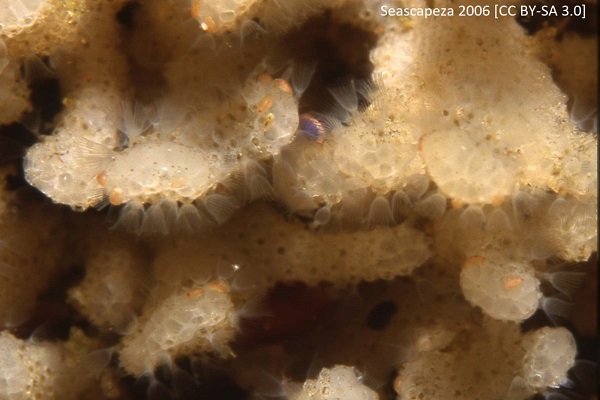
The most immediate concern for colony would be food with many zooids equipped with a feeding organ called a lophophore, a crown of hairy tentacles that catch small pieces of food from the water and flick them towards the mouth. However, with so many lophophores in such a small space these feeding zooids can easily get in each other’s way. The colony also has other needs for which a lophophore would be useless, so some of the zooids have replaced it with another tool.

bryozoan blog image 2
You can see from this photo how close each bryozoan is to each other with their lophophores sticking out.

For defending the colony from predators or rival colonies, some of the bryozoan zooids have spines or a set of snapping jaws (some say they look like mouse traps). Some species go even further with zooid types that are built for holding up the colony, protecting fertilised eggs and sweeping away pests (algae, tiny animals etc) with bristles. Incidentally, these bristles can also be used for ‘walking’ and digging the colony out of sand, a useful trick in busy areas where the sand is thrown around by ocean currents and other sea creatures.

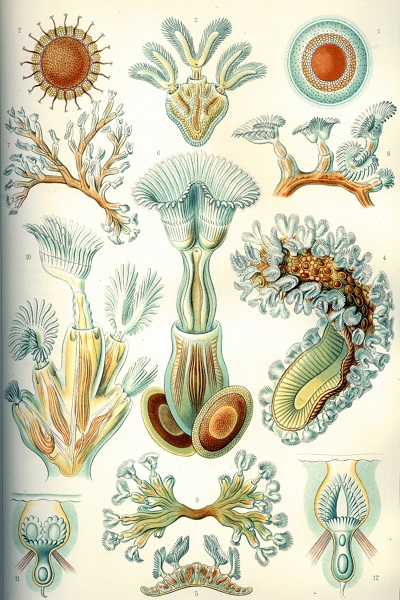
There is just as much diversity between species with bryozoans being one of the most varied animal groups I have seen, and the image below shows this better than I could do with a thousand words. The only thing I will add is that colonies can vary in shape and size from sheets growing on plants and animals to ‘free living’ forms that look like seaweeds, corals and other creatures.

bryozoan blog image 3
These bryozoans were drawn by the naturalist Ernst Haeckel and it’s not the first time I’ve used his illustrations on my blog. They are beautifully detailed and coloured (it also helps that he has been dead long enough for the copyright to expire).

In reality, no one on this planet is truly alone. Every single plant, animal and human being on the planet is made up of millions of cells working in harmony to keep the body alive, most of the time. Even the single celled microorganisms such as bacteria and viruses are often sharing the air and water with millions, if not trillions of other microorganisms. Bryozoans are just a useful reminder of this universal fact.

From a human perspective

From time to time, we probably wish that we could live in a separate existence to the rest of life on earth (I suspect the feeling is mutual). No one likes catching a disease, being swarmed by flies, or being bitten by a wild beast. Bryozoans can also cause us a few problems.

Some of us, particularly fishermen and anyone handling their nets, have encountered the sea chervil (Alcyonidium diaphanum). This species of bryozoan is notorious for causing a skin condition called “Dogger Bank Itch” with symptoms including rashes and dermatitis which can be very uncomfortable in severe cases. Records of the condition in the North Sea date back to at least the 1930s, but it seems to have spread in recent years with recorded cases in Cornwall and the English Channel since 2000.

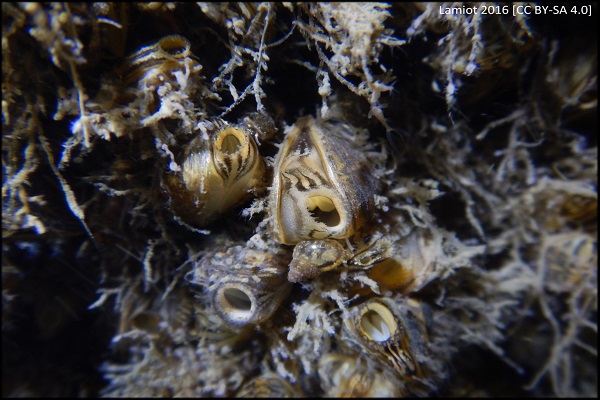
Other species can be a nuisance without coming anywhere near us. Similar to many other marine invertebrates, bryozoans can stick to our pipes, filters and any other hard surface we build in the water. This can lead to a messy situation when we need these pipes and filters to deliver clean drinking water and treat sewage, it’s bad enough when it’s our own crap causing these blockages (literally in some cases). Their tendency to stick to other sea creatures is also annoying if we are trying to farm them for food. Would you eat mussels in a restaurant if they were covered in weird squishy things?

bryozoan blog image 4
These zebra mussels really do not look appetising with all those bryozoans growing on their shells.

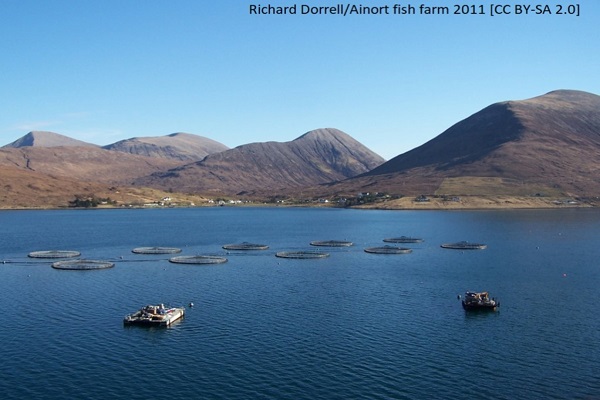
Bryozoans can cause another problem for fish farms by helping diseases to spread and kill off their fish. There is a particularly serious, and costly disease affecting salmon farms called “Proliferative kidney disease” with symptoms including swelling of the kidneys, abdomen and damage to other body organs. The culprit is a myxozoan (jellyfish-like) parasite, but they can’t spread directly from fish to fish and so need a middleman to piggyback off, with bryozoans being the prime suspect

bryozoan blog image 5
Proliferative kidney disease can affect wild salmon, but salmon in fish farms, such as the one above, are more vulnerable because it is easier for diseases to spread in confined spaces.

Despite all this negativity there is one species of bryozoan who could bring us some very good fortune. Bugula neritina, also known as brown bryozoans and common bugulas, produce chemicals called “bryostatins” which could be used to treat cancer and Alzheimer’s disease. I am saying “could” a lot because despite some promising results, this area of research is relatively young, and some clinical trials have raised doubts about their effects against certain types of cancer. An even bigger problem is how can we possibly meet the demand for bryostatins from this one species. A promising solution to this supply problem would be to develop synthetic copies that work just like bryostatins and can be easily mass produced, but this research is still ongoing.

Bringing humans and nature together can be a complicated business with interactions sometimes being unpredictable and dependent on the circumstances. Sometimes the benefits and drawbacks of such interactions are only realised after years of research, which is why it is important for humanity to do these scientific experiments, even some of the really wacky ones (within reason). In the case of bryozoans, we have been studying them for so long that I would have been surprised if we hadn’t found something useful from them by now. Imagine what else we might find in the near future.

bryozoan blog image 6
Thanks for reading

Sources

Wikipedia. 2019. https://en.wikipedia.org/wiki/Bryozoa

Riisgard and Manriquez. 1997. Filter-feeding in fifteen marine ectoprocts (Bryozoa): particle capture and water pumping

Grunbaum. 1995. A model of feeding currents in encrusting bryozoans shows interference between zooids within a colony

Okamura. 1987. Particle size and flow velocity induce an inferred switch in bryozoan suspension-feeding behavior

Carter et al. 2010. Polymorphism and vestigiality: comparative anatomy and morphology of bryozoan avicularia

Harvell. 1984. Predator-induced defense in a marine bryozoan

Banta. 1972. The body wall of cheilostome Bryozoa, V. Frontal budding in Schizoporella unicornis floridana

Winston. 1986. Victims of avicularia

Bradstock and Gordon. 1983. Coral‐like bryozoan growths in Tasman Bay, and their protection to conserve commercial fish stocks

Rogick. 1945. Studies on marine Bryozoa. I. Aeverrillia setigera (Hincks) 1887

Dea. 2009. Relation of form to life habit in free-living cupuladriid bryozoans

Winston and Hâkansson. 1989. MOLTING BY CUPULADRIA DOMA, A FREE-LIVING BRYOZOAN

Newhouse. 1966. Dogger Bank itch: survey of trawlermen

Pathmanaban et al. 2005. Dogger Bank itch in the eastern English Channel: a newly described geographical distribution of an old problem

Wood and Marsh. 1999. Biofouling of wastewater treatment plants by the freshwater bryozoan, Plumatella vaihiriae (Hastings, 1929)

Mant et al. 2011. Biofouling by bryozoans, Cordylophora and sponges in UK water treatment works

Woods et al. 2012. Biofouling on Greenshell™ mussel (Perna canaliculus) farms: a preliminary assessment and potential implications for sustainable aquaculture practices

Scottish Government. 2013. https://www2.gov.scot/Topics/marine/Fish-Shellfish/aquaculture/diseases/notifiableDisease/PKD

Centre for Environment Fisheries and Aquaculture Science. 2019. https://www.cefas.co.uk/international-database-on-aquatic-animal-diseases/disease-data/?id=35

Wahli et al. 2002. Proliferative kidney disease in Switzerland: current state of knowledge

Okamura and Wood. 2002. Bryozoans as hosts for Tetracapsula bryosalmonae, the PKX organism

Zonder et al. 2001. A phase II trial of bryostatin 1 in the treatment of metastatic colorectal cancer

Kollar et al. 2014. Marine natural products: bryostatins in preclinical and clinical studies

Ruan and Zhu. 2012. The chemistry and biology of the bryostatins: potential PKC inhibitors in clinical development

Image sources

Hans Hillewaert. 2007. [CC BY-SA 4.0]. https://commons.wikimedia.org/wiki/File:Flustra_foliacea.jpg

Seascapeza. 2006. [CC BY-SA 3.0]. https://commons.wikimedia.org/wiki/File:Lophophores_bryozoan.jpg

Lamiot. 2016. [CC BY-SA 4.0]. https://commons.wikimedia.org/wiki/File:R%C3%A9surgence_Dreissena_polymorpha_bryozoaires_%C3%A9ponge_2016_Nord_Lamiot_05.jpg

Richard Dorrell / Loch Ainort fish farm. 2011. [CC BY-SA 2.0]. https://commons.wikimedia.org/wiki/File:Loch_Ainort_fish_farm_-_geograph.org.uk_-_1800327.jpg

All other images are public domain and do not require attribution

For more bitesize content and ocean stories why not follow ‘Our world under the waves’ on

🌊 Facebook 🌊 Bluesky 🌊 Instagram

Bottlenose dolphins-The big boys club

by Matthew Norton

The open ocean offers a whole world to explore, provided you belong to a species of strong swimmers. There is however, a big difference between swimming to a new place and surviving there, which is why you can find big differences between groups of animals who live in different environments, even though they belong to the same species.

The bottlenose dolphin is one such species that has populations living all over the world with dramatic differences in body size. In Florida they reach a length of 2.5m which is rather unimpressive compared to world’s largest bottlenose dolphins, which can be found in the Moray Firth in Scotland and reach lengths of almost 4m. These Scottish dolphins are so big because it’s much colder in Scotland (I’ve noticed) and by having a larger body they can hold a thicker layer of fat under their skin (blubber) to keep themselves warm. It is also worth noting that they can throw their weight around while attacking porpoises and other dolphins. It is very unlikely that you would be attacked by a wild dolphin, but best not to make them angry.

BND blog image 1
It is remarkable to think that bottlenose dolphins from the Moray Firth (left) can grow so big. It’s hard not to feel sorry for the harbour porpoise that they attack (right).

These big bottlenose dolphins need lots of food to sustain their body size, so it’s a good thing they are such effective hunters with their ability to use sound to find fish (echolocation) and sharp pointy teeth for catching them. They are also ‘opportunistic feeders’ which means if it’s fishy and they can catch it, they will eat it, but at the same time they are strategic with their feeding habits. In the Moray Firth you have a better chance of seeing bottlenose dolphin from the shore during the summer because they are hunting fish that come close to the shore, such as salmon swimming up and down the rivers. In the winter, they spend more time hunting other species of fish that gather in deeper waters, such as mackerel.

BND blog image 2
The diet of a bottlenose dolphin includes (from the top) salmon, cod, haddock, herring, mackerel, sardines and more.

Moray Firth bottlenose dolphins are also opportunistic in the sense that they are still exploring with members of this population having been spotted further down the east coast in places like Aberdeen, St. Andrews and even northeast England, I hear Scarborough is especially popular. More recently dolphins from the Moray Firth have been spotted even further away in the Netherlands and around the coasts of Ireland. We know these dolphins came from the Moray Firth because we can track individual dolphins using photos of their dorsal fin which has a pattern of scratches, cuts and other markings that is unique to each dolphin (sort of like a fingerprint).

BND blog image 3
Most of the (roughly) 200 bottlenose dolphins that live in the Moray Firth stay in this area all year round, as far as we know.

At the moment I don’t think anyone knows for sure (as of October 2019) why bottlenose dolphins are leaving the Moray Firth, but allow me to speculate on some possibilities. They may be struggling to find food in the Moray Firth and have gone looking for new feeding grounds. They may be trying to avoid inbreeding, which can cause all kinds of problems, by looking for other bottlenose dolphins to reproduce with. It is also possible that the environment is changing in the Moray Firth and is slowly driving them away, those who have already left may be ahead of the curve. I hope this isn’t the case; I have met many people in Scotland who are delighted to have these dolphins around.

Bottlenose dolphins are often described as being very intelligent animals, which is amazing, but this makes it more difficult to work out what they are doing and why. Maybe there is a perfectly logical reason why they explore, or don’t explore, the oceans of the world, but it is possible that they do it because they can.

From a human perspective

Watching whales, dolphins and porpoises in their natural habitat is one of the best life experiences you could wish for and Scotland is a great place to do it. As well as bottlenose dolphins, the Moray Firth is home to harbour porpoises and minke whales regularly visit during the summer, while along the Scottish coastline you can see over 20 different species including common dolphins, risso’s dolphins and orcas.

At Spey Bay (on the coast of the Moray Firth) you will also find the Scottish Dolphin Centre, which is run by a global charity called Whale and Dolphin Conservation (WDC) that is really pushing for the protection of whales and dolphins (and porpoises). I know the centre and WDC very well because for the last 8 months I have volunteered there as a residential guide and education volunteer (I should make it clear that they did not ask me to write and all opinions in this article are my own). This role was split between working ‘front of house’, running the shop and exhibition area, delivering tours and talking to people about whales and dolphins and WDC, and helping with the education programme, which involved running school activities, delivering community talks and planning holiday club activities. That last one was particularly fun because I had a lot of creative freedom, but there was the risk of all hell breaking loose, especially when water pistols were involved.

BND blog image 4
The Scottish Dolphin Centre is the public face of Whale and Dolphin Conservation where we can talk to people face to face on a day to day basis about whales and dolphins and the work that WDC is doing to protect them. It adds an extra layer of engagement that is not so easy when you’re just working from the office. The café and their delicious cakes is also a significant bonus.

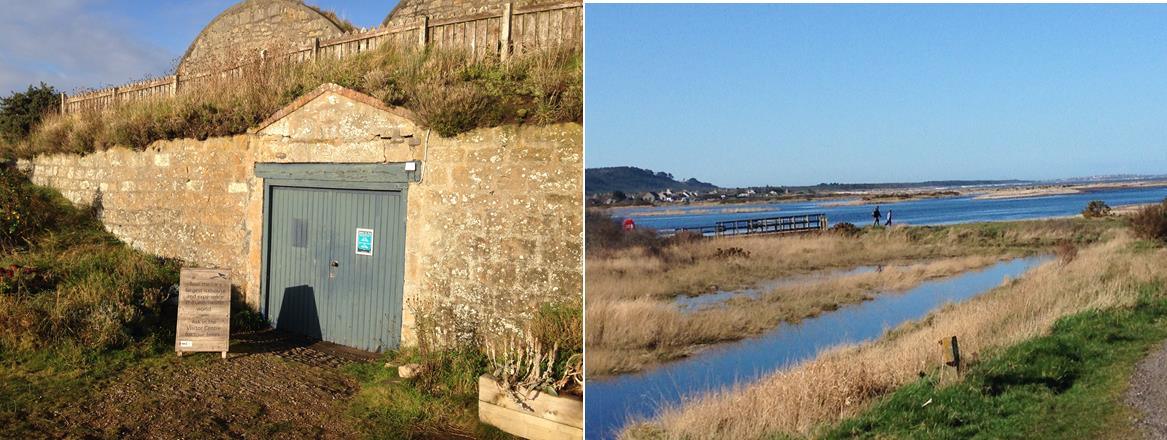
The Scottish Dolphin Centre was set up long before I came along, but I would still say that it breathed new life into the area and has raised awareness of the heritage and the local wildlife (other than dolphins). The centre itself was once a salmon fishing station that processed the fish caught in the river and sea. There is also an icehouse on site, the largest still standing in Scotland, for storing ice that was packed with the fish to keep them fresh at market. Today the icehouse is used as another exhibition area with immersive video rooms, old fishing and ship building tools and a room full of impressive whale and dolphin bones.

BND blog image 5
The icehouse (left) was part of a massive fishing operation with thousands of salmon caught a day at its peak. This all ended in the 1990’s, but the river is still a beautiful place to visit and the fish (that survived us) bring dolphins, seals, otters and ospreys every year.

Reading through this article you are probably thinking that I am biased in favour of the Scottish Dolphin Centre and WDC, and you are probably right. So in the interest of balance I will admit that not every visitor was as impressed as I was when I first walked through those doors, but is a common fact of life that you cannot please everyone. In particular, some people were disappointed that they were not guaranteed to see bottlenose dolphins during their visit. However, all wild animals are unpredictable and WDC is firmly against keeping whales and dolphins in captivity. Besides, there are few things more special than that chance to see them in the wild where they belong.

BND blog image 6
Thanks for reading

Sources

Wikipedia. 2019. Common bottlenose dolphin. https://en.m.wikipedia.org/wiki/Common_bottlenose_dolphin. Last accessed 05/11/2019

Whale and Dolphin Conservation. 2019. Common bottlenose dolphin. https://uk.whales.org/whales-dolphins/species-guide/common-bottlenose-dolphin/. Last accessed 05/11/2019

Connor et al. 2000. THE BOTTLENOSE DOLPHIN: Social Relationships in a Fission-Fusion Society; Cetacean Societies: Field Studies of Dolphins and Whales. ISBN 9780226503417

Connor et al. 2004. Aggression in bottlenose dolphins: evidence for sexual coercion, male-male competition, and female tolerance through analysis of tooth-rake marks and behaviour

Parsons et al. 2003. Male-male aggression renders bottlenose dolphin (Tursiops truncatus) unconscious

Ross and Wilson. 1996. Violent interactions between bottlenose dolphins and harbour porpoises

Santos et al. 2001. Stomach contents of bottlenose dolphins (Tursiops truncatus) in Scottish waters

Hastie et al. 2004. Functional mechanisms underlying cetacean distribution patterns: hotspots for bottlenose dolphins are linked to foraging

Patterson et al. 1998. Evidence for infanticide in bottlenose dolphins: an explanation for violent interactions with harbour porpoises?

Ross Shire Journal. 2019. Moray Firth bottlenose dolphin Spirtle surprises experts after being spotted off south-west Ireland. https://www.ross-shirejournal.co.uk/news/moray-firth-dolphin-surprises-experts-after-being-spotted-off-south-west-ireland-180460/. Last accessed 05/11/2019

Evening express. 2019. Moray Firth dolphins spotted in Netherlands and Ireland. https://www.eveningexpress.co.uk/fp/news/local/moray-firth-dolphins-spotted-in-netherlands-and-ireland/. Last accessed 05/11/2019

Scottish Dolphin Centre. 2019. https://dolphincentre.whales.org/. Last accessed 05/11/2019

Image sources

Shirehorse. 2007. [CC BY-SA 3.0 (http://creativecommons.org/licenses/by-sa/3.0/)%5D. https://commons.wikimedia.org/wiki/File:2005-05-n2-2549.jpg

Hogweard. 2012. [CC BY 3.0 (https://creativecommons.org/licenses/by/3.0)%5D. https://commons.wikimedia.org/wiki/File:Moray_Firth_Map.png

All other images are public domain and do not require attribution

For more bitesize content and ocean stories why not follow ‘Our world under the waves’ on

🌊 Facebook 🌊 Bluesky 🌊 Instagram

Chinese mitten crabs-Long distance crawling

by Matthew Norton

Most living creatures have to be able to move at some point during their lives, to get food, to escape predators or to find new places to live. Some species take this one step further and live their lives while constantly on the move, such as the Chinese mitten crab. These little critters will travel over 1,000km upriver from their birthplace in the sea and then come all the way back down again to make their own baby crabs who will repeat this long voyage.

Chinese mitten crab image 1
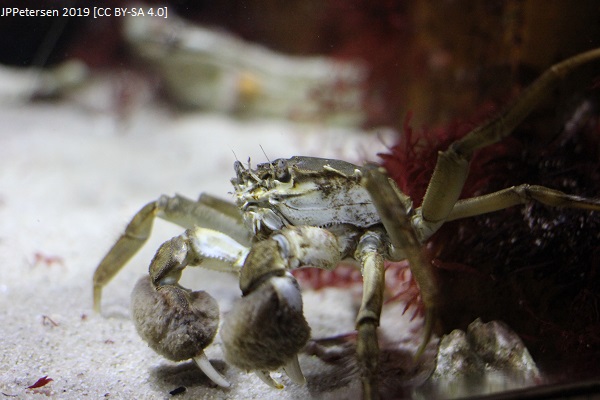
Chinese mitten crab is a fitting name for these little critters given that they are native to China and have very hairy claws.

As tiny floating larvae, these little crabs cannot swim very far, but can still make their way from the coastal seas where they hatched from and into the estuary (the space between the sea and the rivers) by using the tides. The movement of the tides is strongest at the water’s surface and then gets weaker as you go down and the crab larvae take advantage of this by swimming up when the tide is coming in and then swimming down when the tide goes out. The result is that they get themselves pushed more by the incoming tide, which takes them further inland.

Manipulating the tides to propel yourself up rivers only works when the incoming tides can push against the river flow. After this point, crawling on the bottom of the river becomes a much easier way for Chinese mitten crabs to travel. Even so, they may still have hundreds of kilometres to go, but it can take them up to five years to be ready to travel back down and breed. At least they have time on their side.

On their travels, these little crabs will also have to cope with the challenges of moving between different environments. The change in salinity (saltiness of the water) they experience as they move from the sea to the river is particularly tricky to get around. All animals need a certain amount of salt in their bodies dissolved in a certain amount of water, too much salt or too little water and their cells will shrivel up, too much water or too little salt and their cells will get bloated and burst, neither are good outcomes. Aquatic animals use various methods to control the levels of salt and water in their bodies, such as moving salts over their gills, drinking, or not drinking water and using dissolved, non-salt chemicals to make up for a low salt content.

Chinese mitten crab image 2
These diagrams show how fish from freshwater (left) and seawater (right) regulate the levels of water and salt ions in their body. Both use very similar mechanisms, but in very different ways because for freshwater fish there is the risk of getting too much water and not enough salts whereas in seawater fish it is the other way round.

Regulating salt and water levels in your body is easy enough when the salinity of your environment doesn’t change much, but for Chinese mitten crabs a change in tactics is necessary when they move from sea to river and vice versa. As larvae, they are very skillful at cope with a wide range of salinities, but as they grow and move towards the river, where salinity is low, but stable, this becomes an unnecessary expense. This is probably why adult Chinese mitten crabs are not so flexible with salinity, at least until they return to the sea.

It does seem strange that these little make such long and difficult journeys, why not just stay in the sea close to where they were born. They may find more food, fewer predators or fewer competitors in the rivers, but their eggs and larvae may have a better chance in the sea, but this is just one of many possible reasons. Chinese mitten crabs are not the only species who seem to live a difficult life, but this can be necessary for them to live in a natural world where the ‘easy’ roles are already taken.

From a human perspective

Humanity has caused some significant damage to the natural world over the past few decades through global warming, pollution, invasive species and so on. That last one has certainly come back to haunt us in some parts of the world. In theory any species can become invasive if it makes it way to a new area by clinging to our boats, our floating rubbish, or if it is driven there by climate change. Once the species arrives and gets a foothold, it can play havoc with the local ecosystem, driving out species that actually belong there by hunting them, depriving their food or modifying the environment.

Chinese mitten crabs are one such invasive species who have spread through Europe and America since the start of the 20th century and they have made their presence known. There is evidence to suggest that they will forcibly evict shore crabs (Carcinus maenas) from their shelters on the shore, which is ironic given that they are an invasive species themselves in other parts of the world. They can also carry pathogens (disease causing microorganisms) which are deadly to native species, such as the fatal crayfish plague caused by the bacteria Aphanomyces astaci. Unfortunately, by the time we found out that Chinese mitten crabs were a carrier they had already occupied much of Europe.

Chinese mitten crab image 3
For European crayfish, Chinese mitten crabs are a significant threat, not only through competition for food and other resources, but also because they carry deadly diseases which crayfish have no resistance to.

There are problems for us as well, Chinese mitten crabs have a tendency to burrow into river banks, which can damage crops and destabilise anything we build close to the river, and interfere with fishing activities. Their larvae can also clog up our water pipes. However, some entrepreneurs have suggested turning the presence of these destructive crabs to our advantage, by harvesting and eating them. This has already been done in their native China, where they are farmed and ultimately served in seafood restaurants, and has been proposed in America and around the river Thames.

Chinese mitten crab image 4
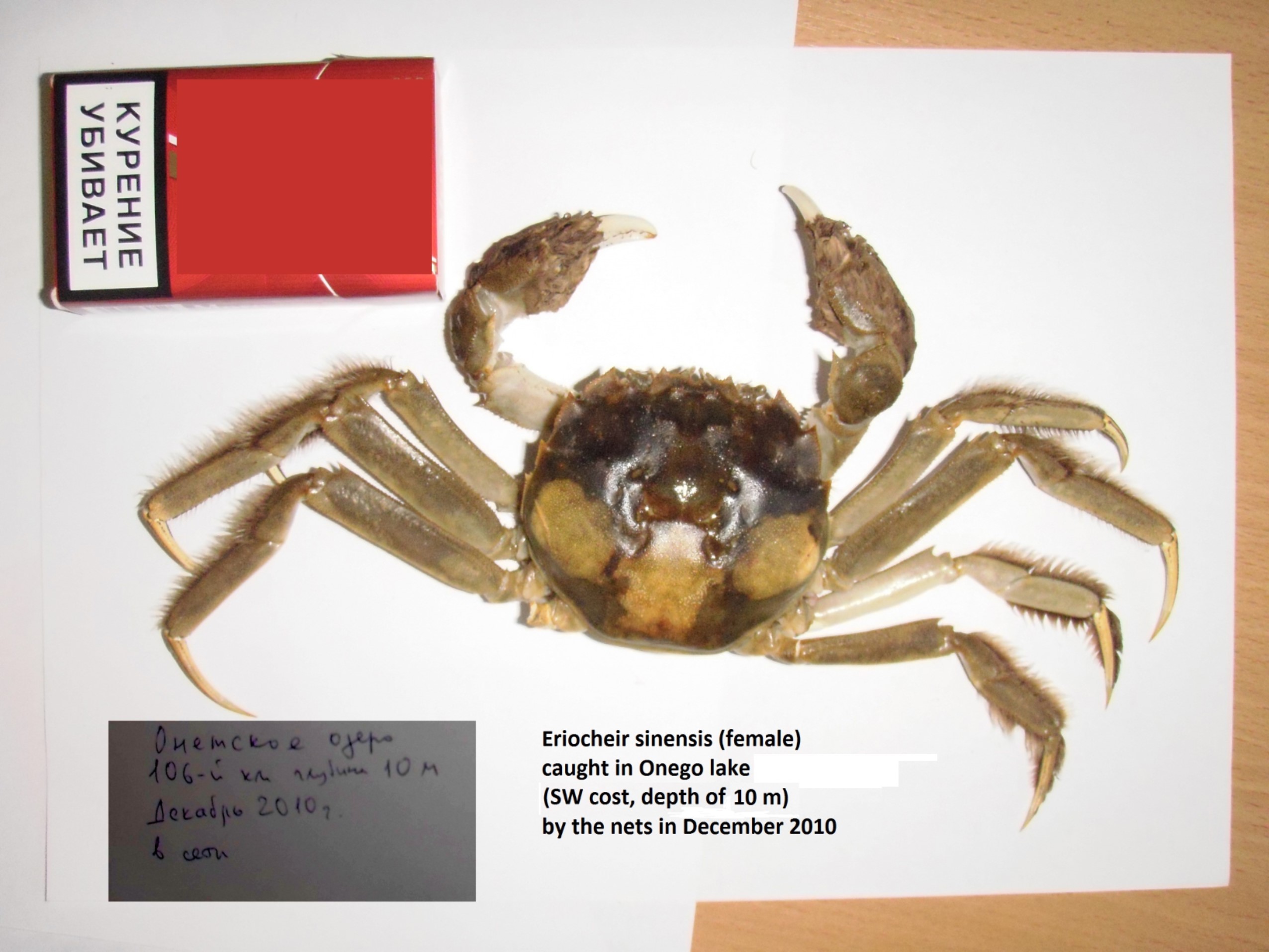
Chinese mitten crabs are already farmed, harvested and cooked in China so it is possible to eat them in regions where they are an invasive species and get their populations under control at the same time.

Properly managed, this could be an ideal solution for keeping numbers of Chinese mitten crabs under control. However, there is a risk that profit may take priority over protecting native species and habitats and this could mean crabs being deliberately imported and farmed in areas where they don’t belong. Clearly, I am not the only one who is concerned because in most of the United States it is illegal to import and farm Chinese mitten crabs with the only exception being California, where some fishing is allowed.

There has been a lot of doom and gloom in this article, but at least we are coming up with solutions to the problems we are causing to the natural world. Some of these solutions, such as harvesting and eating Chinese mitten crabs, are particularly attractive because we can also make money from them. This can be a cause for concern, but I am still optimistic that we can still protect the underwater habitats we share with the natural world, so long as we don’t get carried away.

Chinese mitten crab image 5
Thanks for reading

Sources

Tilburg et al. 2011. Transport and retention of the mitten crab (Eriocheir sinensis) in a Mid-Atlantic estuary: predictions from a larval transport model

Veldhuizen. 2001. Life history, distribution, and impacts of the Chinese mitten crab, Eriocheir sinensis

Anger. 1991. Effects of temperature and salinity on the larval development of the Chinese mitten crab Eriocheir sinensis(Decapoda: Grapsidae).

Cohen and Carlton. 1997. Transoceanic transport mechanisms: introduction of the Chinese mitten crab, Eriocheir sinensis, to California

Wang. 2012. Characterization and expression of glutamate dehydrogenase in response to acute salinity stress in the Chinese mitten crab, Eriocheir sinensis

Inside Ecology. 2017. Invasive non-native species (UK) – Chinese mitten crab. https://insideecology.com/2017/09/13/invasive-non-native-species-uk-chinese-mitten-crab/. Last accessed 26/08/2019

Dittel and Epifanio. 2009. Invasion biology of the Chinese mitten crab Eriochier sinensis: A brief review

Herborg et al. 2003. Spread of the Chinese mitten crab (Eriocheir sinensis H. Milne Edwards) in Continental Europe: analysis of a historical data set

Clark et al. 1998. The alien Chinese mitten crab, Eriocheir sinensis (Crustacea: Decapoda: Brachyura), in the Thames catchment

Rudnick et al. 2005. A life history model for the San Francisco Estuary population of the Chinese mitten crab, Eriocheir sinensis (Decapoda: Grapsoidea)

Schrimpf et al. 2014. Invasive Chinese mitten crab (Eriocheir sinensis) transmits crayfish plague pathogen (Aphanomyces astaci).

Wang. 2004. A spiroplasma associated with tremor disease in the Chinese mitten crab (Eriocheir sinensis)

Glossop et al. Chinese Mitten Crab. http://www.nonnativespecies.org/downloadDocument.cfm?id=367. Last accessed 26/08/2019

Independent. 2009. WILL WE SOON BE TUCKING INTO MITTEN CRABS FRESH FROM THE THAMES?. https://www.independent.co.uk/life-style/food-and-drink/features/will-we-soon-be-tucking-into-mitten-crabs-fresh-from-the-thames-1717807.html. Last accessed 26/08/2019

Clark. 2011. The Commercial Exploitation of the Chinese Mitten Crab Eriocheir sinensis in the River Thames, London: Damned if We Don’t and Damned if We Do

Image sources

JPPetersen. 2019. [CC BY-SA 4.0 (https://creativecommons.org/licenses/by-sa/4.0)%5D. https://commons.wikimedia.org/wiki/File:Eriocheir_Sinensis_in_water.jpg

Kare Kare (modified by Biezl translation improved by smartse). 2009. [CC BY-SA 3.0 (https://creativecommons.org/licenses/by-sa/3.0)%5D. http://en.wikipedia.org/wiki/File:Osmoseragulation_Carangoides_bartholomaei_bw_en.jpg

H. Zell. 2009. [CC BY-SA 3.0 (https://creativecommons.org/licenses/by-sa/3.0)%5D. https://commons.wikimedia.org/wiki/File:Astacus_astacus_01.JPG

Théo Duperray. 2009. [CC BY-SA 3.0 (https://creativecommons.org/licenses/by-sa/3.0)%5D. https://commons.wikimedia.org/wiki/File:Aphanomyces_astaci_(tr%C3%A9s_probable).jpg

J. Patrick Fischer. 2008. [CC BY-SA 3.0 (https://creativecommons.org/licenses/by-sa/3.0)%5D. https://commons.wikimedia.org/wiki/File:Gekochte_Wollhandkrabben.jpg

All other images are public domain and do not require attribution

For more bitesize content and ocean stories why not follow ‘Our world under the waves’ on

🌊 Facebook 🌊 Bluesky 🌊 Instagram

Diatoms-My house of glass

by Matthew Norton

The seas of the world are full of chemical mixtures, not just the sodium chloride that makes up table salt, and many living things are able to extract these chemicals directly from the water for their own purposes. In some cases, they have been quite inventive, using chemicals that most other creatures would not look twice at (assuming they have eyes).

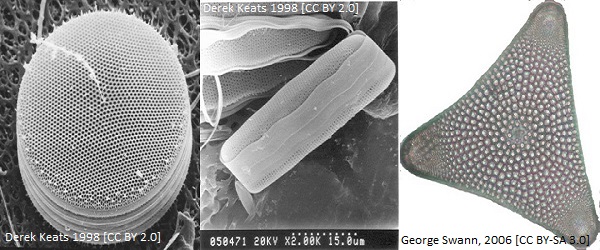
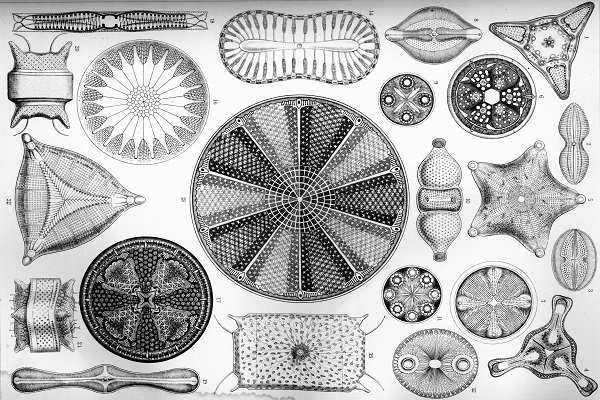
Diatoms, a group of microscopic algae (i.e. seaweeds), are one such group who have devised a way of extracting silica (also called silicon dioxide) from the water and using it to make protective cases out of glass. These cases are called frustules and they come in a variety of shapes (e.g. square, circular, long and thin) and the diatoms that make them may live alone, or joined together in a chain.

Diatom article image 1
Diatoms do really come in kinds of the shapes and sizes and these images are only a few examples.

We don’t really know the exact process that diatoms use to make their glass cases and given the wide variety made by different species it is possible that there is no single process used by all diatoms, but there are some things we do know. We know that the amount of silica available can control diatom growth, although the ‘pools’ of silica they can store in their bodies may give them an edge when supplies from the water are running low. We have also made some progress in identifying the genes that ultimately make the proteins that grab the silica molecules from the water and transport them to where they are needed in the diatom cell. In recent years, we have also discovered some strange molecules in diatom cells which may yield further clues, but only time will tell.

The glass cases made by diatoms demonstrates how resourceful these little seaweeds can be, but it comes with the problem of glass being very heavy and this extra weight could drag them into deeper water, out of reach of the sunlight they need to make their food. Diatoms rise to the challenge by using their vacuoles, a closed off space inside their single-celled bodies, as a float. They can also make their whole body (except the glass case) heavier during the day by using sunlight to accumulate food reserves and then burn through those reserves to make themselves lighter when they have sunk too far away from the sunlight.

Despite the difficulties that come with living in a glass case, diatoms are a very successful group of organisms who are found floating around in coastal seas, living under sea ice in polar waters and various other habitats in the water and even on land to some extent. They also fulfil a very important role in the world’s oceans, supporting many ocean food chains through sheer numbers at both the surface and as their dead bodies sink into the ocean depths as particles of ‘marine snow’.

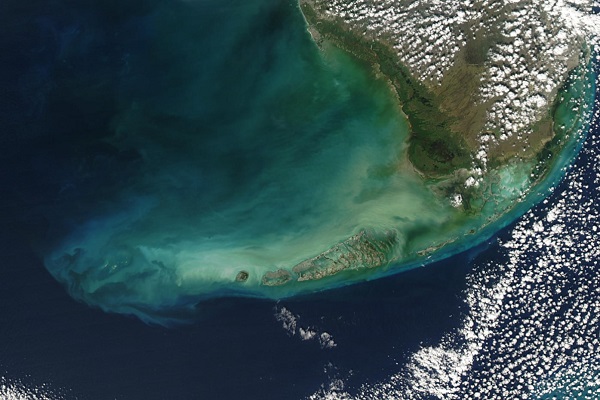
The influence of diatoms on the natural world is particularly dramatic when there are rapid explosions in diatom growth called ‘blooms’, but this is not always good for other creatures in the area. For example, anything living under the bloom may suffocate as the dead diatoms suck out all the oxygen as they rot. Some diatom species also release toxic chemicals into the water which can cause serious health problems to animals that get themselves caught in their blooms.

Diatom article image 2
Some diatom blooms are so vast that they can even be seen from satellites.

Diatom article image 3
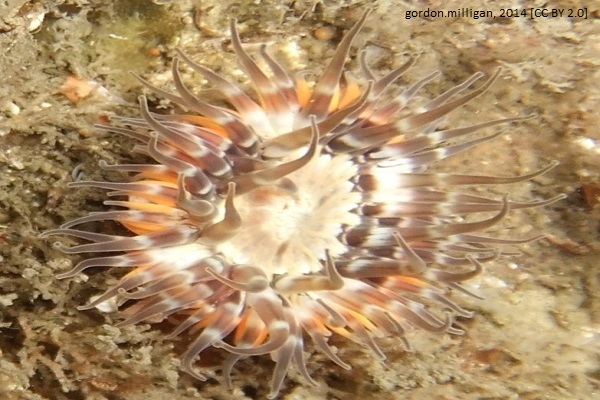
Diatom blooms really can turn nasty under certain conditions and make things unpleasant, even dangerous, for us and any wildlife in the area.

Diatom evolution has produced some pretty impressive techniques for turning a readily available resource into a valuable tool for survival. This seems to have made them a very important part of the ocean ecosystem, which is not bad for a bunch of microscopic plants that we can’t even see with the naked eye.

From a human perspective

There is little doubt that diatoms find their glass cases useful, otherwise they wouldn’t go to the trouble of making them, but we have also found quite a few uses for them because they are durable, long lasting and come in a variety of microstructures.

For example, the glass cases from long dead diatoms can give us vital clues on what life was like millions of years ago through fossilised samples. The patterns of the preserved diatom cases can be compared to the patterns from modern day diatoms and use to the closest matches to work out what the environment was like when the fossilised diatom was alive. Diatom mats on the sea floor can also help to keep the remains of dead animals intact, eventually producing some very well preserved fossils.

Diatoms are also useful in modern detective work by providing forensic investigators with evidence to determine the exact cause of death in victims who have ‘appear’ to have drowned. This is based on the idea that if the victim really did die from drowning in the water body (lake, river, canal etc) that their body is found than they would have inhaled the diatoms from that water body and those diatoms would have been circulated around the body. This can be confirmed by comparing taking samples from the water body and the victim’s major organs and bone marrow and seeing if there is a match. If there is a large difference between these samples then it may suggest that the victim’s body was moved after they had died, which would be very suspicious indeed.

Diatom article image 4
For forensic investigators, diatoms can be a very useful source of evidence to rule out (or not rule out) homicide in cases of drowning.

It is worth noting that diatom sampling is not a perfect forensic tool for determining a cause of death and there are several circumstances that can produce misleading results. For example, if the victim drowned quickly then any diatoms they inhaled might not have had the chance to get round the body before their circulation shut down. On the other hand, if the victim’s body isn’t discovered for a long time after death then decomposition can directly expose the major organs to the water and the diatoms it contains. Still, diatoms can provide a useful source of evidence in potential homicide cases, even though other pieces of evidence are needed for a conclusive result.

Finally, there has been some interest in using diatom cases in nanotechnology to design micro-electronic devices, chemical sensors and drug delivery systems inside the human body. The advantage to using diatoms is that they we don’t need extreme conditions (e.g. extreme heat to melt metal) to modify the microstructure of their cases, although some clever genetic engineering is still required. There have also been some pretty bold claims that diatom-based nanotechnology can be used to extract tiny particles of silver and gold and make new materials by using the glass case a mould from which the silica can be replaced at the atomic level. This might actually be a step towards creating a machine very similar to the replicators seen in Star Trek.

Diatom article image 5
It is truly remarkable how diatom-based nanotechnology could be applied in so many different ways.

It is amazing to think that, through the production of their detailed glass cases, diatoms are so useful to us and in some cases they really can change a person’s life. It seems that human innovation and the result of millions of years of evolution is a winning combination that can be applied to a number of problems in our modern world.

diatom article image 6
Thanks for reading

Sources

Wikipedia. 2019. Diatom. https://en.m.wikipedia.org/wiki/Diatom. Last accessed 29/07/2019

Martin‐Jézéquel et al. 2000. Silicon metabolism in diatoms: implications for growth

Moore and Villareal. 1996. Size‐ascent rate relationships in positively buoyant marine diatoms

Waite et al. 1997. Sinking rate versus cell volume relationships illuminate sinking rate control mechanisms in marine diatoms

Smetacek. 1985. Role of sinking in diatom life-history cycles: ecological, evolutionary and geological significance

Granata. 1991. Diel periodicity in growth and sinking rates of the centric diatom Coscinodiscus concinnus

Armbrust. 2009. The life of diatoms in the world’s oceans

Sumper and Brunnner. 2008. Silica biomineralisation in diatoms: the model organism Thalassiosira pseudonana

Smetacek et al. 2012. Deep carbon export from a Southern Ocean iron-fertilized diatom bloom

Miralto et al. 1999. The insidious effect of diatoms on copepod reproduction

Harding and Chant. 2000. Self-sedimented diatom mats as agents of exceptional fossil preservation in the Oligocene Florissant lake beds, Colorado, United States

De NYs and de Wolf. 2001. 13 Diatoms as indicators of coastal paleo-environments and relative sea-level change

Krstic et al. 2002. Diatoms in forensic expertise of drowning—a Macedonian experience

Verma. 2013. Role of diatoms in the world of forensic science

Scott. 2016. How microscopic algae are helping forensic teams catch criminals. http://theconversation.com/how-microscopic-algae-are-helping-forensic-teams-catch-criminals-57407. Last accessed 29/07/2019

Bozarth et al. 2009. Diatoms in biotechnology: modern tools and applications

Schrofel. 2011. Biosynthesis of gold nanoparticles using diatoms—silica-gold and EPS-gold bionanocomposite formation

Drum and Gordon. 2003. Star Trek replicators and diatom nanotechnology

Image sources

Derek Keats from Johannesburg, South Africa. 1998. [CC BY 2.0  (https://creativecommons.org/licenses/by/2.0)]. https://commons.wikimedia.org/wiki/File:Pennate_diatom_(3074441653).jpg;

Derek Keats from Johannesburg, South Africa. 1998. [CC BY 2.0  (https://creativecommons.org/licenses/by/2.0)]. https://commons.wikimedia.org/wiki/File:Centric_diatom_(38258532722).jpg

George Swann. 2006. [CC BY-SA 3.0 http://creativecommons.org/licenses/by-sa/3.0/)]. https://commons.wikimedia.org/wiki/File:Diatom_3.png

West Midlands Police from West Midlands, United Kingdom. 2012. [CC BY-SA 2.0 (https://creativecommons.org/licenses/by-sa/2.0)]. https://commons.wikimedia.org/wiki/File:Day_253_-_West_Midlands_Police_-_Forensic_Science_Lab_(7969822920).jpg

Tim Houlihan. 2008. [CC BY-SA 3.0 (https://creativecommons.org/licenses/by-sa/3.0)]. https://commons.wikimedia.org/wiki/File:Drowning_in_a_matelrialistic_world.jpg

Jiangtao12345. 2019 [CC BY-SA 4.0 https://creativecommons.org/licenses/by-sa/4.0)]. https://commons.wikimedia.org/wiki/File:Nanogenerator-applications.jpg

All other images are public domain and do not require attribution

For more bitesize content and ocean stories why not follow ‘Our world under the waves’ on

🌊 Facebook 🌊 Bluesky 🌊 Instagram

Elegant anemone-Clone of my own

by Matthew Norton

In the natural world, creating the next generation is a complicated process with multiple ways for animals to reproduce. The coming together of a male and female to create new life (sexual reproduction) provides each of their offspring with a unique mix of their genes. This helps to keep the variety of genes in the species high, which in turn creates a high variety in all the features that genes control (e.g. body size, eye colour) and gives evolution more options to work with. However, there are some species that use the older method of producing exact copies of themselves (asexual reproduction).

Elegant anemones, Sargatia elegans (not to be confused with Actinoporus elegans), produce their identical clones from bits of their body that break off as they crawl along the seabed. This can allow elegant anemones to rapidly take over sections of the seabed with sheer numbers. They are also well equipped to defend their territories, using their long stinging tentacles to drive away corals, sponges and other anemones. However, this is not a perfect defence and some bacteria are able to slip through the net and live in elegant anemones’ tentacles.

Elegant anemone blog article image 1
Elegant anemones stand out with their banded colour pattern and the jagged outline on their base (not visible here) which is a tell-tale sign of their reproduction through fragmentation.

Of course, there are drawbacks to how elegant anemones reproduce. For example, they do not release their young into the water to be carried away by the currents (as is the case with many other marine species), which can make it difficult for elegant anemones to disperse into new areas. Also, because they rely on producing identical clones, elegant anemone populations may struggle to adapt to changes in their environment because evolution have fewer sets of genes to work with. For example, elegant anemones have been wiped out from some areas of the seabed around the Netherlands following a severe winter.

Surprisingly, elegant anemones have managed to overcome their limitations and distribute themselves over large areas of the world’s oceans with reports in 2013 of their spread into the Black Sea. Also, their populations seem to have surprisingly high variety of genes, which suggests that each population was founded by multiple anemones with different genes. In theory, this is possible if these founding anemones came from different populations that were separated from each other and allowed to develop different sets of genes over time before being brought together at a later date.

There is a common misconception that creatures with simple features, such as asexual reproduction, are in some way less evolved. However, the truth is that evolution only provides each species with the upgrades that they need, and not every species needs to be so complicated. It is also worth mentioning that even without sexual reproduction, there are various ways that an animal’s genes and physical features can change over time and give evolution the tools it needs.

From a human perspective

A lot of sea creatures have evolved weapons for attacking prey and defending themselves from predators and unfortunately we can sometimes get caught in the crossfire. In the case of elegant anemones, and other Sargatia anemones, their tentacles are loaded with special stinging cells called nematocysts.

Elegant anemone blog article image 2
All cnidarians (e.g. jellyfish, anemones, corals) have these microscopic harpoons tipped with toxins that can produce a nasty sting.

These stings are a particular danger to fishermen who collect the sponges that live among Sargatia anemones and may then suffer from sponge fishermen’s disease, also known as Sargatia’s dermatitis. This condition can include some nasty symptoms, such as burning/itching sensations, redness of the skins and blisters, which can then develop into ulcers and abscesses. In more extreme cases victims suffer from nausea, vomiting, fever and muscle spasms.

Elegant anemone blog article image 3
Portraits of sponge fishing seem to date back to at least the 19th century which probably means there have been sufferers of sponge fishermen’s disease since then.

Apart from their stings, elegant anemones do not appear to have any other connections with our lives. However, I would like to suggest some ideas on how these anemones may still be useful to us, especially in scientific research. For example, their strange way of reproduction may make them a species of interest for genetic research (the study of genes), particularly in how genes change over time without sexual reproduction. This idea was explored (sort of) in a 1929 experiment where several anemones, including elegant anemones, were studied to compare their very different ways of reproducing, although genetic research was a very new science back then.

Elegant anemone blog article image 4
The 1929 study on several sea anemones included species that can reproduce through cutting off fragments from their base (left), species that are hermaphrodites (both male and female) and practice sexual reproduction (middle) and species where new anemones stretch out from their parents and then snap off (right).

Their ability to easily produce identical clones of themselves could also make useful ‘lab rats’ for all kinds of laboratory experiments. Especially, because this (almost) removes a common source of confusion with the results of these experiments, the difference in genes among the test animals. However, we do need to be careful because genetic differences between animals are an important part of the natural world and without them the results of these experiments may not be that useful.

There are also practical reasons why elegant anemones are useful test animals to keep in a laboratory, despite their stinging tentacles. It is easy to get lots of them to work with by collecting the fragments from a few wild caught anemones and, being quite simple animals, all you only really need to provide them with food and the right living conditions in a small water tank. Also, because of their limited ability to disperse into new areas, elegant anemones are unlikely to escape from the laboratory and invade new areas of the seabed, although such escapes should still be prevented where possible. Not only would these potential invaders be stuck to one area, but they would likely struggle to adapt to their new surroundings. There are even records of an elegant anemone invasion in Massachusetts in 2000 eventually failing by the end of the decade.

In this article I have included some ifs, buts and a lot of blue sky thinking with not much evidence to back it all up. In all honesty, the nasty effects of elegant anemone stings was all I really had and I didn’t have much luck in finding particular incidents to talk about. However, I think it is always worth imagining how else the creatures of the sea might affect our lives, especially as there is so much of their world that we know nothing about.

Elegant anemone blog article image 5
Thanks for reading

Sources

Wikipedia. 2018a. Sargatia elegans. https://en.wikipedia.org/wiki/Sagartia_elegans. Last accessed 09/06/2019

Wikipedia. 2018b. Elegant anemone. https://en.wikipedia.org/wiki/Elegant_anemone. Last accessed 09/06/2019

Marine Species Identification Portal. Sagartia elegans. http://species-identification.org/species.php?species_group=anthozoa&id=80. Last accessed 09/06/2019

Schuett and Doepke. 2009. Endobiotic bacteria and their pathogenic potential in cnidarian tentacles

Ates et al. 1998. The occurrence of Sagartia elegans (Dalyell, 1848)(Anthozoa: Actiniaria) in the Netherlands

Shaw. 1991. Effects of asexual reproduction on population structure of Sagartia elegans (Anthozoa: Actiniaria)

Bengtsson. 2003. Genetic variation in organisms with sexual and asexual reproduction

Grebelnyi and Kovtun. 2013. A species of sea anemone Sagartia elegans (Dalyell, 1848) (Anthozoa, Actiniaria, Sagartiidae) that is new for the Black Sea and is capable of clonal reproduction

Bonamonte et al. 2016. Aquatic Dermatology: Biotic, Chemical and Physical Agents

Elston. 2007. Aquatic antagonists: Sponge dermatitis

Wells. 2013. The failed introduction of the sea anemone Sagartia elegans in Salem Harbor, Massachusetts

Stephenson. 1929. On methods of reproduction as specific characters

Image sources

gordon.milligan. 2014 [CC BY 2.0 (https://creativecommons.org/licenses/by/2.0)%5D. https://commons.wikimedia.org/wiki/File:Sagartia_elegans.jpg

Mike Noren. 2001 [CC BY-SA 3.0 (https://creativecommons.org/licenses/by-sa/3.0)%5D. https://commons.wikimedia.org/wiki/File:Diadumene_cincta_DSCN1979.JPG

Ecomare/Sytske Dijksen. 2016 [CC BY-SA 4.0 (https://creativecommons.org/licenses/by-sa/4.0)%5D. https://commons.wikimedia.org/wiki/File:Ecomare_-_slibanemoon_(pcd02025-slibanemoon-sd).jpg

Fernándo Herranz Martín. 2005 [GPL (http://www.gnu.org/licenses/gpl.html)%5D. https://commons.wikimedia.org/wiki/File:Actinia_pedunculada_014.jpg

Mike Noren. 2001 [CC BY-SA 3.0 (https://creativecommons.org/licenses/by-sa/3.0)%5D. https://commons.wikimedia.org/wiki/File:Sagartiogeton_laceratus_DSCN2001.JPG

Learning by action; Stichting Natuurbeelden. 2010 [CC BY-SA 3.0 nl (https://creativecommons.org/licenses/by-sa/3.0/nl/deed.en)%5D. https://commons.wikimedia.org/wiki/File:Actinothoe_sphyrodeta_in_the_Netherlands.jpg

All other images are public domain and do not require attribution

For more bitesize content and ocean stories why not follow ‘Our world under the waves’ on

🌊 Facebook 🌊 Bluesky 🌊 Instagram

Orcas-Silent running

by Matthew Norton

When it comes to feeding yourself in the sea, different prey use different antipredator adaptations which in turn requires the predator to use different methods to catch their prey. This makes things interesting for opportunistic predators, who target a variety of different prey species and so must be flexible in their hunting strategy, such as orcas (also known as killer whales). The diet of these large dolphins includes fish, sharks, squid and a range of marine mammals, but each orca population, of which there are many, target only some of these prey species and seem to ignore others.

Orca article image 1
Orcas hunt various animals that include (clockwise from top left) fish such as herring, salmon and even large sharks as well as seals, porpoises, dolphins, humpback whales and even the occasional octopus or squid.

The most well known difference in the prey that orcas target is between resident populations, who stay in one area and eat fish, and transient populations, who move from place to place and attack other marine mammals. The fish-eating orcas also rely more on echolocation (they produce high frequency ‘clicking’ sounds that bounce off solid objects in the water) to find their food whereas mammal eating orcas are more likely to listen out for their prey without making any sound themselves.

Echolocation would be just as effective in detecting marine mammals as it would for fish, but marine mammals are more likely to hear those high frequency ‘clicking’ sounds, especially dolphins who use echolocation themselves, and be warned of approaching orcas. Even for these powerful predators, the element of surprise can be vital to the success of a hunt with even large whales sometimes running away if they hear orcas coming.

Orca article image 2
Echolocation is used by many toothed whales (a group that includes all dolphins ) to find food by sending out high frequency ‘click’ sounds and listening for the echoes that are bounced back when the clicks hit something solid in the water. Using these clicks they can make a mental map of their environment, including the location of a potential fish.

Even between fish-eating orca populations (and probably marine mammal eating populations) there are differences in the prey species they target and the hunting strategies they use. For example, orcas living in Norway and Iceland catch herring by herding them into tight groups and then slapping their tails to stun the fish.

Meanwhile, the shark and ray eating orcas found around New Zealand and Australia (although orcas have been seen eating sharks elsewhere in the world) can use various hunting methods to handle these tricky prey. These include grabbing bottom dwelling rays by the tail with their teeth and dragging them out of hiding places, sometimes with the orca’s tail hanging out of the water, using tail slaps to confuse sharks and even flipping white sharks on to their backs to immobilize them. It is worth mentioning that reported cases of orcas eating sharks and rays are rare and these hunting behaviours could be one-off, or could be one of many unique shark hunting techniques used by orcas.

The different hunting techniques that orcas have developed are all part of the continuing battle of wits that evolution creates between every predator and prey combination. This in return has lead some of the orca’s prey species to evolve clever antipredator responses, with some fish being able to hear the high frequency sounds used in echolocation and smaller dolphins using sounds that are outside an orca’s hearing range. Nonetheless, orcas are still one of the seas most impressive and effective predators.

From a human perspective

It was difficult to know where to start for this section, orcas have affected our lives for so long by being a source of wonder in the seas and a source of inspiration in television and film with the Free Willy films being particularly famous. Sadly, many orcas who came into contact with humanity were abducted from the wild and forced into a life in captivity for our entertainment. Fortunately, the harm caused to orcas by a life in captivity has received worldwide attention since the documentary “Blackfish” came out and sparked major protests against aquariums that still keep whales and dolphins in captivity.

Even in their natural environment, orcas may not be completely safe from humans meddling in their lives, they do share the seas with us after all. For example, our boats can sometimes disturb wild orcas if they live around a busy shipping lane, or are approached by a whale-watching boat that gets too close. As isolated incidents, these disturbances may not cause the orcas too much harm, but if they are repeated over and over again then it may cause them to waste a lot of their valuable time and energy while avoiding our boats.

Orca article image 3.jpg
We make noise in the sea through all kinds of activities including pile driving to set up wind turbines, engine noise from boats and the sonar from submarines.

Worse still, the noise pollution from some of our activities at sea, which include general boat traffic, sonar from submarines and pile driving (i.e. slamming a large piece of metal into the seabed), can disturb orcas and other marine wildlife that are nowhere near us. All that noise makes it harder to be heard in the ocean, which is especially bad for social animals like orcas that use various calls to talk to each other. Noise pollution can also drive orcas away from the surrounding area for long periods of time, which in some cases is the intended effect with humans using noise to keep marine mammals away from fish farms and to round up whales and dolphins to take into captivity.

These are the impacts of noise pollution on orcas that we know about, but it is worth pointing out that noise pollution has a whole range of effects on sea life. In the most extreme cases it can actually damage the ears, or whatever other structure an animal may use to hear, and cause hearing loss. In other cases, noise pollution can lead to dangerous behavioural changes such as unusual aggression, a lack of response to certain sounds and for whales and dolphins, panic and disorientation during dives which could lead to decompression sickness. Even though these effects of noise pollution have not been specifically reported in orcas (as far as I know) they could still be happening.

Noise pollution is one of many threats that marine life is facing in the modern world and while the world under the waves is a naturally noisy place, the loud sounds that we make are certainly an unwelcome addition.

thanks for reading image.jpg
Thanks for reading

Sources

Wikipedia. 2019. Killer whale. https://en.wikipedia.org/wiki/Killer_whale. Last accessed 06/05/2019

Au et al. 2004. Echolocation signals of free-ranging killer whales (Orcinus orca) and modeling of foraging for chinook salmon (Oncorhynchus tshawytscha)

Ford and Ellis. 2014. You are what you eat: foraging specializations and their influence on the social organization and behavior of killer whales

Simon et al. 2007. The relationship between the acoustic behaviour and surface activity of killer whales (Orcinus orca) that feed on herring (Clupea harengus)

Barrett-Lennard et al. 1996. The mixed blessing of echolocation: differences in sonar use by fish-eating and mammal-eating killer whales

Deecke et al. 2005. The vocal behaviour of mammal-eating killer whales: communicating with costly calls

Cure et al. 2015. Predator sound playbacks reveal strong avoidance responses in a fight strategist baleen whale

Van Opzeeland et al. 2005. Vocal behaviour of Norwegian killer whales, Orcinus orca, during carousel and seiner foraging on spring-spawning herring

Simon et al. 2005. Acoustic characteristics of underwater tail slaps used by Norwegian and Icelandic killer whales (Orcinus orca) to debilitate herring (Clupea harengus)

Wilson and Dill. 2002. Pacific herring respond to simulated odontocete echolocation sounds

Astrup and Mohl. 1993. Detection of intense ultrasound by the cod Gadus morhua

Morisaka and Connor. 2017.Predation by killer whales (Orcinus orca) and the evolution of whistle loss and narrow‐band high frequency clicks in odontocetes

Holt et al. 2009. Speaking up: Killer whales (Orcinus orca) increase their call amplitude in response to vessel noise

Morton and Symonds. 2002. Displacement of Orcinus orca (L.) by high amplitude sound in British Columbia, Canada

Williams et al. 2006. Estimating relative energetic costs of human disturbance to killer whales (Orcinus orca)

Williams et al. 2014. Severity of killer whale behavioral responses to ship noise: a dose–response study

Erbe. 2002. UNDERWATER NOISE OF WHALE‐WATCHING BOATS AND POTENTIAL EFFECTS ON KILLER WHALES (ORCINUS ORCA), BASED ON AN ACOUSTIC IMPACT IMPACT MODEL

Gabbatiss. 2019. Dolphins’ psychological trauma after being hunted for marine parks revealed in new research. https://www.independent.co.uk/environment/nature/dolphins-trauma-whale-hunting-whaling-the-cove-taiji-drive-hunts-a8835821.html?fbclid=IwAR2HEQ0XK40Dz14GhjrVd9I-LEUhvdI1hARl7IuKACPdT1JYfJEQqAGtMxI. Last accessed 06/05/2019

All images are public domain and do not require attribution

For more bitesize content and ocean stories why not follow ‘Our world under the waves’ on

🌊 Facebook 🌊 Bluesky 🌊 Instagram

Flatworms-Living without a heart

by Matthew Norton

The insides of many animals are made up of blood vessels, nerves, muscles and organs (and more) working together as one complicated machine with each small part performing specific tasks to keep this machine working properly. How easy it is to forget that not all animals are, or need to be, this complicated, with some weird animals groups able to survive without the major components that we need to live.

Flatworms (also called Platyhelminthes) are one such weird group of animals that come in a wide range of body forms, even though their basic biology is very simple, with some ‘vital’ organs completely missing. For example, they have no heart, gills, or circulation system for extracting oxygen from the environment and pumping it around their body. Instead, they simply rely on the oxygen to flow through their bodies, a process called diffusion, but this only really works over small distances, which is probably why flatworms are flat and/or small.

Flatworm article image 1
Flatworms are definitely a weird and varied group of animals with examples including (clockwise from top left) Turbellerians, Trematodes, Tapeworms and Monogeans.

Even the few organs that flatworms do possess are very simple in design with the digestive system being just a fleshy sack instead of a system of different compartments (stomach, small intestine, large intestine etc) for different stages of food digestion. Some species don’t even have an anus for getting rid of waste and have to vomit this waste back out through their mouths. Their nervous system is also very simple, although they do have a clump of nerves at one end of the body which could be a brain.

Clearly, flatworms have very little to work with and you wouldn’t expect them to do anything interesting. Many flatworm species cannot even function on their own and survive as parasites on animals that include fish, crabs, snails, frogs and even humans. Other species however, can live on their own and catch their own prey by waiting to ambush them, trapping them in nets of sticky mucus, or poisoning the water around them.

Flatworms also demonstrate some interesting social behaviours despite their primitive brain, if it even counts as a brain. This is well demonstrated by Pseudobiceros bedfordi, a species that meet in pairs and fence with their penises. Like many flatworms they are simultaneous hermaphrodites (which means each animal is both male and female at the same time), but each animal would prefer the other to ‘be the female’ and do the job of carrying the fertilised eggs. Neither animal develops a specific opening for the sperm so the ‘fencers’ will try to burn a hole in each other with acid, while trying to avoid being burnt themselves.

Flatworm article image 2
Both these Pseudobiceros bedfordi flatworms have the common goal of reproduction, but the one that carries the fertilised eggs will have to spend a lot more energy dragging them round.

A common misunderstanding with evolution is that it aims to produce some sort of perfect organism in the long term, but really it works to change a species one small step at a time and equip it with what it needs to survive, and nothing more. The complicated machinery that support many large animals is just one of many options to help animals survive in the natural world and it is an option that flatworms don’t need.

From a human perspective

Unfortunately, when it comes to the interactions between us and flatworms it is the parasitic species that stand out, and with good reason. The flatworm group includes some nasty parasites that can infect various parts of the body including (but not limited to) the blood, liver and intestines and can cause serious health problems. One particular case from 2017 where a 17 year Mexican teenager who had somehow got a tiny flatworm burrowing around inside his eye. The flatworm was successfully removed, but it left the teenager with a permanently damaged eyeball.

On a wider scale, several species of flatworm parasite are also responsible for Schistosomiasis (also known as snail fever) which is the world’s 2nd most devastating disease caused by a parasite after malaria. Symptoms are varied and include blood in the urine, pain in the genital area, stunted growth, infertility and reduced learning ability, all of which are harmful, but rarely cause death directly. Victims can become infected with Schistosoma flatworms from any contact with water that contains their larvae, whether they are drinking it, bathing in it, or washing their clothes in it. The water itself can become infectious from releases of flatworm larvae by infected snails, or the faeces of infected humans, which can contain flatworm eggs.

Flatworm article image 3
Without access to clean drinking water and good sanitation there is a serious risk of picking up a Schistosomiasis causing parasite.

Without access to clean drinking water and good sanitation there is a serious risk of picking up a Schistosomiasis causing parasite. Image source: Bb.braam, 2017 (right, CC BY-SA 4.0).Flatworms can also cause us serious economic problems by attacking other animals that we rely on. A number of flatworm parasites can infect livestock, farmed fish and shellfish, making the meat unsuitable for human consumption and costing the farmers considerable amounts of money. Even non-parasitic species can be a problem, for example some Bipalium flatworms, such as the New Zealand flatworms, have been massacring earthworms in Northwest Europe. This is bad because earthworms are an especially valuable species because they can be a protein rich food source for our livestock and a useful decomposer of food waste.

Flatworm article image 4
New Zealand flatworms (Arthurdendyus triangulates) and their relatives are invasive species in Northwest Europe.

Despite all these negative effects, some flatworms can help us to develop useful ideas to our problems. In particular, the ability of Planarian flatworms to clone themselves from tiny fragments the original body may hold insights for stem cell research. There has also been interest in using certain species planarian and turbellarian flatworm, and their consumption of insect larvae, as natural controls against mosquitos.

Survival in the natural world does not usually encourage niceness to other animals, especially towards different species, and in some cases we can get caught in the firing line. However, this is nothing compared to the impacts (e.g. climate change, overfishing, plastic pollution) that we have on the environment, both above and below the waves. No other species on earth manipulates the world around them like we do.

Flatworm article image 5
Thanks for reading

Sources

Wikipedia. 2019a. Flatworm. https://en.wikipedia.org/wiki/Flatworm. Last accessed 08/04/2019

Reuter and Halton. 2001. Comparative neurobiology of Platyhelminthes

Jennings. 1971. Parasitism and commensalism in the Turbellaria

Wikipedia. 2018. Pseudobiceros bedfordi. https://en.wikipedia.org/wiki/Pseudobiceros_bedfordi. Last accessed 08/04/2019

Whitfield. 2004. Everything you always wanted to know about sexes

Wild Singapore. Persian carpet flatworm. http://www.wildsingapore.com/wildfacts/worm/polycladida/bedfordi.htm. Last accessed 08/04/2019

Blaustein. 1990. Typhloplanid flatworms (Mesostoma and related genera): Mechanisms of predation and evidence that they structure aquatic invertebrate communities

Reuter and Kreshchenko.2004. Flatworm asexual multiplication implicates stem cells and regeneration

Salo. 2006. The power of regeneration and the stem‐cell kingdom: freshwater planarians (Platyhelminthes)

Hechinger et al. 2011. Social organization in a flatworm: trematode parasites form soldier and reproductive castes

Littlewood. 1990. Predation on cultivated oysters, Crassostrea rhizophorae (Guilding), by the polyclad turbellarian flatworm, Stylochus (Stylochus) frontalis Verrill

Stowers Institute for Medical Research. 2011. Flatworms provide new insight into organ regeneration and the evolution of mammalian kidneys. https://www.sciencedaily.com/releases/2011/08/110810085544.htm. Last accessed 08/04/2019

Lengerer et al. 2014. Biological adhesion of the flatworm Macrostomum lignano relies on a duo-gland system and is mediated by a cell type-specific intermediate filament protein

Dean. 2017. Where No Flatworm Has Gone Before: Doctors Find Wriggling Parasite in Teen’s Eyeball. https://www.sciencealert.com/where-no-flatworm-has-gone-before-doctors-find-wriggling-parasite-in-an-eyeball. Last accessed 08/04/2019

World Health Organization. Schistosomiasis. https://www.who.int/news-room/fact-sheets/detail/schistosomiasis. Last accessed 08/04/2019

Wikipedia. 2019b. Earthworm. https://en.wikipedia.org/wiki/Earthworm. Last accessed 08/04/2019

Pellettieri. 2007. Cell turnover and adult tissue homeostasis: from humans to planarians

Tranchida et al. 2009. Predation potential of three flatworm species (Platyhelminthes: Turbellaria) on mosquitoes (Diptera: Culicidae)

Legner. 1975. Mosquito and chironomid midge control by planaria

Image sources

Hhgutierrez49. 2012 [CC BY-SA 3.0 (https://creativecommons.org/licenses/by-sa/3.0)%5D. https://commons.wikimedia.org/wiki/File:Faringe_planarias.jpg

Neely852. 2018 [CC BY-SA 4.0 (https://creativecommons.org/licenses/by-sa/4.0)%5D. https://commons.wikimedia.org/wiki/File:C._vesicaudus2.png

Jana Bulantová. 2018 [CC BY-SA 4.0 ()]. https://commons.wikimedia.org/wiki/File:15_Eudiplozoon_nipponicum.tif

Nico Michiels. 2004 [CC BY 2.5 (https://creativecommons.org/licenses/by-sa/4.0)%5D. https://commons.wikimedia.org/wiki/File:Mating_Pseudobiceros_bedfordi.png

Bb.braam. 2017 [CC BY-SA 4.0 (https://creativecommons.org/licenses/by-sa/4.0)%5D. https://commons.wikimedia.org/wiki/File:Male_and_female_schistosomiasis.jpg

Rae’s. 2014 [CC BY 2.0 (https://creativecommons.org/licenses/by/2.0)%5D. https://commons.wikimedia.org/wiki/File:New_Zealand_flatworm_4.jpg

All other images are public domain and do not require attribution

For more bitesize content and ocean stories why not follow ‘Our world under the waves’ on

🌊 Facebook 🌊 Bluesky 🌊 Instagram