Giant groupers- Ch-ch-changes

by Matthew Norton

Since the beginning of Our World Under The Waves, I’ve tried to reflect the variety of the world’s sea creatures by introducing obscure animal groups, covering well-known species (e.g. pufferfish) from unusual angles, and everything in between. But it’s a big ocean out there, and even with 50+ articles to my name, I am guilty of more than a few oversights. For instance, all articles published under the “Big fish” category have been about sharks. Impressive though they are, sharks are not the only fish in the sea, so let’s give the big bony fish some time to shine, starting with the aptly named Giant Grouper.

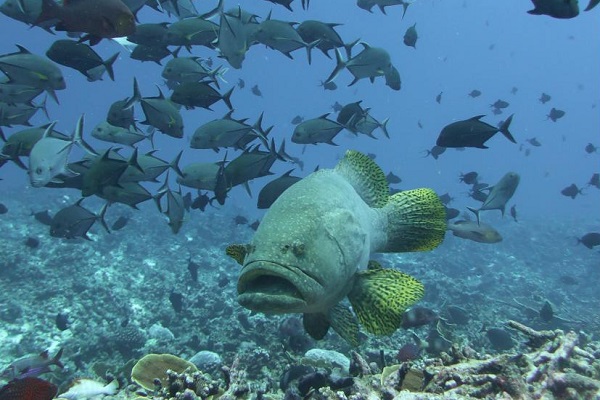
The mottled pattern of a giant grouper (Epinephelus lanceolatus) is thought to aid with camouflage, helping them to blend into their surroundings to then ambush their prey. I suppose you could mistake them for a rock if they stayed still enough.

They may also use slight fin movements to maintain their position while hovering in mid-water.

Able to grow to at least 2.7 metres long, weighing in at around 400kg (though some claim that stretch further to 3 metres and 600kg), giant groupers are one of the largest bony fish in the world. And probably the largest fish you could hope to see around the tropical coral reefs on the Indo-Pacific and around Australia, where they’re commonly known as Queensland groupers. You may also find them in underwater caves, wrecks and harbours, if you’re so inclined to look. But be warned, they are territorial animals and are known to attack interlopers if sufficiently provoked, although posturing and low frequency warning sounds are enough to settle most disputes, with no prolonged violence necessary.

Small animals would be especially wise to give these big fish a wide berth, given their tendency to take a wide variety of prey, including bony fish, molluscs, crabs, spiny lobsters (reported by some to be their favourite food), rays, sharks and even sea turtles. For the latter three, giant groupers would typically only pounce on the smaller species, or the smaller juveniles of large species. That said, their mouths can, and will, stretch wide open to engulf their meal and swallow it whole, aided by the small, but sharp canine teeth. A rather gruesome fate for anyone who fails to evade them.

The mouth of a grouper, specifically an orange spotted grouper (Epinephelus coioides), but it gives a good idea of what a giant grouper mouth would look like.

And yet, there is a small fish (one scarcely bigger than your finger) who will not only swim up to a giant grouper, but willingly slip into their mouth and work their way around the big fish’s teeth as required. Such is the bold lifestyle of a bluestreak cleaner wrasse who, despite how dumb their behaviour may sound, is actually one of the smartest fish in the world, smart enough that the giant grouper is very unlikely to eat them. Why would the grouper deprive itself of the invaluable cleaning service provided by the wrasse? Why risk being overrun by ectoparasites (i.e. parasites who attach themselves to the outside of their host) and anything else they may wish to be removed, in exchange for such a pitifully small meal?

Bluestreak cleaner wrasse are smart enough to not push their luck however. With other ‘clients’ they may be inclined to cheat by removing the fish’s scales, or biting into the mucus of their mouth instead of the parasites they were supposed to be clearing away. But they know the difference between the small residential fish they can risk ripping off, and the big predators who may retaliate with something far worse than a bad review on Trip Advisor. Naturally, giant groupers fall into the latter category, their colossal size ensuring that they have little to fear from the world around them. 

Despite their diminutive size, and a brain that barely weighs 0.1 grams, bluestreak cleaner wrasse (Labroides dimidiatus) can match and even perform the likes of chimpanzees on certain tests of intelligence. Especially when it comes to memory and keeping track of all the ‘clients’ they service and/or rip off (literally biting off scales, skin, etc). Sometimes they will recognise a client they previously mistreated and offer an ‘apology’ with a better service, including a fin massage. They may be the only non-mammal who attempts reconciliation in this manner. An impressive feat given that they can perform 2,000 cleans per day and may keep track of 100 clients or more.

But for young giant groupers, life carries a considerably greater risk of being attacked and/or eaten. As tiny giant grouper fry, they may not even be safe among their own kind according to research with individuals reared in aquarium conditions. Find yourself with grouper fry bigger than you (at least 30% bigger according to one study) and you may be considered easy pickings.

As for well developed juveniles, though not longer the diddy little fry they once were, are still going to be vulnerable to large predators until they attain the substantial size of an adult giant grouper. This may explain why their colours are so different, bearing irregular splashes of yellow and black instead of the mottled grey of fully formed adults. “May” being the key word here, for my attempts to find out the purpose behind these particular childhood colours have been fruitless (at the time of writing). But I can speculate on two possible explanations, based on the adaptations of other fish species. 

Because of the black and yellow patterns of juvenile giant groupers (left), the species is also known as the bumblebee grouper. Even in larger adults (right), the patterns of their youth can still be found on the tips of their fins.

Maybe the black and yellow colours protect juvenile giant groupers by mimicking the patterns of creatures who are poisonous, venomous or capable of inflicting nasty wounds in self-defence. This would be an example of ‘Batesian mimicry’, a tried and tested strategy employed by the juveniles of other large fish and those who remain small into adulthood.

These fish all provide great examples of using colour and patterns to make themselves look more formidable than they actually are. 
The baby harlequin sweetlips (Plectorhinchus chaetodonoides; top left) both looks and moves like a toxic flatworm or nudibranch. 
The baby zebra shark (Stegostoma tigrinum; top right) has black and white stripes to mimic a banded sea krait (Laticauda colubrina), which has nasty venom in its fangs. 
The comet fish (Calloplesiops altivelis; bottom right), when it senses danger, sticks its face into the rock and arranges its body and fins and to resemble the head of a whitemouth moray eel (Gymnothorax meleagris) complete with a fake eye spot on both sides.
The sabre-tooth blenny, also known as the false cleaner wrasse (Aspidontus taeniatus; bottom left), who just bites off pieces of client fish, using their resemblance to aforementioned bluestreak cleaner wrasse to approach big fish unharmed.

Or, the black and yellow pattern may serve as the ideal camouflage for a juvenile grouper, according to their size, lifestyle, habitat, or combinations therein. The latter is particularly worth considering, since many species in the sea do use ‘nursery habitats’ (e.g. mangrove forests, seagrass beds) where the young will find relative safety compared to the habitat occupied by their parents. However, these nurseries (sheltered though they may be) can also present challenges that would only impact the fish during these formative years, requiring adaptations that need only be expressed during that particular period.

This baby orbicular batfish (also known as a rounded batfish; Platax orbicularis) employ a different kind of mimicry by using their colours and otherwise peculiar swimming style to resemble floating mangrove leaves, thus avoiding being seen at all. 

See for yourself: https://www.youtube.com/watch?v=3pS63liVRyc

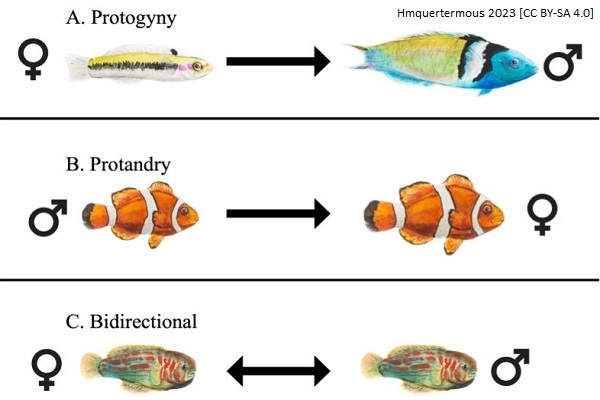
Whatever the case may be, the mottled grey colouration will eventually emerge as the giant grouper enters adulthood. But that doesn’t mean they’ve finished changing, far from it, since giant groupers also engage in protogynous hermaphroditism, meaning that the females (at some point after reaching maturity) can turn into males. It’s an ability that’s shared among the various species of grouper and is surprisingly common among fish in general, though it can go from male to female (protandrous hermaphroditism) instead, depending on the dynamics of the species. For example, going from female to male would suit species where the males need to be large to have even a fighting chance of competing for a mate. But going from male to female might suit other species by allowing the larger females to invest significantly more resources and energy in each batch of young. And in the case of the giant grouper there is the added complication of some males starting out as males straight away, skipping the change altogether. A phenomenon known as diandric protogynous hermaphroditism.

A fairly straightforward representation of different methods of gender change in fish that exhibit sequential hermaphroditism, with protogynous hermaphrodites going from female to male, while protandrous hermaphrodites go from male to female (as opposed to simultaneous hermaphroditism where one is both male and female at the same time). There is still variation and nuance to be found however, with some sequential hermaphrodites being able to go back and forth between genders, while for other it’s a one way process.  

And for giant groupers, there is the matter of diandric protogynous hermaphroditism, where there are two versions (or phenotypes) of a male, those who mature as females and then later transform into males, and those mature as males (skipping the female stage entirely). As opposed to monandric protogynous hermaphroditism, where there is only one version of a male (i.e. the one that matures as a female first).
A few more examples of fish who change genders. Cuckoo wrasse (Labrus mixtus; top left) and blackeye goby (Rhinogobiops nicholsii; left) change from female to male (protogyny) while clownfish (Amphiprion ocellaris; top right) and gilthead bream (Sparus aurata; bottom right) change from male to females (protandry).

Assuming all goes well, and the giant grouper doesn’t starve, get eaten or otherwise dispatched before they reach maturity (in one form or another), they should get the opportunity to breed and pass on their genes to the next generation. But even this biblical act can take an unexpected turn with giant groupers sometimes mating with groupers of other species to produce hybrid offspring. It’s a twist that may occur naturally, in the wild, but it seems to be particularly prevalent in the aquaculture industry, typically with the giant grouper being the father. 

Sometimes, this is achieved by simply introducing the male of one species and the female of another to the same tank and encouraging them to do the deed. Sometimes, our interventions are more clinical, with artificial insemination and cryopreserved (i.e. frozen) sperm being used to achieve the desired result. And sometimes, these hybrids are quite beneficial for the trade into which they were conceived, producing individuals who can grow faster, produce more meat and be more resilient to disease and hypoxia (low oxygen conditions that can occur whilst keeping and transporting live fish) compared to one or both of their parent species. But then there’s the risk of reaping what you sow, as proven by the Hulong hybrid grouper, produced by crossing giant groupers with tiger groupers, who proved resilient enough to become an invasive species in the wild, specifically off the coast of Hainan Island, China.

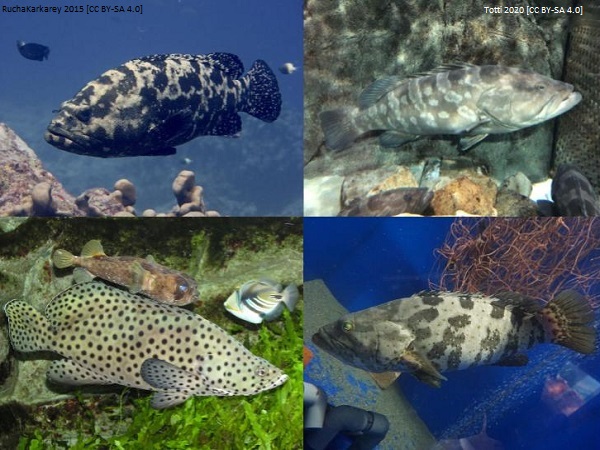
The Tiger grouper (Epinephelus fuscoguttatus; top left), Longtooth grouper (Epinephelus bruneus; top right), Orange-spotted grouper (Epinephelus coioides; bottom right) and Humpback grouper, also known as the Panther grouper (Cromileptes altivelis; bottom left) have all been bred with giant groupers to produce hybrid offspring with varying degrees of success. The most successful arguably being the tiger grouper, also known as the brown marbled grouper, who first produced the Hulong hybrid grouper in 2007 and is thought to account for much of the grouper market in China.

Hybridisation is a curious thing in general, usually producing offspring who are sterile (and thus unable to pass on their genes to the next generation), beset with deformities or other health problems, or were never viable to begin with. So why would giant groupers, or any other fish for that matter, cross that species barrier at all? Perhaps both mother and father don’t realise they’re not of the same species, especially if their species are closely related. Even we have trouble identifying species with absolute certainty (and last I checked, giant groupers don’t have access to binoculars and ID guides). Perhaps the doubts are there during their brief encounter, but they decided to do it anyway. Because what would be the greater risk? Mating with the wrong partner, or rejecting the right one? And in some cases the union can work, perhaps going as far as to kickstart a brand species. 

All things considered, the life of a giant grouper isn’t all about growing big and strong, there are other changes to go through, timings to finesse and decisions to make that could greatly impact how long they survive and what they leave behind once they’ve the exhausted the last of their fleeting moments on planet Earth. Boldness can be dangerous if enacted at the wrong moment, but sometimes playing it safe isn’t an option either.

From a human perspective

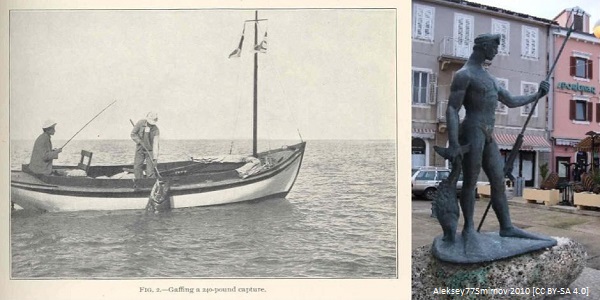
They may not be sharks, but giant groupers are still big, powerful fish that inspire awe in most, if not all people who come across them. Those of a certain mindset would see them as a worthy challenge to be overcome at the end of a fishing rod or a speargun. 

Like it or not, angling and spearfishing have long-standing traditions in some communities.

This was once the case in New South Wales, Australia, where giant groupers were popular targets for anglers and spearfishers until they were listed as a protected species under the Fisheries Management Act 1994. In my experience (such as it is from speaking to a few local anglers) catch-and-release fishing is already pretty common among recreational anglers, but with giant groupers caught in NSW waters, it is a legal requirement. One would imagine the thrill of the chase, and the effort of unhooking such a colossal creature, would be more than enough, as evidenced by their appearance on an episode of Jeremy Wade’s River Monsters. Giant groupers aren’t exactly river fish, nor was it the fish he was after, but I doubt the viewers were complaining.  

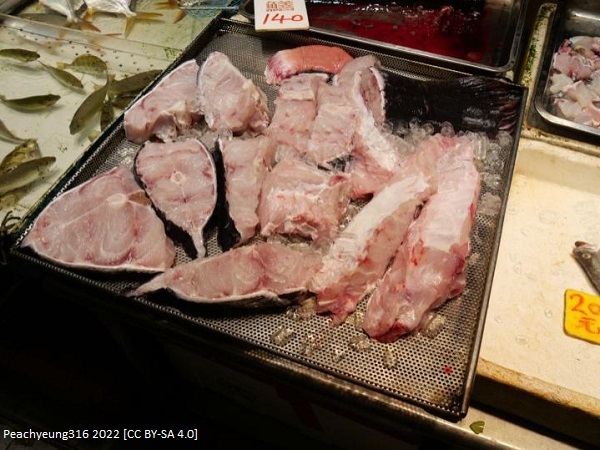
Groupers are also a commercial species, and widely considered to be a good quality fish with Asia being one of their big markets (if not the big market), such as this fresh produce on sale at Yan Oi Market, Hong Kong. But as previously mentioned (when I touched on hybrid groupers), aquaculture plays a significant role in meeting the demand, though seedstock (i.e. fry, fingerlings, juvenile fish) sourced from the wild is also used. 
Still, the hope is that aquaculture will minimise the need to take from wild populations, and therefore reduce the risk of overfishing. The ethics of the practice is another matter however, and one would hope that the floating cages, ponds, live transport vessels, and other set-ups are suitable for them during their farmed lives.

Some claim that giant groupers have got their own back on being hunted and/or handled from time to time. The species has even been implicated in fatal attacks, though as far as I can tell, none of them have been fully documented or confirmed. Physically, they are capable of the act and are reported to be curious of people from time to time, while the similarly large Goliath grouper is known to stalk divers and sometimes attempt (usually unsuccessful) ambushes. And there have been confirmed non-fatal attacks, such as an incident that occurred on New Year’s Eve, 2001, when a giant grouper (believed to be around two metres long and 80 years old) attacked a Swedish diver near the wreck of the steamship Yongala, located 100km southeast of Townsville, Australia. 

It was the kind of rare incident that would inspire debate around the potential cause. For example, the Florida based Marine Safety Group (MSG) suggested, based on what they had seen at dive sites closer to home, that people feeding these large, predatory fish may have been a contributing factor. Although, there was a general code of conduct among the operators who led dive tours to the Yongala wreck that there was to be no feeding of the animals. Maybe there was an operator or two who were secretly breaking that rule, maybe someone was altering the grouper’s behaviour in some other way without realising. Or maybe the grouper was feeling particularly territorial and this particular diver was simply in the wrong place at the wrong time. Whatever the case, you should generally be okay around groupers (and other large reef predators) so long as you stay calm, respect their boundaries and don’t try to force any interactions or unnatural behaviours. And that should include conditioning them (intentionally or otherwise) to expect free handouts.

Trying this with a giant grouper in the wild is highly ill advised.

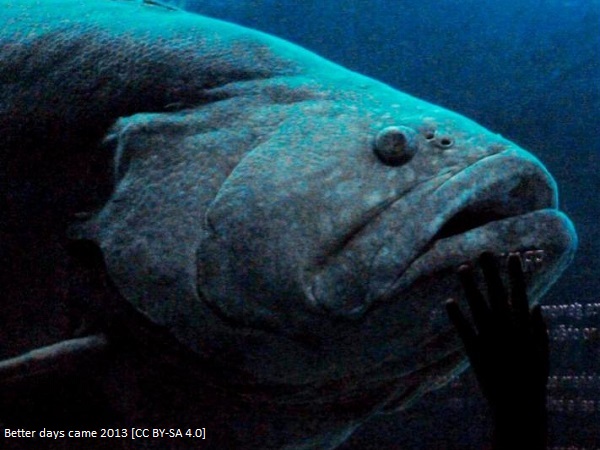
Of course, not all interactions between humans and giant groupers take place in the ocean, or at the end of a line. The latter can also be found behind a thick layer of glass, for groupers are quite popular in public aquariums, with the larger species certainly making their presence known if and when they choose to approach the window. What often surprises visitors, once the shock of their sheer size has passed, is the lack of any attempt to hunt the smaller fish living in the same exhibit. Spoiler alert, aquariums tend to keep large predatory fish well fed, at least well fed enough that they don’t need to hunt, as well as providing the necessary supplements to meet their vitamin and mineral needs. 

And the care that a giant grouper can expect within aquarium waters extends well beyond just feeding them, as demonstrated by the story of ‘Bubba’. First introduced to the Shedd Aquarium in Chicago, USA in 1987, via a large bucket left at reception, the 25cm (10 inch) long female ultimately grew to 1.37 metres, and weighed around 69kg, as well changing gender along the way. If there were any doubts that she (then he) was a hit among visitors, they were firmly smashed by uproar of his temporary move off-display in 1998. But then in 2001, pink pimply growths were noticed on his head which, at first, was mistaken for a bacterial infection. The subsequent course of antibiotics proved ineffective however, with a couple of biopsies revealing he actually had cancer. 

Such a diagnosis would be game over in the wild, but Bubba was in a uniquely fortunate position and by autumn 2002 the veterinarians at the Shedd Aquarium, along with veterinary oncologists from further afield, surgically removed the tumours and administered chemotherapy. So far as is known, he was the first fish to receive a full course of chemotherapy and beat cancer. 

The success was unfortunately short-lived, with the cancer returning by Spring 2003, requiring a more aggressive procedure where bigger chunks of flesh were removed and connective tissue implants were needed to bridge the gaps. It would have taken great skill to perform an operation like this, but even those pioneering surgeons couldn’t get around the impossibility of keeping a dry bandage on a fish. Fortunately, Bubba himself had this covered, producing a natural layer of mucus that coated his entire body and which was swarming with antibodies for fighting infection. And he was able to do this while undergoing more chemotherapy, this time directed around the edges of where the tissue had been removed, to catch any malignant tumour cells that might have survived the purge. It would have been a long, and at times stressful, ordeal, but it gave Bubba an extra three years of life until his sudden passing in 2006 at the age of 24.

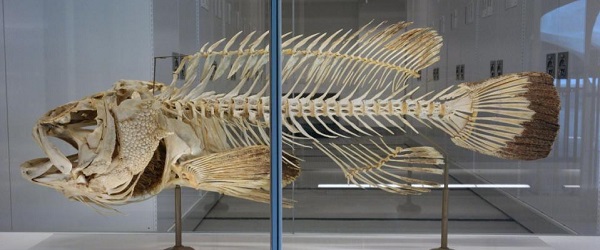
This is not Bubba, but it is the skeleton of giant grouper on display at the American Museum of Natural History, New York. 
Your best bet for seeing Bubba’s actual remains is the Field Museum in Chicago, which has his skeleton as part of their large fish collection as well as cryogenically frozen tissue samples.

It goes without saying that none of this treatment would’ve been available to Bubba in the wild, and it would’ve been more natural to simply allow him to succumb to the disease. Then again, even the largest and best equipped aquariums in the world cannot make the lives of their animals 100% natural. What they can do is provide these animals with suitable food, habitat and stimulation to ensure they can live long, contented lives in an aquarium environment. This would include a ton of intensive research and planning to ensure they can feasibly take on a given animal in the first place, but when it comes to the day-to-day operation, the means of achieving the above can be fairly simple. These include providing different foods on different days (if applicable to their natural diet), appropriate hiding places for cave dwelling animals (e.g. octopuses and conger eels) and novel objects (including toys) for especially inquisitive animals to investigate and interact with. And for the big animals, they may be trained to recognise a given target and associate it with food. For Bubba, Shedd Aquarium used a blue triangle, while at the aquarium where I work (which I appreciate can make me seem a little biased) we’ve used yellow balls on sticks and black and white patterns painted on boards. It’s a practice that ensures the big fish do get their food and don’t start snacking on their smaller tank mates instead. It also creates opportunities for aquarium staff to conduct health checks, without chasing the animals and stressing them out, and to make the animals work for their food by chasing the target, thus adding another level of stimulation. 

I should say, as a general disclaimer, that when it comes to big animals there are species who cannot adapt to living in an aquarium and so should not be kept in one. In particular, very large animals who migrate over vast distances, such as whales, dolphins and some sharks, need more space and social contact than an aquarium tank can realistically provide. And unfortunately, despite the high level of care they provided for Bubba, Shedd Aquarium, by keeping beluga whales and Pacific white-sided dolphins, has yet to move away from this particular ethical minefield. 

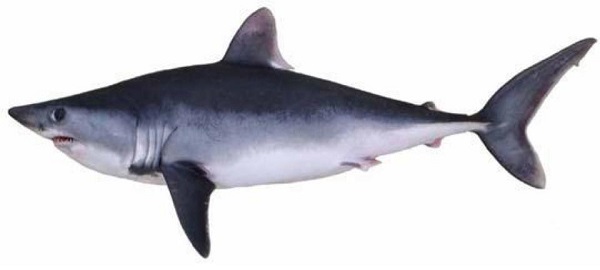
But where it is possible, and ethical, to keep large and impressive sea creatures in an aquarium environment, there is little doubt about the huge role they play in introducing the general public to the marine world. Mainly because it’s a world that is difficult to access in the ocean itself, given that many creatures (including big fish like Porbeagle sharks) would be compelled to hide, swim or crawl away if they saw a human swimming their way. And that’s assuming you know where to find them in the first place. Don’t get me wrong, it can be done, and the reward of experiencing the ocean’s marvels firsthand, and in their own domain, is second to none. But frankly, going to see them in an aquarium is so much easier and still brings about so much joy, especially to young children (see Starfish article).

So much for keeping the focus away from sharks. Seriously though, these porbeagle sharks (Lamna nasus) are big, powerful and the (smaller) cousins of great white sharks. Yet they are known for being shy around people and skittish when snorkelers or divers try to slip in for a closer look and a photo in the wild. They also migrate over vast distances and so are unlikely to be suitable for an aquarium.

Again, this is dependent on the animals being properly cared for, which sometimes requires medical interventions that would not happen in the wild. It also makes practical sense to keep these animals happy, healthy and alive for as long as is reasonably possible (without denying them euthaniasia if it’s the kindest thing to do) so that fewer of them need to be removed from the wild. Especially with species who are difficult, if not impossible to breed in an aquarium environment for one reason or another.

On the public engagement side, the story of a popular resident recovering from a nasty injury, or a serious illness, is a great story to tell and one that often makes the animal more relatable with visitors and animal enthusiasts further afield. In the case of Bubba the giant grouper, his brush with cancer made him an inspiration to adults and children (especially children) who had gone through, or were going through the same difficult journey. This led to numerous phone calls from patients and their families to ask how Bubba was doing and even a recognition tile at Hope Children’s Hospital in Oak Lawn, Illinois. 

And this particular giant grouper is just one of many prime examples of how meeting marine life, even in an aquarium environment, can really build that human connection. In my local aquarium alone, there is a large humphead wrasse who likes to lurk from behind rocks and generally people watch, a conger eel who sleeps upside down in her cave and an adorable small-spotted cat shark who turned two years old on the day this very article was published. Long story short, the more you become acquainted with these animals, the more you realise that they are not just a member of their species, they are individuals with their own quirks and personalities. Maybe not exactly the same way we do, but close enough to be worth certain considerations.

Thanks for reading

Sources

McGrouther. 2021. Queensland Groper, Epinephelus lanceolatus (Bloch, 1790). https://australian.museum/learn/animals/fishes/queensland-groper-epinephelus-lanceolatus-bloch-1790/. Last accessed 19/11/2025

Bray. 2021. Queensland Groper, Epinephelus lanceolatus (Bloch 1790). https://fishesofaustralia.net.au/home/species/4672. Last accessed 19/11/2025

FishBase. Epinephelus lanceolatus (Bloch, 1790)

Giant grouper. https://fishbase.se/summary/6468. Last accessed 19/11/2025

New South Wales (NSW) Government. Giant Queensland groper. https://www.dpi.nsw.gov.au/fishing/closures/identifying/marine-or-estuarine-species/giant-queensland-groper. Last accessed 19/11/2025

Nausicaá Boulogne-sur-mer. Giant Grouper. https://www.nausicaa.fr/en/my-visit/animals/giant-grouper. Last accessed 19/11/2025

Aquarium of the Pacific. Queensland Grouper Epinephelus lanceolatus. https://www.aquariumofpacific.org/onlinelearningcenter/species/queensland_grouper. Last accessed 19/11/2025

Myoung et al. 2013. First Record of the Giant Grouper Epinephelus lanceolatus (Perciformes: Serranidae: Epinephelinae) from Jeju Island, South Korea

Brewster et al. 2023. Seasonal Dynamics and Environmental Drivers of Goliath Grouper (Epinephelus itajara) Sound Production

Singapore Oceanarium. Giant Grouper Epinephelus lanceolatus. https://www.singaporeoceanarium.com/en/animals-habitats/animals-a-z/giant-grouper.html. Last accessed 19/11/2025

Science Source. Wrasse cleaning the teeth of a Grouper – Image. https://www.sciencesource.com/1145494-wrasse-cleaning-the-teeth-of-a-grouper-stock-image-royalty-free.html. Last accessed 25/10/2025

Guy. 2016. On Certain Mental Tests, the Tiny Cleaner Wrasse Outperforms Chimps. https://oceana.org/blog/certain-mental-tests-tiny-cleaner-wrasse-outperforms-chimps/. Last accessed 19/11/2025

Hugh. 2019. Cleaner Wrasse “Clean” a Grouper. https://www.aquariumofpacific.org/blogs/comments/cleaner_wrasse_clean_a_grouper. Last accessed 19/11/2025

Hseu et al. 2004. Morphometric model and laboratory analysis of intracohort cannibalism in giant grouper Epinephelus lanceolatus fry

Spencer. 2021. How Animals Mimic Each Other to Survive and Thrive. https://oceanconservancy.org/blog/2021/03/15/mimicry/. Last accessed 08/11/2025

FishBase. Calloplesiops altivelis (Steindachner, 1903)

Comet. https://www.fishbase.se/summary/Calloplesiops-altivelis.html. Last accessed 08/11/2025

Shark Trust. 2020. CREATURE FEATURE: Zebra Shark. https://www.sharktrust.org/blog/creature-feature-zebra-shark. Last accessed 22/10/2025

McGrouther. 2019. Spotted Sweetlips, Plectorhinchus chaetodonoides Lacépède, 1801. https://australian.museum/learn/animals/fishes/spotted-sweetlips-plectorhinchus-chaetodonoides/. Last accessed 08/11/2025

Bray. 2020. Round Batfish, Platax orbicularis (Forsskål 1775). https://fishesofaustralia.net.au/home/species/2208. Last accessed 08/11/2025

Andrew Mitchell. 2017. MangroveLeafFish. https://www.youtube.com/watch?v=3pS63liVRyc. Last accessed 08/11/2025

Palma et al. 2019. Reproductive development of the threatened giant grouper Epinephelus lanceolatus

University of the Sunshine Coast. 2021. Study finds surprising sex change secrets of giant grouper. https://www.usc.edu.au/about/unisc-news/news-archive/2021/march/study-finds-surprising-sex-change-secrets-of-giant-grouper. Last accessed 08/11/2025

Florida Museum. 2025. Goliath Grouper. https://www.floridamuseum.ufl.edu/100-years/object/goliath-grouper/. Last accessed 08/11/2025

Chen et al. 2020. A highly efficient method of inducing sex change using social control in the protogynous orange-spotted grouper (Epinephelus coioides)

Quertermous and Gemmell. 2024. Sex change in fish

The Wildlife Trusts. Cuckoo wrasse. https://www.wildlifetrusts.org/wildlife-explorer/marine/fish-including-sharks-skates-and-rays/cuckoo-wrasse. Last accessed 25/10/2025

FishBase. Rhinogobiops nicholsii (Bean, 1882) Blackeye goby. https://fishbase.se/summary/3847. Last accessed 25/10/2025

Casas et al. 2016. Sex change in clownfish: molecular insights from transcriptome analysis

FishBase. Sparus aurata Linnaeus, 1758 Gilthead seabream. https://www.fishbase.se/summary/Sparus-aurata.html. Last accessed 25/10/2025

Zhang et al. 2024. The Hulong hybrid grouper (Epinephelus fuscoguttatus♀×Epinephelus lanceolatus♂) has invaded the coastal waters of Hainan Island, China

Shapawi et al. 2018. Nutrition, growth and resilience of tiger grouper (Epinephelus fuscoguttatus) × giant Grouper (Epinephelus lanceolatus) hybrid‐ a review

Kiriyakit et al. 2011. Successful hybridization of groupers (Epinephelus coioides x Epinephelus lanceolatus) using cryopreserved sperm

Huang et al. 2014. Characterization of triploid hybrid groupers from interspecies hybridization (Epinephelus coioides ♀ × Epinephelus lanceolatus ♂)

Masuma and Aoki. 2023. Maturation in a hybrid grouper, Kue-Tama, a cross between female longtooth grouper, Epinephelus bruneus, and male giant grouper, E. lanceolatus

Gong et al. 2025. Development and characterization of a novel intergeneric hybrid grouper (Cromileptes altivelis♀× Epinephelus lanceolatus♂)

Wang et al. 2024. Acute hypoxia and reoxygenation alters glucose and lipid metabolic patterns in Hulong hybrid grouper (Epinephelus fuscoguttatus♀× E. lanceolatus♂)

Yang et al. 2023. Assembly of genome and resequencing provide insights into genetic differentiation between parents of Hulong hybrid grouper (Epinephelus fuscoguttatus♀ × E. lanceolatus ♂) 

River Monsters™. 2024. Jeremy Wade catches a HUGE 250lbs+ Queensland GROUPER by accident | River Monsters. https://www.youtube.com/watch?v=TFvQcRXNDJM. Last accessed 28/11/2025

Glamuzina and Rimmer. 2002. Grouper aquaculture world status and perspectives

Southeast Asian Fisheries Department Centre / Aquaculture Department (SEAFDEC/AQD). Quality seed for sustainable aquaculture. https://www.seafdec.org.ph/thematic-areas/quality-seed-for-sustainable-aquaculture/. Last accessed 28/11/2025

Russo. 2014. Think Sharks Are Scary? This Goliath Grouper Attack Is Terrifying. https://www.huffpost.com/entry/goliath-grouper-attack_n_5632612. Last accessed 28/11/2025

CYBER DIVER News Network. 2002. Did fish feeding cause recent shark, grouper attacks?. https://web.archive.org/web/20021026164337/http://www.cdnn.info/eco/e020104/e020104.html. Last accessed 25/10/2025

Troy Mayne. 2016. Queensland Groper Attack on the Yongala Wreck, Great Barrier Reef. https://www.youtube.com/watch?v=hM3XyuT8zBs. Last accessed 28/11/2025

Underwater Times. 2006. ‘Bubba,’ Famed Cancer-surviving Grouper, R.I.P.; ‘Overcame Some Incredible Odds’. https://www.underwatertimes.com/news.php?article_id=71021389645. Last accessed 04/12/2025

Gross. 2025. Gigantic “super grouper” named Bubba becomes first fish to survive chemotherapy. https://www.guinnessworldrecords.com/news/2025/3/gigantic-super-grouper-named-bubba-becomes-first-fish-to-survive-chemotherapy. Last accessed 04/12/2025

Shedd Aquarium. 2006. Bubba: Super Grouper. https://web.archive.org/web/20060930110139/http://www.sheddaquarium.org/bubbasupergrouper.html. Last accessed 04/12/2025

Shedd Aquarium. Animals. https://www.sheddaquarium.org/animals. Last accessed 04/12/2025

Cameron et al. 2018. Transatlantic movement in porbeagle sharks, Lamna nasus

Image sources

Ginkgo100. 2006. [CC BY-SA 3.0 (http://creativecommons.org/licenses/by-sa/3.0/)]. https://commons.wikimedia.org/wiki/File:GiantGrouper018.JPG

Rob and Stephanie Levy. 2008. [CC BY 2.0 (https://creativecommons.org/licenses/by/2.0)]. https://commons.wikimedia.org/wiki/File:Pharynx_and_Gill_raker_of_Epinephelus_coioides.jpg

Elias Levy. 2012. [CC BY 2.0 (https://creativecommons.org/licenses/by/2.0)]. https://commons.wikimedia.org/wiki/File:Bluestreak_Cleaner_Wrasse_(6997583331).jpg

Citron. 2014. [CC-BY-SA-3.0 (https://creativecommons.org/licenses/by-sa/3.0/)]. https://commons.wikimedia.org/wiki/File:Epinephelus_lanceolatus_young.jpg

K. Picard, M. Stowar, N. Roberts, J. Siwabessy, M.A. Abdul Wahab, R. Galaiduk, K. Miller, S. Nichol. 2021. [CC BY 4.0 (https://creativecommons.org/licenses/by/4.0)]. https://commons.wikimedia.org/wiki/File:Epinephelus_lanceolatus_Money_ShoalCaptureFig32Picard.png

Gp258. 2016. [CC BY-SA 4.0 (https://creativecommons.org/licenses/by-sa/4.0)]. https://commons.wikimedia.org/wiki/File:Zebra_Shark_Baby.jpeg

Longdongdiver (Vincent C. Chen). 2015. [CC BY-SA 4.0 (https://creativecommons.org/licenses/by-sa/4.0)]. https://commons.wikimedia.org/wiki/File:Calloplesiops_altivelis_%E7%91%B0%E9%BA%97%E4%B8%83%E5%A4%95%E9%AD%9A.jpg

Rickard Zerpe. 2017. [CC BY 2.0 (https://creativecommons.org/licenses/by/2.0)]. https://commons.wikimedia.org/wiki/File:Harlequin_sweetlips_juvenile_(Plectorhinchus_chaetodonoides)_(35635869076).jpg

Izuzuki. 2005. [CC BY-SA 2.5 (https://creativecommons.org/licenses/by-sa/2.5)]. https://commons.wikimedia.org/wiki/File:NiseKGP.jpg

Chaloklum Diving. 2014. [CC BY 3.0 (https://creativecommons.org/licenses/by/3.0)]. https://commons.wikimedia.org/wiki/File:Platax_orbicularis_juvenil.jpg

Hmquertermous. 2023. [CC BY-SA 4.0 (https://creativecommons.org/licenses/by-sa/4.0)]. https://commons.wikimedia.org/wiki/File:Sequential_hermaphroditism_systems.png

Libbykeatley. 2024. [CC BY 4.0 (https://creativecommons.org/licenses/by/4.0)]. https://commons.wikimedia.org/wiki/File:Labrus_mixtus_N_Ireland_male.jpg

Brian Gratwicke. 2009. [CC BY 2.0 (https://creativecommons.org/licenses/by/2.0)]. https://commons.wikimedia.org/wiki/File:Rhinogobiops_nicholsii;_Blackeye_goby.jpg

Jenny from Taipei. 2006. [CC BY 2.0 (https://creativecommons.org/licenses/by/2.0)]. https://commons.wikimedia.org/wiki/File:Clownfish_(Amphiprion_ocellaris).jpg

Roberto Pillon. 2011. [CC BY 3.0 (https://creativecommons.org/licenses/by/3.0)]. https://commons.wikimedia.org/wiki/File:Sparus_aurata_Sardegna.jpg

RuchaKarkarey. 2015. [CC BY-SA 4.0 (https://creativecommons.org/licenses/by-sa/4.0)]. https://commons.wikimedia.org/wiki/File:Brown_marbled_grouper_(Epinephelus_fuscoguttatus)_Lakshadweep.jpg

Totti. 2020. [CC BY-SA 4.0 (https://creativecommons.org/licenses/by-sa/4.0)]. https://commons.wikimedia.org/wiki/File:Epinephelus_bruneus_AQUAS.jpg

Aleksey77Smirnov. 2010. [CC BY-SA 4.0 (https://creativecommons.org/licenses/by-sa/4.0)]. https://commons.wikimedia.org/wiki/File:SpearfisherMonument.jpg

Peachyeung316. 2022. [CC BY-SA 4.0 (https://creativecommons.org/licenses/by-sa/4.0)]. https://commons.wikimedia.org/wiki/File:A_Fresh_Giant_grouper_brindle_bass_on_the_Seafood_Shop_in_Yan_Oi_Market.jpg

Better days came. 2013. [CC BY-SA 4.0 (https://creativecommons.org/licenses/by-sa/4.0)]. https://commons.wikimedia.org/wiki/File:Queensland_grouper.jpg

All other images are public domain and do not require attribution,

Maerl- Living Labyrinths

by Matthew Norton

In the ocean, things are not always as they appear to be. For example, corals can easily be mistaken for some kind of hardened plant or seaweed, rather than the colony of polyps (tiny animals related to jellyfish and anemones) they actually are. And it’s easily done, given how each colony cements itself to one spot and gets most of its food from sunlight via photosynthesis, albeit through the microscopic algae (i.e. zooxanthellae) they keep. But there are times when nature pulls the old switcheroo and gives us an actual seaweed that looks like coral. Such is the case with the corraline red seaweeds commonly known as maerl. 

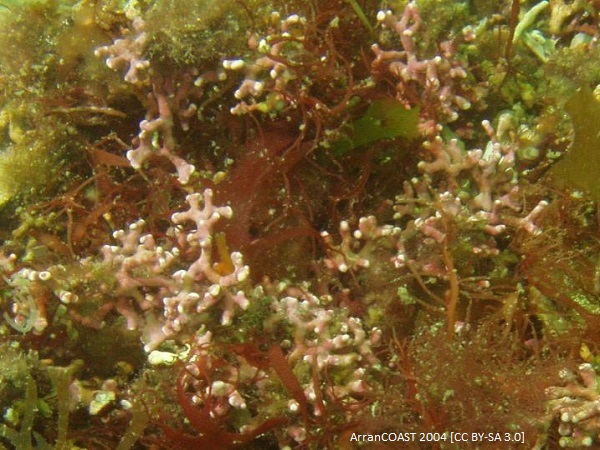
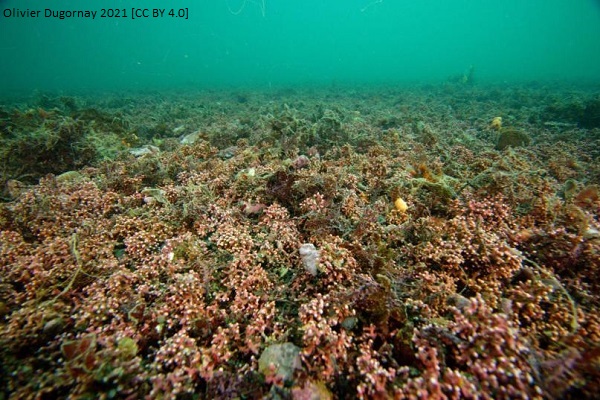
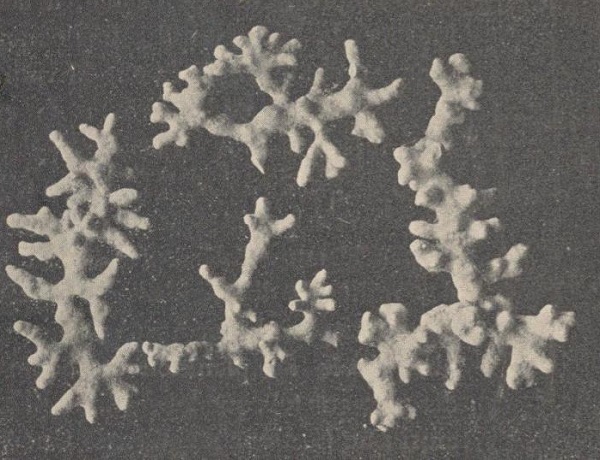
A little bit of maerl on the seafloor, mixed in with other seaweeds.
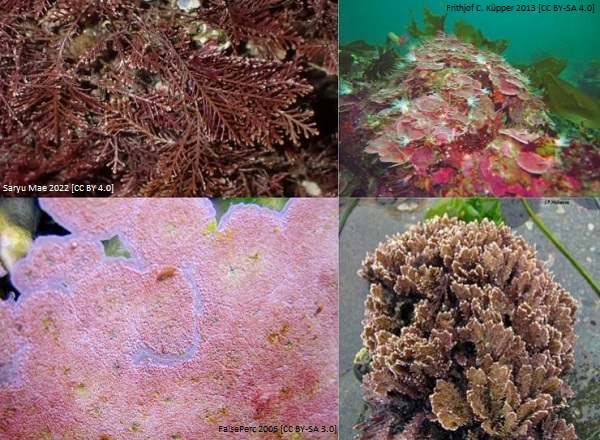
Some other forms of coralline red algae.

There are a number of species that come referred to as maerl, including (but not limited to)  Phymatolithon calcareum and Lithothamnion corallioide. Broadly speaking, they are pink-purple in colour and start out as unattached nodules (or crusts), each adorned with an outer layer of calcium carbonate, just like a coral’s exoskeleton, as they roll about like a tumbleweed. And assuming they survive this literally turbulent time, these nodules will eventually grow too heavy for the currents and waves to throw about, allowing them to settle and possibly form part of a maerl bed (such aggregations may also be called “rhodoliths”). Kind of like a dense, but not too dense carpet of living gravel on a typically soft sediment (varying from mud to coarse sand).

The exact density of a particular maerl bed can depend greatly on local conditions, such as thicker beds being the ones to survive and develop in areas exposed to stronger currents and/or wave action. While sheltered areas favour the thinner maerl beds that are more likely to play host with epiphytic algae (i.e. a seaweed that grows on another seaweed). It’s even been suggested that the shape, structure and surface features of constituent maerl nodules could be a handy indicator of what the water movements are like for a given stretch of coastline over a long period of time. Even the most dedicated researchers can’t take measurements continuously 24/7. It is worth mentioning however, that a bare minimum of water movement is required to keep silt from building and smothering the maerl bed.

Assuming that conditions are adequate and the site remains unaffected by disaster or major disturbance, a maerl bed can grow into a highly complex 3D structure, with living maerl growing on the foundations of their dead, but still hard and chalky predecessors. And with the little and (often) difficult to reach spaces between their interlocking thalli (the parts of the nodules that look like twigs) the maerl effectively creates a living maze in which a whole assortment of sea creatures can live on or within. These include (but again, are not limited to) bivalve molluscs, worms, anemones, urchins, sea cucumbers, brittle stars and octopus. 

Just imagine all the little critters who could be hiding under all that. And not just in this layer of living maerl, but all the chambers and tight passageways left behind in the dead, but still structurally sound foundations.
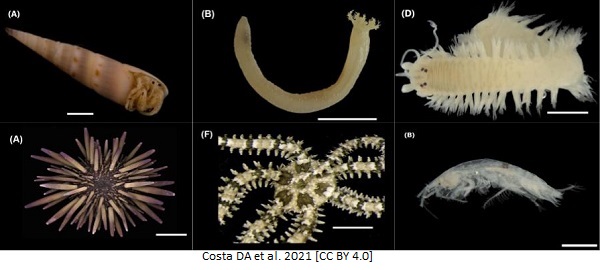
An extensive survey of a maerl off the northeast coast of Brazil yielded a vast diversity of invertebrates, including (but not nearly limited to; clockwise from top left) hermit crabs, sea cucumbers, polychaete worms, amphipods, brittle stars and sea urchins.

Sometimes, these maerl bed residents will remain small and in need of these hiding places for their whole lives. Sometimes, they simply need a safe refuge during their early years, until they are big and strong enough to take on the big wide world. In the case of the latter, maerl has proven useful for some commercial species, such as queen scallops, soft clams and even gadoid fish like Atlantic cod, pollock and saithe. Maerl isn’t necessarily the only nursery habitat these species would rely on, but would you gamble away your fish fingers or tasty scallops (hopefully caught sustainably) just to find out? 

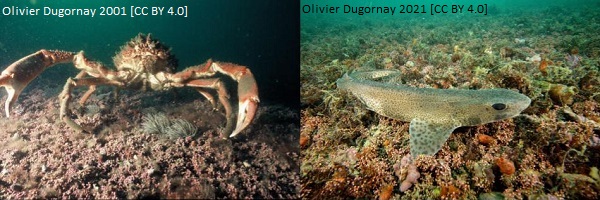
As well as concealing smaller creatures and providing suitable nursery habitats, maerl beds can also play host to some substantial sea creatures. Such as spider crabs (left) and small spotted catsharks (right).

But as effective as maerl is at providing these diverse habitats and eking out a living for itself, generating its food through photosynthesis and absorbing the necessary minerals from the surrounding water, it’s all achieved very slowly. Different sources quote different figures, but the growth rate usually averages out somewhere between 0.4-1mm per year. These growth increments are so small that it’s sometimes necessary to use high-tech solutions like scanning electron microscopes and Alizarin staining (commonly used to detect bone growth and calcium deposits) to measure them accurately. And even then, the result can fluctuate wildly depending on environmental factors, especially temperature and light levels, which themselves can fluctuate on a variety of timescales (e.g. seasonal vs. daily variations). 

On the flip side, the slow growth of maerl is matched by a long lifespan, with individuals recorded to have lived over 100 years while whole beds have been dated back thousands of years. For example, there are maerl beds off the coast of Brittany, France that are thought to be around 5,500 years old. A testament to the slow and steady lifestyle to which they are very much committed, and which also enhances their status as a carbon sink. All that carbon that today’s maerl is incorporating into their calcium carbonate exoskeletons, and their soft tissue, could be prevented from re-entering the water (and the atmosphere) for a very long time. 

Unfortunately, while the adaptations of maerl are effective against the challenges of the natural world, their resilience against human interventions is far from assured. It’s an issue that they’ve been dealing with for some time, with maerl being directly harvested for fertilisers and soil conditioners for centuries. Even Pliny the Elder (the Roman scholar, author and naturalist) observed Celtic people using ‘Marga’ to enrich their soils. 

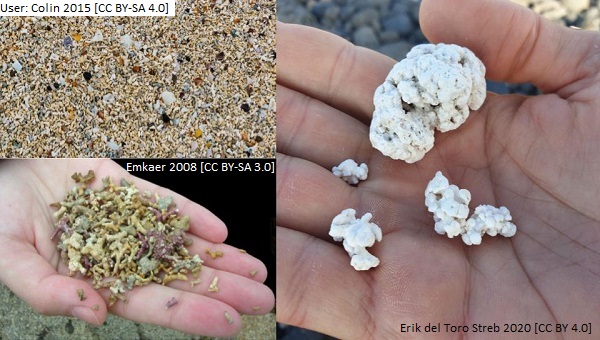
Some assorted fragments of maerl. As well as being harvested for various uses, it’s thought that many of white sandy beaches one can find around the world (e.g. Scotland) are made up of chunks that have been pulverised by time and erosion. 

In more recent years, maerl has been used in the making of cosmetics (e.g. GELYOL® P.C. 25) for “stimulating skin vitality and energy” among other things, as well as a supplement in horse feeds to prevent gastric ulcers. But given their incredibly slow growth rate, the exploitation of maerl is far from sustainable, especially when it’s dredged up from the seafloor, leaving behind only a few smashed up pieces and a habitat that will remain damaged for a long time. Even the maerl beds not directly caught in a dredge’s path can be impacted by all the sediment (sand, mud, silt etc) thrown up by these kinds of fishing gear. Whether its suspended in the water, or blanketing the maerl, that sediment will obstruct much of the light attempting to pass through it. A big problem for seaweeds who need that light to photosynthesise. 

Worse still, any organic material (e.g. faecal matter, bits of dead sea creature) dragged out of the sediment, and then decomposed by the relevant microorganisms, can bring down the local oxygen concentration. As can certain types of pollution, such as organic pollution from sewage pipes and fish farms as well as fertilisers from farms further inland, which runoff into rivers and then later into the sea. The latter causes a phenomenon called ‘eutrophication’, where the sudden upsurge of nutrients can drive an equally abrupt bloom of phytoplankton (microscopic algae). This would initially drive up the oxygen concentration as these phytoplankton photosynthesise, until much of the bloom dies, sinks and decomposes, sucking away that precious oxygen for habitats nearer the seafloor (such as maerl beds).

On a positive note, maerl is generally found all over the world, from the tropics to the polar regions and down to around 270m below the ocean surface (if the water above is clear enough), so there may very well be pristine beds that remain relatively untouched to this day. And as well as reproducing in the traditional sense, they can also (at least to a moderate extent) reproduce via fragmentation, with each snapped off piece having a chance at growing and beginning anew. 

But these advantages have their limits, including the limited distributions of certain species of maerl, our aggressive tendencies towards seeking out new resources wherever we can get them, and the global effects of climate change and plastic pollution, which has proven to permeate into areas that few humans have seen with their own eyes. The ocean, and nature as a whole, has the capacity to withstand the damage we inflict upon its habitats and ecosystems to an extent, But it can’t hold out forever. 

From a human perspective

“Ocean: With David Attenborough” hit cinemas earlier this year, drawing attention to the beautiful wonders of the undersea world and how threatened they are from the raw and reckless destruction of unsustainable fishing practices. The bottom trawling scene (https://www.youtube.com/watch?v=IzG9AwlypaY) was particularly disturbing, like something out of a brutal disaster film. 

But there was also hope in those 95 minutes of screen time, proof that the ocean can recover if we give a chance to do so. Marine protected areas (MPAs), spaces where fishing and other potentially damaging activities are restricted, were regularly cited as a particularly effective tool for managing our seas. As evidenced by a number of case studies and guest narrators, including Don MacNeish, co-founder of the Community of Arran Seabed Trust (COAST), a charity that played a key role in establishing the MPA that covers the south side of Isle of the Arran in Scotland.

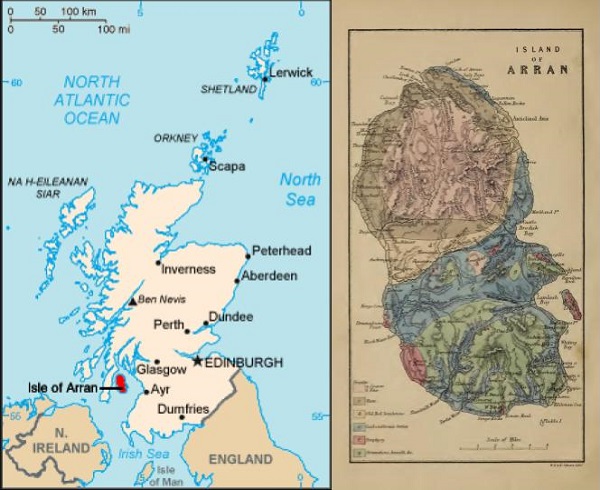
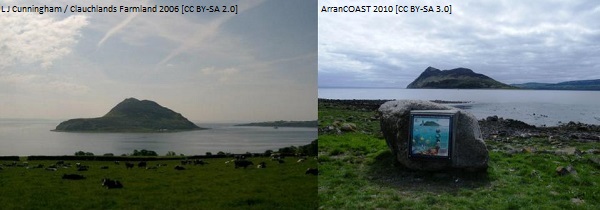
The Isle of Arran’s location off the west coast of Scotland (left) and a geological survey of map of Arran published in 1859 (right).
The South Arran MPA forms a kind of semicircle around (as the name suggests) the southern of the island from (approximately) King’s Caves on the western side, all the way to Corriegills on the eastern shore. 

Check out https://www.arrancoast.com/south-arran-mpa/ for a more detailed representation.

What does this have to do with maerl you may ask? Well, before the South Arran MPA (designated in 2014; legally enforced from 2016), there was the Lamlash Bay No Take Zone (NTZ). Established in 2008 and covering an area of 2.67km², it offers the highest form of protection where (as the name suggests) no sea life can be taken by any method. It also contains one of the largest maerl beds in Scotland, providing a critical habitat for dogfish, king scallops, queen scallops, crabs, starfish, flatfish, sea squirts, brittle stars and so on. The logo for COAST even features a piece of maerl (https://www.arrancoast.com/), demonstrating its continued importance in their efforts to protect and celebrate the island’s waters. 

Butt hasn’t always been smooth sailing for COAST. Originally formed by Don MacNeish and Howard Wood OBE in 1995, it was a long and hard fought campaign to get that NTZ. The determination was there however, borne from their firsthand experience of diving around Arran and witnessing the deterioration of their local seas. Particularly from the damage inflicted by mobile fishing gear like trawls and scallop dredges, along with the dwindling abundance of plaice, sole, rays and other fish that were once abundant on the seafloor. Worse still, the Lamlash Sea Angling festival, once a renowned annual event, was ultimately cancelled in 1994 due to the abysmal lack of fish. Clearly, something had to be done. 

Alas, the concerns of two well informed divers are unlikely to convince a government, or any other legal body, to take effective action (no matter how often we wish this was the case). Howard and Don needed support and lots of it, so they adopted a bottom-up approach to their campaign, using those early years to engage with local groups and residents on the island. To make their case they used (among other things) old fishing photos to demonstrate the bountiful catches that anglers could achieve 10-15 earlier, as well as their own photos of the seabed to prove what was left to protect. This all led to the critical step of gathering all the local Arran fishermen at a pub in 1998 to finalise the exact location of their proposed NTZ.   

From this strong, grassroots foundation, COAST was able to go forth and correspond with the relevant government agencies and gradually build up political support from further afield. A daunting task for sure, but the idea was not entirely without precedent. A few years before COAST was officially founded, Don travelled to New Zealand and met Dr. Bill Ballantine (1937-2015), who tirelessly campaigned for a series of marine reserves within the nation’s waters. Ultimately, he played a key role in developing the Marine Reserves Act 1971, which created 44 such reserves (all of them NTZs). Needless to say, Dr. Ballantine’s efforts had a profound effect on both Howard and Don, but the gruelling 12 years of bureaucracy clearly shows what one can expect from such campaigns. The man himself once compared the process to being a drunk trying to open a locked door: “You have to be at the right door, and be holding the right key, but beyond that it’s just persistence.”

This was certainly the case for Howard, Don and everyone else involved with COAST in its early years. The political will from Scottish Natural Heritage (now NatureScot) was somewhat lacking at the time (particularly after the disastrous Loch Sween MPA proposal) and the influence of large scale fisheries from further afield posed a significant challenge. Some, like the Southwest Static Gear Association (CSSGA), who represent static gear fishermen (e.g. those who use creel pots) were all for the NTZ. But the Clyde Fishermen’s Association (CFA), who represented mobile gear fishermen (e.g. trawlers and dredgers) were opposed to the idea. They would sometimes argue that local communities were (at best) minority stakeholders when it came to the sea and would ‘drag their heels’ during many of the discussions held with COAST.

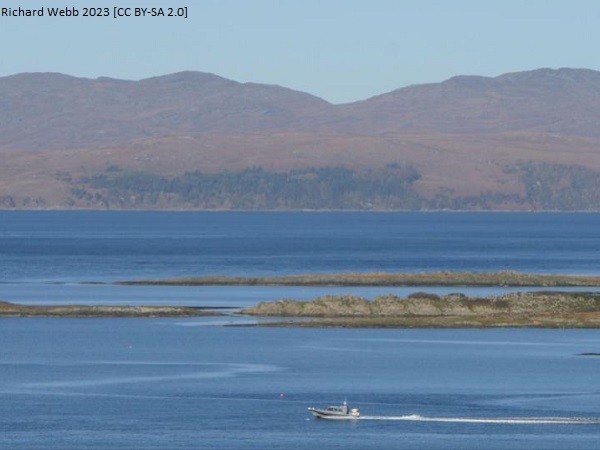
Loch Sween, a beautiful sea loch located near the town of Lochgilphead on the west coast of Scottish mainland (albeit one of the more ‘sticky out’ bits of the mainland) and just north of the Isle of Arran. In 1990, there was an attempt to establish a marine protected area by Nature Conservancy Council (NCC) and Scottish Natural Heritage (now NatureScot), in which all fishing (including creel pots) would be prohibited, except that of migrating salmonid fish. Similar restrictions of fish farming were also planned, with existing leases set to be honoured but not renewed. 
But their failure to properly consult local stakeholders early in the planning stage, along with lack of compensation for the income that would be lost, led to a strong pushback. The benefits of the MPA for tourism and sustainable fishing were said to be explained in a broad sense, but the aforementioned lack of consultation had already doomed the proposal. 
In 2014, the loch was designated as a Nature Conservation MPA, but the first attempt stands as a perfect example of how not to do it.

The people of the CFA may have had the livelihoods to consider, it should be noted that the Firth of Clyde (not just the waters around the Isle of Arran) was in dire state. The commercial fish stocks, from species such as cod, haddock and hake, had been declining from the 1980s-early 1990s, with significant landings of whitefish in general ceasing after 2003. With herring stocks (which had sustained communities in the area since the 15th century) not doing much better, many fisheries resorted to trawling for Nephrops prawns (the kind that go into making scampi). 

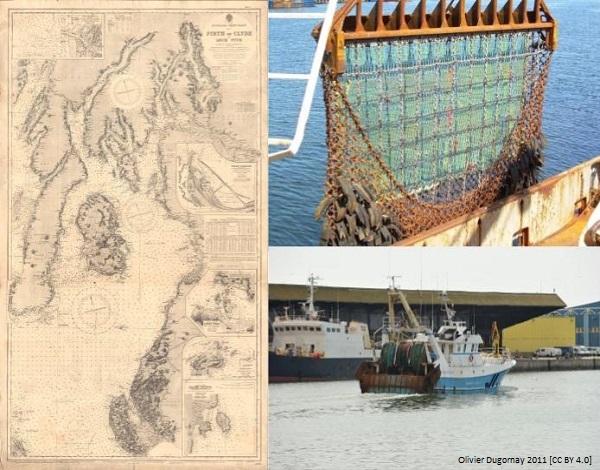
The Firth of Clyde (as per an admiralty chart published in 1869; left) was once a highly productive fishing area, until we got too good at it and developed tools and machines that were too effective to exploit the stocks sustainably. 
While the signs of serious declines were noted from the 1980s, it seems the exact opposite of responsible action was taken at the time, with a previous ban on trawling within three nautical miles of the shore being lifted in 1984. Fortunately, more recent efforts have been put in place to at least give the Firth of Clyde a fighting chance of thriving again, such as the eventual banning of Scallop dredgers (top right) and trawlers (bottom right) in 2022 and a closure of cod fishing during the spawning season in 2024, and then again in 2025.
Naturally, there were going to be critics of such measures, especially among local fishing communities. But the Firth of Clyde is often regarded as one of the most heavily impacted marine environments by human action in the world, with some dramatically suggesting the area had undergone an “Ecological Meltdown”. What else but dramatic (if painful) measures could hope to bring it all back?

Despite all the hurdles, COAST continued campaigning for the NTZ, engaging with policy makers, building up their memberships, strengthening the proposal with rewrite after rewrite and recording all the habitats and sea creatures that were there to be found in Lamlash Bay. The latter provided particularly useful evidence during a 2004 campaign against plans by Scottish Water to install a sewage pipe that would discharge its effluent straight into Lamlash Bay, and into the path of maerl beds that COAST were trying to protect. The eventual decision to reroute the pipe was the organisation’s first big win, and from there they kept going, and going, and going until the Lamlash Bay NTZ was finally established in 2008. 

Looking out from this northern shore Lamlash bay to Holy Isle in the distance gives you a pretty good idea of the stretch of water that the Lamlash Bay NTZ covers. It didn’t cover the whole of the Lamlash Bay, as was hoped for in the original proposal, but it was an incredible achievement nonetheless.
Check out https://www.arrancoast.com/no-take-zone/ for a more accurate representation.

That was a very, very brief summary of the events that led to the Lamlash Bay NTZ, but there is a full, detailed account on the official COAST website: The Lamlash Bay No-Take Zone: A Community Designation. Be warned though, it is a long read which perfectly reflects the long and frustrating process they went through (as previously mentioned). But from there COAST really did go from strength to strength, with the introduction of the wider South Arran MPA and then, in the summer of 2018, the opening of the COAST Discovery Centre in Lamlash. Which (without blowing my horn too much) is where I came in. 

It was the first volunteering opportunity I’d landed since finishing university the previous year (and working in a warehouse so that I actually had some money in my bank account), my first chance to gain some real world experience in marine conservation. Even before the centre was fully opened to the public, there was plenty to do, from generating website content about the sea creatures around Arran to helping set up the mobile aquarium tank that would become the centrepiece of the small, but effective exhibition space. All while facilitating the building’s previous function as an outside tennis court, co-organising an fundraising art exhibition and rockpooling with visiting school groups. But naturally, things got more lively once the centre was open and the summer holidays were in full swing, with regular day-to-day interactions with visitors. These kinds of engagement are undoubtedly important, not just for the sake of doubling down on the community focus that underpinned COAST’s prior successes, but also for securing the future of Arran’s seas. The NTZ and MPA were firmly established, but that didn’t mean the job was done. 

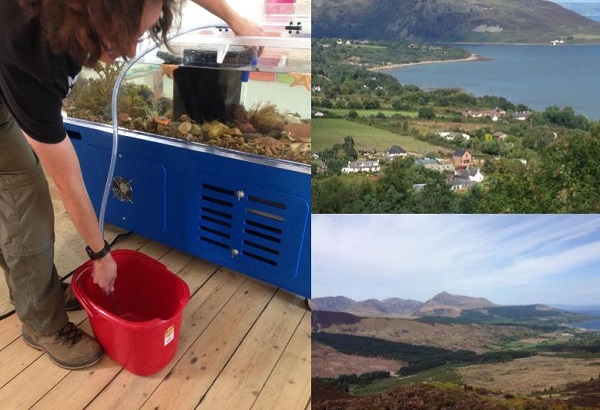
As well as doing some basic maintenance of the mobile aquarium tank (left) and otherwise supporting the burgeoning visitor centre through its first summer, I also had the chance to explore the Isle of Arran a bit on my days off. 
There are certainly worse places to spend four months volunteering.

One of the biggest issues during my time with COAST was a proposed salmon farm near Lochranza on the north side of the island, a proposal submitted by the Scottish Salmon Company (SCC; now named “Bakkafrost Scotland” after the Faroe Islands based company that acquired them in September 2019). Generally, fish farming is lauded by some for its potential economic benefits and the idea that it might reduce the pressure of wild populations of commercial fish species. Alas, the practice comes with a number of environmental concerns, with fish farms (especially those which are poorly managed) potentially being :

  • A source of organic pollution, in the form of faceal matter and uneaten food, which may decompose and suck away the oxygen from the surrounding waters (as mentioned earlier in this article).
  • A breeding ground for parasites (e.g. sea lice) and pathogens (i.e. disease causing microbes) which can spread beyond the confines of the fish pens. The medicines used to combat them can also leach out beyond the farm and cause collateral damage among the wild sea life. 
  • A source of disturbance via the acoustic devices that may be used to keep away large predators like dolphins and seals. 

Combine all of the above with the prospect of spoiling a beautiful natural landscape, which one can easily find on the Isle of Arran, and the push for an intensive salmon farm was hardly going to be popular. As evidenced by an exit poll that COAST organised in April 2019, following public talks with the SCC, which revealed 89% were opposed to the farm while 10% were undecided and 1% were in favour. And it didn’t take long for the subsequent petition against the farm to accumulate signatures from the majority of the island’s permanent residents, followed by protest banners and a human chain demonstration later that year. You can’t get a much clearer answer than that. 

I’m not suggesting that aquaculture sites, such as this salmon farm from Toravaig, Isle of Skye, Scotland, are a complete dud of a solution. They just need to be managed responsibly, ethically and proper regard for the environment and local communities.

But let us not forget that you also need evidence to show that NTZs and MPAs actually work, otherwise what would you have engage with? As previously mentioned, Howard and Don already had the local knowledge and experience during COAST’s early years, but strong scientific evidence required the use of rigorous survey techniques and the accurate identification of species on the seabed. Fortunately, the Marine Conservation Society (MCS) were happy and willing to provide the necessary Seasearch training for local divers. The subsequent data they collected proved to be a major asset in the aforementioned 2004 campaign against the sewage pipe in Lamlash Bay. In more recent years, the monitoring work has continued, with COAST even acquiring their own vessel in 2022 for research and outreach purposes. 

As a result, the recovery of Arran’s waters since the protected areas were established is well documented, and has received a lot of attention from the media and scientific literature. Within the NTZ specifically, there’s been a general increase in biodiversity, with greater densities of maerl, hydroids, sponges, feather stars and macroalgae (i.e. seaweeds other than maerl) compared to nearby areas of seabed. A pattern that also applies to the abundance of commercial species like king scallops and European lobsters, which can then spill over into areas where they can be caught legally and (hopefully) sustainably. It really is a testament to the efforts of COAST and their supporters, as well as providing a valuable case study to show that MPAs can work when they are done right. 

It’s the kind of optimism we really do need right now. But not at the expense of getting complacent when we actually succeed in our efforts to protect the natural world. Instead, we must remain constantly on our guard against the likely pushback from the misinformed, those who have vested interests in weakening these kinds of protective measures, and those who are somewhere in between. In the case of COAST, it’s easy to see how someone could frame the organisation as being anti-fishing altogether (despite the support from many local and static gear fisheries), and then stir up a wave of hostility based on that misconception. Sadly, it seems to be the way that many arguments are made these days, to attack one group of people based on the false (or greatly exaggerated) impression that you’re protecting another group of people. But Don made the truth about his intentions very clear during his contribution to “Ocean: With David Attenborough”: “I’m not saying that people shouldn’t catch fish, eat fish, and fishermen shouldn’t be able to make a living. But they shouldn’t be able to do it in a way that is just breaking everything.”

Thanks for reading

Sources

NatureScot. 2023. Maerl beds. https://www.nature.scot/landscapes-and-habitats/habitat-types/coast-and-seas/marine-habitats/maerl-beds. Last accessed 27/08/2025

Perry et al. 2024. Maerl beds. https://www.marlin.ac.uk/habitats/detail/255/maerl_beds. Last accessed 27/08/2025

Scottish Wildlife Trust. Maerl Phymatolithon calcareum. https://scottishwildlifetrust.org.uk/species/maerl/. Last accessed 04/07/2025

Jardim et al. 2022. Quantifying maerl (rhodolith) habitat complexity along an environmental gradient at regional scale in the Northeast Atlantic

Bosellini and Ginsburg. 1971. Form and internal structure of recent algal nodules (rhodolites) from Bermuda

NatureScot. 2016. 2016 Mousa maerl bed octopus. https://www.youtube.com/watch?v=enK29eQ2p90. Last accessed 04/07/2025

Costa et al. 2021. Marine invertebrates associated with rhodoliths/maërl beds from northeast Brazil (State of Paraíba)

Kamenos et al. 2004. Nursery-area function of maerl grounds for juvenile queen scallops Aequipecten opercularis and other invertebrates

Kamenos et al. 2004. MAERL: ITS VALUE AS A NURSERY HABITAT FOR COMMERCIAL SPECIES

Kamenos et al. 2004. Small-scale distribution of juvenile gadoids in shallow inshore waters; what role does maerl play?

Blake and Maggs. 2003. Comparative growth rates and internal banding periodicity of maerl species (Corallinales, Rhodophyta) from northern Europe

Grall and Hall-Spencer. 2003. Problems facing maerl conservation in Brittany

O’Reilly et al. 2012. Chemical and physical features of living and non-living maerl rhodoliths

Sordo et al. 2020. Seasonal photosynthesis, respiration, and calcification of a temperate maërl bed in southern Portugal

Wilson et al. 2004. Environmental tolerances of free-living coralline algae (maerl): implications for European marine conservation

Stannard. 2025. Pliny the Elder. https://www.britannica.com/biography/Pliny-the-Elder. Last accessed 06/09/2025

CliniSciences. Alizarin red stain. https://www.clinisciences.com/en/buy/cat-alizarin-red-stain-5402.html. Last accessed 27/08/2025

Twose. 2023. Competing with gastric ulcers: What you need to know. https://www.spillers-feeds.com/competing-your-horse-with-gastric-ulcers?srsltid=AfmBOopxsptbY5y69Ut2RKA5iaGxlSzjYJbw8eLO5_J10DX59aMsV7ng. Last accessed 27/08/2025

Ultrus Prospector. GELYOL® P.C. 25. https://www.ulprospector.com/en/eu/PersonalCare/Detail/15394/1020726/GELYOL-PC-25. Last accessed 06/09/2025

Allen & Page. Soothe & Gain: A High Calorie Conditioning Feed. https://www.allenandpage.com/product/soothe-gain/. Last accessed 27/08/2025

Bernard et al. 2019. Declining maerl vitality and habitat complexity across a dredging gradient: Insights from in situ sediment profile imagery (SPI)

Divernet. 2016. MMO ignores Cornwall dredge campaigners. https://divernet.com/scuba-diving/mmo-ignores-cornwall-dredge-campaigners/. Last accessed 27/08/2025

Pezij et al. 2024. Health status and characterisation of Gibraltar’s maerl beds

Hall-Spencer et al. 2006. Impact of fish farms on maerl beds in strongly tidal areas

Grall and Hall-Spencer. 2025. Maerl Bed Conservation: Successes and Failures

IMDb. 2025. Ocean with David Attenborough. https://www.imdb.com/title/tt33022710/. Last accessed 20/07/2025

Altitude Films. 2025. OCEAN WITH DAVID ATTENBOROUGH | BOTTOM TRAWLING OFFICIAL CLIP | IN CINEMAS NOW | Altitude Films. https://www.youtube.com/watch?v=IzG9AwlypaY. Last accessed 01/08/2025

Community of Arran Seabed Trust. South Arran MPA. https://www.arrancoast.com/south-arran-mpa/. Last accessed 06/09/2025

Community of Arran Seabed Trust. No Take Zone. https://www.arrancoast.com/no-take-zone/. Last accessed 06/09/2025

Community of Arran Seabed Trust. The Lamlash Bay No-Take Zone

A Community Designation. https://ffi.maps.arcgis.com/apps/Cascade/index.html?appid=70448e12ec3c45139beca33dfc990b7a. Last accessed 21/09/2025

Department of Conservation: Te Papa Atawhai. 2015. Remembering New Zealand’s ‘father of marine conservation’. https://blog.doc.govt.nz/2015/12/14/remembering-bill-ballantine/. Last accessed 06/09/2025

Department of Conservation: Te Papa Atawhai. Marine reserves A to Z. https://www.doc.govt.nz/marinereserves. Last accessed 06/09/2025

Goldman Environmental Foundation. 2016. Remembering Marine Conservation Hero, Bill Ballantine. https://www.goldmanprize.org/blog/remembering-marine-conservation-hero-bill-ballantine/. Last accessed 06/09/2025

Spirit of the Highlands and Islands. Loch Sween. https://discoverhighlandsandislands.scot/en/visitor/location/loch-sween. Last accessed 01/08/2025

British Sea Fishing. The Decline of the Firth of Clyde. https://britishseafishing.co.uk/the-decline-of-the-firth-of-clyde/. Last accessed 06/09/2025

Scottish Government. 2021. Scottish Marine and Freshwater Science Volume 3 Number 3: Clyde Ecosystem Review. https://www.gov.scot/publications/scottish-marine-freshwater-science-volume-3-number-3-clyde-ecosystem/pages/6/. Last accessed 06/09/2025

Richardson. 2021. Clyde’s fish stocks start to recover – with a different fish than before. https://www.theguardian.com/environment/2021/oct/07/clydes-fish-stocks-start-to-recover-with-a-different-fish-than-before. Last accessed 06/09/2025

McBride. 2024. Firth of Clyde Cod Closure to Remain in Place for 2025 States Gougeon. https://thefishingdaily.com/latest-news/firth-of-clyde-cod-closure-to-remain-in-place-for-2025-states-gougeon/. Last accessed 06/09/2025

Thurstan and Roberts. 2010. Ecological meltdown in the Firth of Clyde, Scotland: two centuries of change in a coastal marine ecosystem

Jones. 1999. Marine nature reserves in Britain: past lessons, current status and future issues

Fraser 2019. Scottish Salmon Company bought by Faroese fish farm. https://www.bbc.co.uk/news/uk-scotland-scotland-business-49833904. Last accessed 21/09/2025

Bakkafrost. The Scottish Salmon Company renames operations in Scotland. https://www.bakkafrostscotland.com/news/the-scottish-salmon-company-renames-operations-in-scotland. Last accessed 21/09/2025

McEachern. 2019. Proposed salmon farm off Arran met with fury by locals and environmentalists as industry comes under increasing criticism. https://www.sundaypost.com/fp/proposed-salmon-farm-on-arran-met-with-fury-by-locals-and-environmentalists-as-industry-comes-under-increasing-criticism/. Last accessed 21/09/2025

Carrell. 2019. Protests at plans for salmon farm near Lochranza, on Arran. https://www.theguardian.com/environment/2019/dec/31/protest-plans-salmon-farm-lochranza-arran. Last accessed 21/09/2025

COAST. 2022. The start of an exciting new era for COAST. https://mailchi.mp/arrancoast/protect-scotlands-seas-from-damaging-discarding-coast-summer-news-9766609?e=[UNIQID]. Last accessed 01/08/2025

COAST. COAST in the media. https://www.arrancoast.com/coast-in-the-media/. Last accessed 21/09/2025

Stewart et al. 2020. Marine conservation begins at home: how a local community and protection of a small bay sent waves of change around the UK and beyond

Howarth et al. 2015. Sessile and mobile components of a benthic ecosystem display mixed trends within a temperate marine reserve

Image sources

ArranCOAST. 2004. [CC BY-SA 3.0 (https://creativecommons.org/licenses/by-sa/3.0)]. https://commons.wikimedia.org/wiki/File:ARRAN_SEASCENES_013.jpg

Saryu Mae. 2022. [CC BY 4.0 (https://creativecommons.org/licenses/by/4.0)]. https://commons.wikimedia.org/wiki/File:Corallina_officinalis_at_Kakamatua_Point,_Huia.jpg

Frithjof C. Küpper. 2013. [CC BY-SA 4.0 (https://creativecommons.org/licenses/by-sa/4.0)]. https://commons.wikimedia.org/wiki/File:Coralline_algae_2.jpg

FalsePerc. 2006. [CC BY-SA 3.0 (http://creativecommons.org/licenses/by-sa/3.0/)]. https://commons.wikimedia.org/wiki/File:Coralline.1.jpg

Olivier Dugornay. 2021. [CC BY 4.0 (https://creativecommons.org/licenses/by/4.0)]. https://commons.wikimedia.org/wiki/File:Banc_de_ma%C3%ABrl_en_rade_de_Brest_(Ifremer_00686-79814_-_32446).jpg

Costa DA, Dolbeth M, Prata J, da Silva FA, da Silva GMB, de Freitas PRS, Christoffersen ML, de Lima SFB, Massei K, de Lucena RFP. 2021. [CC BY 4.0 (https://creativecommons.org/licenses/by/4.0)]. https://commons.wikimedia.org/wiki/File:Pagurus_criniticornis_(10.3897-BDJ.9.e62736)_Figure_10_a.jpg

Costa DA, Dolbeth M, Prata J, da Silva FA, da Silva GMB, de Freitas PRS, Christoffersen ML, de Lima SFB, Massei K, de Lucena RFP. 2021. [CC BY 4.0 (https://creativecommons.org/licenses/by/4.0)]. https://commons.wikimedia.org/wiki/File:Chiridota_rotifera_(10.3897-BDJ.9.e62736)_Figure_11_b.jpg

Costa DA, Dolbeth M, Prata J, da Silva FA, da Silva GMB, de Freitas PRS, Christoffersen ML, de Lima SFB, Massei K, de Lucena RFP. 2021. [CC BY 4.0 (https://creativecommons.org/licenses/by/4.0)]. https://commons.wikimedia.org/wiki/File:Ceratonereis_singularis_(10.3897-BDJ.9.e62736)_Figure_4_d.jpg

Costa DA, Dolbeth M, Prata J, da Silva FA, da Silva GMB, de Freitas PRS, Christoffersen ML, de Lima SFB, Massei K, de Lucena RFP. 2021. [CC BY 4.0 (https://creativecommons.org/licenses/by/4.0)]. https://commons.wikimedia.org/wiki/File:Echinometra_lucunter_(10.3897-BDJ.9.e62736)_Figure_11_a.jpg

Costa DA, Dolbeth M, Prata J, da Silva FA, da Silva GMB, de Freitas PRS, Christoffersen ML, de Lima SFB, Massei K, de Lucena RFP. 2021. [CC BY 4.0 (https://creativecommons.org/licenses/by/4.0)]. https://commons.wikimedia.org/wiki/File:Ophiactis_savignyi_(10.3897-BDJ.9.e62736)_Figure_11_f.jpg

Costa DA, Dolbeth M, Prata J, da Silva FA, da Silva GMB, de Freitas PRS, Christoffersen ML, de Lima SFB, Massei K, de Lucena RFP. 2021. [CC BY 4.0 (https://creativecommons.org/licenses/by/4.0)]. https://commons.wikimedia.org/wiki/File:Elasmopus_brasiliensis_(10.3897-BDJ.9.e62736)_Figure_9_b.jpg

Olivier Dugornay. 2001. [CC BY 4.0 (https://creativecommons.org/licenses/by/4.0)]. https://commons.wikimedia.org/wiki/File:Araign%C3%A9e_m%C3%A2le_sur_fond_de_ma%C3%ABrl_(Ifremer_00557-66908_-_20311).jpg

Olivier Dugornay. 2021. [CC BY 4.0 (https://creativecommons.org/licenses/by/4.0)]. https://commons.wikimedia.org/wiki/File:Petite_roussette_sur_fond_de_ma%C3%ABrl_(Ifremer_00686-79812_-_32436).jpg

Colin. 2015. [CC BY-SA 4.0 (https://creativecommons.org/licenses/by-sa/4.0/)]. https://commons.wikimedia.org/wiki/File:Close-up,_Coral_beach,_Isle_of_Skye.jpg

Emkaer. 2008. [CC BY-SA 3.0 (http://creativecommons.org/licenses/by-sa/3.0/)]. https://commons.wikimedia.org/wiki/File:Coral_Fragments,_Coral_Beach,_Carraroe.JPG

Erik del Toro Streb. 2020. [CC BY 4.0 (https://creativecommons.org/licenses/by/4.0)]. https://commons.wikimedia.org/wiki/File:Pieces_of_maerl_from_Majanicho_(Fuerteventura_island)_on_human_hand.jpg

ArranCOAST. 2003. [CC BY-SA 3.0 (https://creativecommons.org/licenses/by-sa/3.0)]. https://commons.wikimedia.org/wiki/File:COAST_logo.jpg

L J Cunningham / Clauchlands Farmland, Lamlash, Arran. 2006. [CC BY-SA 2.0 (https://creativecommons.org/licenses/by-sa/2.0/)]. https://commons.wikimedia.org/wiki/File:Clauchlands_Farmland,_Lamlash,_Arran_-_geograph.org.uk_-_185770.jpg

Richard Webb. 2023. [CC BY-SA 2.0 (https://creativecommons.org/licenses/by-sa/2.0)]. https://commons.wikimedia.org/wiki/File:Boat_leaving_Loch_Sween_-_geograph.org.uk_-_7636095.jpg

Olivier Dugornay (IFREMER, Pôle Images, Centre Bretagne – ZI de la Pointe du Diable – CS 10070 – 29280 Plouzané, France). 2011. [CC BY 4.0 (https://creativecommons.org/licenses/by/4.0)]. https://commons.wikimedia.org/wiki/File:Chalutier_Le_Pr%C3%A9curseur_retournant_au_port_de_Boulogne-sur-Mer_(Ifremer_00760-87155_-_45848).jpg

John Allan. 2011. [CC BY-SA 2.0 (https://creativecommons.org/licenses/by-sa/2.0)]. https://commons.wikimedia.org/wiki/File:Salmon_farm_cages_below_Toravaig_-_geograph.org.uk_-_2567640.jpg

All other images are public domain, or my own photos, and do not require attribution.

Megalodons- An even bigger boat?

by Matthew Norton

The ocean today is a beautifully diverse world, full of stunning habitats, wonderfully weird phenomena and species who have originated from many diverging walks of life. Even so, they only represent the minutest fraction of what has lived throughout the history of life on planet Earth. A history that began at least 3.5 billion years ago (according to the earliest known fossils), or maybe 4.1 billion years ago (according to other strands of evidence). Dinosaurs are, in general, the most well known animals who are no longer alive today, despite the best efforts of Richard Attenborough, but in the sea, few prehistoric predators have inspired as much awe as the Megalodon shark.

There’s little doubt that Megalodons were incredibly sharks and powerful hunters.

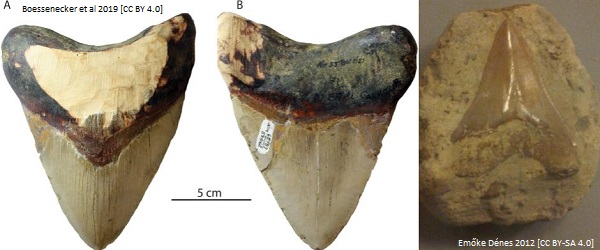
Thought to have gone extinct around 3.6 million years ago, megalodons are often pictured as great white sharks, but scaled up in size. A single fossilised tooth by itself can be the size of your hand (around 7 inches long), compared to the great white’s tooth, which is about the length of your finger (around 3 inches). 

Imagine the size of prey that megalodons needed those kind of chompers for.

A shark’s teeth, including those from extant (still living) species, can tell us more about the animal than just its sheer size. Their shape, for example, can tell us a lot about how they bite and what prey they take. Strong, flat teeth are likely employed in crushing hard shelled animals like crabs and molluscs. Long, needle-point teeth are better equipped for gripping small to medium sized fish, along with other slippery prey. And triangular, serrated teeth is the way to go when slicing and tearing large prey into more manageable chunks. 

With megalodons, you rarely get anything but the teeth to work with. This is because the skeleton of any shark, whether ancient or modern day, is made out of cartilage rather than bone. This is great for reducing weight (cartilage being about half as dense as bone) and enhancing flexibility and swimming speed. But if you want to be preserved as a fossil, the process works far better with harder materials like bones and shells. 

That said, it can happen, with the very occasional discovery of fossilised placoid scales, also known as dermal denticles (the tooth-like scales found in sharks and rays) as well as fragments of cartilage and segments of their vertebrae (also made out of cartilage). All of which can be used to make educated guesses about the animal’s biology and interactions with the world around them. 

This reconstruction of a another large prehistoric shark species, Cretoxyrhina mantelli, also called the ʻginsuʼ shark, was reconstructed from a tooth embedded in one of the cervical vertebrae (i.e. the neck) of a flying pterosaur (Pteranodon sp.). While the scene is highly speculative (for example, we don’t know for sure the shark wasn’t scavenging on an already dead pterosaur), the evidence suggests that the ginsu shark likely had sufficient size and power to at least attempt a bite.
Fossil evidence can come from plenty of different sources, such as the megalodon coprolite (i.e. a fossilised turd).

Vertebrae in particular can be imprinted with ‘growth rings’ that indicate the age of the animal. The technique is most famously used to age trees, particularly species temperate regions, where the growing conditions vary throughout the year. Cut a tree down (or better yet wait for it to fall due to natural causes) and look into the trunk and you’ll see alternating light and dark rings that show its growth in spring/early summer and later summer/autumn respectively, with each pair of light and dark rings equating to one year of growth. But the technique can also be applied to the ear bones (otoliths) of bony fish, the vertebrae of modern day sharks and, as it turns out, the vertebrae of ancient sharks. Which led to a 2025 study inferring that newborn megalodon sharks were somewhere between 3.6 to 3.9 metres long.

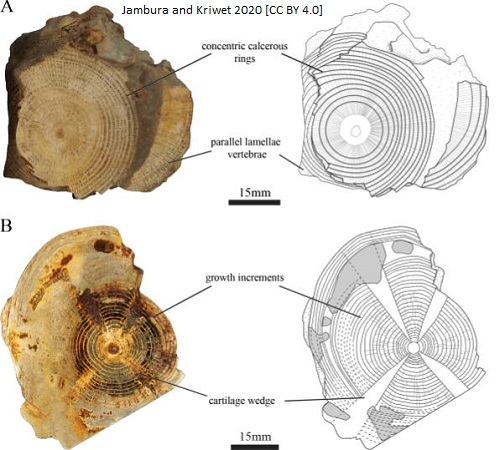
Two preserved vertebrae from Ptychodus (a genus of shark who, just like the Megalodon, are long extinct) from the Upper Cretaceous period (100.5 to 66 million years ago). The 2020 study that examined estimated they were between 4.3  to just over 7 metres in length, indicating they were large, slow growing predators.

But no matter how impressive, or intuitive, a tool may seem, it still needs some sort of a calibration, a reference point to make your measurements make sense. This is where modern day species can come in as an analogue, or proxy species that we assume to be similar (within a given margin of error) to the ancient species we are studying, allowing us to fill in the blanks. This idea has cropped up in previous articles, such as the modern day Nautiluses acting as proxies for extinct ammonites, but with megalodons, the proxy species of choice has often been, unsurprisingly, the great white shark.

In Jaws, the original 1974 novel, when Matt Hooper had his first proper look at the infamous shark he had some choice words regarding its size.
‘It’s a fish, all right,’ said Hooper. He was still visibly excited. ‘And what a fish! Damn near megalodon.’

Alas, such assumptions should always be used with a hint of caution. Not least because the scientific name for the megalodon shark has gone from Carcharodon megalodon to Otodus megalodon, suggesting the great white shark (Carcharodon carcharias) is not as close a relative as first thought. Such changes to the ‘accepted’ lineages of a species can occur quite often as new evidence comes to light to challenge our previously solid conclusions. 

Furthermore, there is also evidence to suggest that great white sharks would have major problems supporting themselves and swimming properly if their size was scaled up to the size of a megalodon. A more slender body, like that of a lemon shark, would be considerably more practical and probably a more accurate representation of what a megalodon shark actually looked like. Yet great whites, though sometimes used alongside other species, are still used as a proxy species simply because we don’t have anything better. 

This depiction, though dramatic, is not completely accurate of what we know of megalodon’s appearance and build now.
And then there are reconstructions that go for a little artistic liberty.

This makes for a somewhat uncomfortable demonstration of how difficult it can be to get things right with species that no human has ever actually seen first-hand, whether they be aquatic or terrestrial (i.e. land based). One especially informative example arose from a study published in the year 2000, which made some very bold claims regarding the fossilised remains of an ornithischian dinosaur. After using a CT scanner, among other techniques, they suggested that the specimen not only contained a fossilised heart, but that it also contained four chambers, like those of mammals and birds, rather than the less efficient three-chambered heart of a reptile. One might have dared to believe that these dinosaurs were also warm-blooded, again like today’s birds and mammals. But less than a year later, a different research group took another look at the same fossil and came to the conclusion that this ‘heart’ was actually ironstone. Yet another group examined the same fossil around ten years later, using more advanced CT scans, X-rays and electron microscope images, and concluded that this ‘heart’ was made of cemented grains of sand. 

These were likely embarrassing developments for the original researchers, but the course corrections that followed (and not just in this one case) were only possible through the continued work of palaeontologists, paleobiologists and scientists in other related fields. In some instances, they may inspire or guide the development of new techniques and tools along the way. For example (bringing the conversation back to megalodons), a study published in 2022 generated a 3-D model from an especially well preserved megalodon fossil. This allowed the researchers to infer that they were likely transoceanic hunters capable of consuming prey large enough to fuel long migrations, whilst travelling at a cruising speed that was faster than any shark species alive today.

All in all, megalodons may not have been the supermassive great white sharks we thought them to be. But they were still incredible animals who will continue to inspire awe and the imaginations of many. Just like the dinosaurs who once roamed the land and the pterodactyls who soared through the sky.

From a human perspective

I love sharks. Big or small, alive or extinct, few animals in the sea get the blood pumping like they do. It’s one of a number of reasons I’ve made them the star of this, the 50th article to be published on Our world under the waves. A milestone that, by happy accident, has closely coincided with the 50th anniversary of Jaws (the film, not the original novel). A film synonymous with horror, summer blockbusters and multiple robotic sharks that proved exceptionally problematic to work with.

Though not even close to an accurate representation, there something inherently thrilling about shark attack films.

Unlike that legendary, and fictional, great white shark, megalodons have never swum in the sea at the same time as humans (so far as we know). Yet there’s been no shortage of films to explore how that might go down, with varying degrees of quality.

***WARNING: Spoilers ahead***

The Meg (2018) for example. It’s got Jason Statham versus a massive shark, I mean what more do you want? Not much judging by the nearly $530 million the film grossed at the box office worldwide, despite its modest reviews. The plot was fairly straightforward, following a research team as they dive from their underwater facility down to a hidden realm at the bottom of the ocean, from which they accidentally lead not one, but two megalodons back to the surface, ready to wreak havoc. Both sharks arguably had a rough deal from the start though, given Statham’s history of not losing on-screen fights, sometimes literally being written into the contract. 

There’s a whole scene in The Meg where one character is chased through the water until he attempts to find refuge by climbing on a floating whale carcass. The massive megalodon nonetheless targets and consumes him, even though the whale itself was a far more substantial meal on which to scavenge. Much like the smaller great white shark pictured above.

And then, before the likes of Godzilla vs Kong, or Batman vs Superman: Dawn of Justice, there was Mega Shark versus Giant Octopus (2009), a hilariously schlocky film that served little purpose beyond easy entertainment, which is fair enough (I’d take it over reality TV any day). And it clearly worked, given the series of (somehow) even more bizarre sequels is spawned, pitting the titular shark against a “Crocosaurus”, a “Mecha shark” and “Kolussus”, a giant doomsday robot.

For me, the stand out moment of absurdity from the original entry in the series is when the titular megalodon was able to launch itself out of the ocean and bring down a commercial airplane with its teeth. A scene I specifically looked up again online, just to make sure it wasn’t my imagination playing tricks on me. To be fair, we’ve never actually had the chance to observe the limits of a breaching megalodon, assuming they could thrust themselves out of the water at all. But that kind of range seems far fetched to say the least.

And before all that, you had Shark Attack 3: Megalodon (2002), another dumb fun film with bad writing and even worse special effects. Any Doctor Who fans watching this film (whatever your reasons may be) will likely recognise John Barrowman in the starring role. And he has been pretty open about the fact that he did the film for the money, even going so far as to say “it bought me my first place” during an appearance on the BBC Two series QI. But the film as a whole, like the Mega Shark series, had become a cult classic due, in part, to its incredible awfulness. 

Whatever the critical reception may be, all of these films have one very Jaws-like element in common. They all suggest that if megalodons were to reappear today, they would be bloodthirsty, human-killing machines. But given how unsuitable we are to the large predatory sharks that are around today (e.g. great white sharks, tiger sharks, bull sharks) this is very unlikely to be the case for something as colossal as a megalodon. 

Unfortunately, no movie studio (to my knowledge) has portrayed megalodons in a more sympathetic light. But sharks in general have enjoyed the occasional moment of (relatively) favourable representation.

In the world of animation you have Shark Tale (2004), perhaps the most star-studded film here, with the likes of Will Smith, Robert De Niro, Angelina Jolie, Jack Black and so on. While De Niro portays a more menacing shark gangster, his son Lenny (voiced by Jack Black) embodies a much friendlier archetype, being both vegetarian and the friend of a cleaner erase Oscar (Will Smith). Lenny goes so far as to help Oscar pursue his dreams of fame and fortune when he falsely claims credit for the death of Frankie, Lenny’s brother. Though hardly realistic by any stretch, it nevertheless proves that positive representation of sharks is possible. 

But long before Shark Tale, there was Mako: The jaws of death (1976), a rather bizarre film that was released the year after Jaws on what appeared to be a much lower budget. There’s still plenty of shark biting action (though strangely no actual mako sharks), but most of the time it’s the sharks retaliating against shark hunters, fishermen and other humans seeking to exploit their kind. And in the midst of it all there’s Sonny, a character with some sort of psychic connection that allows him to sharks. 

At first, Sonny is somewhat hopeful that he can change people’s attitudes toward sharks by renting out some of fishy friends to the local aquarium and a bar with an inbuilt show tank. But when he uncovers the abuse they’re being put through, he takes brutal action, sometimes dolling the punishment himself, sometimes facilating the vengeance of the sharks around him. 

Overall, the film is not a perfect advocate for sharks, especially when you account for the notice plastered onto the opening shot, praising the underwater camera crew who “risked their lives to film the shark sequences in this motion picture.” But at the very least, it was a genuine departure from portraying sharks as mindless killing machines.

It’s also worth briefly touching upon an even older Italian / French film called Tiko and the shark (1962), which tells the story of Ti-Koyo, a young boy who befriends a baby shark, before introducing him to his girlfriend Diana (later his wife) before rekindling their friendship a decade later. It certainly feels massively ahead of its time, yet it has been argued that it could have gone further. Specifically by Leo Pestelli, a critic writing for the daily newspaper La Stampa, who criticised the film for focussing too much on Ti-Koyo romance with Diana, at the expense of his relationship with the shark. 

And for something completely different. This is the Megalodon Collective, a jazz band formed of Norwegian and Swedish members whose debut album, simply called Megalodon, was nominated for a Norwegian grammy after its 2015 release.

But despite all the efforts to portray sharks in a different light, it’s easy to see why they make for such good movie monsters. Jaws very much set that standard in stone, becoming a major pop culture sensation in the 50 years since, as demonstrated by its three sequels, of very variable quality, the video game adaptation Jaws Unleashed (2006), released for the PlayStation 2, Xbox and PC and a prequel novel focussed on Quint’s backstory. And let’s not forget the seemingly endless variety of merchandise including, but not limited to, T-shirts, clocks, board games, posters, custom Lego sets and key rings.

I also recently had the pleasure of watching the play “The shark is broken” at the Theatre Royal in Plymouth. For those who don’t know, the play portrays the three main lead actors from Jaws (with Robert Shaw played by his own son, Ian Shaw) and everything they did to pass the time, and get on each other’s nerves while the crew dealt with various calamities behind the scenes. As mentioned earlier, such calamities often involved “Bruce” the robotic shark (and his ‘stunt doubles’) constantly breaking down. It just goes to show that even the film’s flaws and issues have proven to be worth exploring. A status that few others have achieved.

Not even the Universal Studios tour is safe from the Jaws effect.

The problem arises when we fail to disseminate fiction from reality and believe in the killer shark (however unintentionally) that has proven to be such a guaranteed box office success. But things are getting better, and more and more people are coming to understand that sharks are sentient, thinking creatures and that they form critical roles in ecosystems across the world under the waves. Here’s hoping that trend continues for the next fifty years.

Thanks for reading

Sources

Center for Near Earth Object Studies. NEO Basics. https://cneos.jpl.nasa.gov/about/life_on_earth.html. Last accessed 25/05/2025

Sarchet. 2024. We now know that life began on Earth much earlier than we thought. https://www.newscientist.com/article/2444811-we-now-know-that-life-began-on-earth-much-earlier-than-we-thought/. Last accessed 25/05/2025

Davis. 2025. Megalodon: The truth about the largest shark that ever lived. https://www.nhm.ac.uk/discover/megalodon–the-truth-about-the-largest-shark-that-ever-lived.html. Last accessed 26/04/2025

FossilEra. Megalodon Vs. Great White Tooth Size. https://www.fossilera.com/pages/megalodon-vs-great-white-tooth-size#:~:text=There%20have%20only%20been%20a,hard%20to%20confuse%20the%20two. Last accessed 18/06/2025

Chetan-Welsh. What can shark teeth tell us?. https://www.nhm.ac.uk/discover/what-can-shark-teeth-tell-us.html. Last accessed 25/05/2025

Natural History Museum. Do sharks have bones?. https://www.nhm.ac.uk/discover/quick-questions/do-sharks-have-bones.html. Last accessed 25/05/2025

Benchley. 1974. Jaws. ISBN 978-1-4472-2003-9

NOAA. Discover Your World with NOAA: Be a Tree Ring Detective. https://oceanservice.noaa.gov/education/dyw-tree-detective.html. Last accessed 07/06/2025

Rajalakshmi. 2024. Growth rings in fish give clues about fluctuations in climate over decades. https://news.arizona.edu/news/growth-rings-fish-give-clues-about-fluctuations-climate-over-decades. Last accessed 07/06/2025

Hutching. 2006. Shark vertebra. https://teara.govt.nz/en/photograph/5318/shark-vertebra. Last accessed 07/06/2025

Stoller-Conrad. 2017. Tree rings provide snapshots of Earth’s past climate. https://climate.nasa.gov/news/2540/tree-rings-provide-snapshots-of-earths-past-climate/. Last accessed 07/06/2025

Jambura and Kriwet. 2020. Articulated remains of the extinct shark Ptychodus (Elasmobranchii, Ptychodontidae) from the Upper Cretaceous of Spain provide insights into gigantism, growth rate and life history of ptychodontid sharks

Hone et al. 2018. Evidence for the Cretaceous shark Cretoxyrhina mantelli feeding on the pterosaur Pteranodon from the Niobrara Formation

Amalfitano et al. 2019. Large deadfalls of the ʻginsuʼ shark Cretoxyrhina mantelli (Agassiz, 1835)(Neoselachii, Lamniformes) from the Upper Cretaceous of northeastern Italy

Pimiento et al. 2010. Ancient nursery area for the extinct giant shark Megalodon from the Miocene of Panama

Shimada. 2002. The relationship between the tooth size and total body length in the white shark

Shimada et al. 2017. A new elusive otodontid shark (Lamniformes: Otodontidae) from the lower Miocene, and comments on the taxonomy of otodontid genera, including the ‘megatoothed’ clade

Sternes et al. 2024. White shark comparison reveals a slender body for the extinct megatooth shark, Otodus megalodon (Lamniformes: Otodontidae)

Shimada et al. 2025. Reassessment of the possible size, form, weight, cruising speed, and growth parameters of the extinct megatooth shark, Otodus megalodon (Lamniformes Otodontidae), and new evolutionary insights into it gigantism, life history strategies, ecology and exinction

Fisher et al. 2000. Cardiovascular evidence for an intermediate or higher metabolic rate in an ornithischian dinosaur

Rowe et al. 2001. Dinosaur with a heart of stone

Cleland et al. 2011. Histological, chemical, and morphological reexamination of the “heart” of a small Late Cretaceous Thescelosaurus

Black. 2011. Willo the Dinosaur Loses Heart. https://www.smithsonianmag.com/science-nature/willo-the-dinosaur-loses-heart-93712793/. Last accessed 07/06/2025

Cooper et al. 2022. The extinct shark Otodus megalodon was a transoceanic superpredator: Inferences from 3D modeling

IMDb a. The Meg. https://www.imdb.com/title/tt4779682/. Last accessed 08/05/2025

The Business Standard. 2020. The Rock, Vin Diesel’s ‘Fast and Furious’ contract say they can’t lose fights. https://www.tbsnews.net/glitz/rock-vin-diesels-fast-and-furious-contract-say-they-cant-lose-fights-113596. Last accessed 08/05/2025

IMDb b. Mega Shark Vs Giant Octopus. https://www.imdb.com/title/tt1350498/. Last accessed 08/05/2025

Wikipedia. 2025. Mega Shark (film series). https://en.wikipedia.org/wiki/Mega_Shark_(film_series). Last accessed 08/05/2025

IMDb c. Mega Shark vs. Kolossus. https://www.imdb.com/title/tt4566574/. Last accessed 08/05/2025

John Fitzgerald. 2009. The Greatest Movie Scene Ever? – Mega Shark vs. Giant Octopus!. https://www.youtube.com/watch?v=I16_8l0yS-g. Last accessed 08/05/2025

JohnBarrowman.com. SHARK ATTACK 3: MEGALODON. https://www.johnbarrowman.com/film/sharkattack.shtml. Last accessed 08/05/2025

IMDb d. Shark Attack 3: Megalodon. https://m.imdb.com/title/tt0313597/. Last accessed 08/05/2025

QI. 2025. “This Would Make A Great Drinking Game!” | QI. https://youtu.be/iVTzrMlITg4?si=GEcFmTCQzLCEHTgY. Last accessed 08/05/2025

Megalodon Collective. About. https://megalodoncollective.wordpress.com/about/. Last accessed 24/05/2025

Stavanger Jazzforum. Megalodon Collective. https://stavangerjazzforum.no/artister/megalodon-collective-2/. Last accessed 24/05/2025

IMDb e. Shark Tale. https://www.imdb.com/title/tt0307453/. Last accessed 24/05/2025

IMDb f. Mako: The Jaws of Death. https://www.imdb.com/title/tt0074845/. Last accessed 08/05/2025

FILMIX. 2024. Mako: The Jaws of Death (1976) | RETRO HORROR MOVIE | Richard Jaeckel – Jennifer Bishop – Buffy Dee. https://www.youtube.com/watch?v=WZ0STRVwWaA. Last accessed 08/05/2025

IMDb g. Ti-Koyo e il suo pescecane. https://www.imdb.com/title/tt0061096/. Last accessed 08/05/2025

G.E.G. GEG2. 2023. Ti-Koyo e il suo pescecane- Film completo 1962. https://youtu.be/3rbTGKiOx6g?si=bZiRhBf-ISUknr4E. Last accessed 08/05/2025

MUBI. TIKO AND THE SHARK. https://mubi.com/en/gb/films/tiko-and-the-shark. Last accessed 08/05/2025

La Stampa. 1962. La Stampa – Friday 23 November 1962. http://www.archiviolastampa.it/component/option,com_lastampa/task,search/mod,libera/action,viewer/Itemid,3/page,4/articleid,0089_01_1962_0265_0004_17401956/anews,true/. Last accessed 08/05/2025

Metacritic. Jaws Unleashed. https://www.metacritic.com/game/jaws-unleashed/. Last accessed 24/05/2025

Goodreads. Quint. https://www.goodreads.com/book/show/181211787-quint. Last accessed 24/05/2025

Board game geek. Jaws (2019). https://boardgamegeek.com/boardgame/272738/jaws. Last accessed 24/05/2025

LMG Vids. 2025. Universal Studio Tour in the Rain – Universal Studios Hollywood – 2025 Rides POV | 4K 60FPS. https://www.youtube.com/watch?v=IqvjzHEy3VI. Last accessed 24/05/2025

Image sources

Ellie Sattler. 2023. [CC BY-SA 4.0 (https://creativecommons.org/licenses/by-sa/4.0)]. https://commons.wikimedia.org/wiki/File:Megalodonte_a_caccia.jpg

Robert W. Boessenecker​, Dana J. Ehret, Douglas J. Long, Morgan Churchill, Evan Martin, Sarah J. Boessenecker. 2019. [CC BY 4.0 (https://creativecommons.org/licenses/by/4.0)]. https://commons.wikimedia.org/wiki/File:Otodus_megalodon_from_Niguel_Fm.png

Emőke Dénes.2012. [CC BY-SA 4.0 (https://creativecommons.org/licenses/by-sa/4.0)]. https://commons.wikimedia.org/wiki/File:Hal_-_Megalodon_tooth.jpg

Mark P. Witton. 2018. [CC BY 4.0 (https://creativecommons.org/licenses/by/4.0)]. https://commons.wikimedia.org/wiki/File:Cretoxyrhina_attacking_Pteranodon.png

Jambura PL and Kriwet J. 2020. [CC BY 4.0 (https://creativecommons.org/licenses/by/4.0)]. https://commons.wikimedia.org/wiki/File:Ptychodus_vertebra.PNG

James St. John. 2008. [CC BY 2.0 (https://creativecommons.org/licenses/by/2.0)]. https://commons.wikimedia.org/wiki/File:Giant_white_shark_coprolite_(Miocene;_coastal_waters_of_South_Carolina,_USA).jpg

Hugo Saláis. 2016. [CC BY 4.0 (https://creativecommons.org/licenses/by/4.0)]. https://commons.wikimedia.org/wiki/File:Otodus_megalodon_in_sea_restoration.jpg

Crudmucosa. 2023. [CC BY 2.0 (https://creativecommons.org/licenses/by/2.0)]. https://commons.wikimedia.org/wiki/File:Megalodon_reconstruction.jpg

Skvader. 2018. [CC BY-SA 4.0 (https://creativecommons.org/licenses/by-sa/4.0)]. https://commons.wikimedia.org/wiki/File:Dinosaur_Land_sign.jpg

PLBechly. 2024. [CC BY-SA 4.0 (https://creativecommons.org/licenses/by-sa/4.0)]. https://commons.wikimedia.org/wiki/File:Megalodon_snacking.jpg

Fallows C, Gallagher AJ, Hammerschlag N. 2013. [CC BY 2.5 (https://creativecommons.org/licenses/by/2.5)]. https://commons.wikimedia.org/wiki/File:White_shark_(Carcharodon_carcharias)_scavenging_on_whale_carcass_-_journal.pone.0060797.g004-B.png

Tore Sætre. 2016. [CC BY-SA 4.0 (https://creativecommons.org/licenses/by-sa/4.0)]. https://commons.wikimedia.org/wiki/File:Megalodon_Collective_(214227).jpg

Andrew Thomas from Shrewsbury, UK. 2010. [CC BY-SA 2.0 (https://creativecommons.org/licenses/by-sa/2.0)]. https://commons.wikimedia.org/wiki/File:Jaws_(5530370622).jpg

All other images are public domain and do not require attribution.
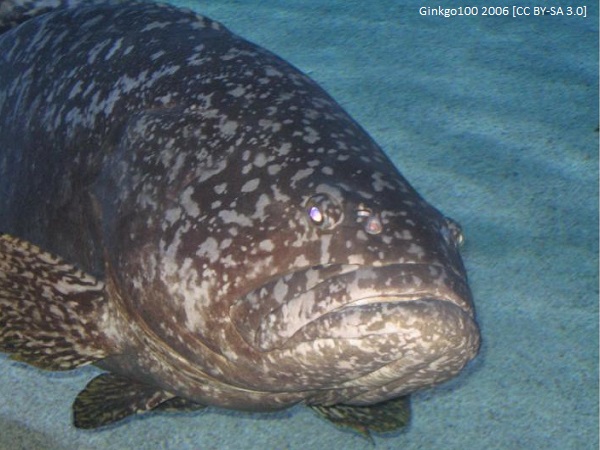
Fire corals- Coral, anemone, jellyfish, other?

by Matthew Norton

Things are often not what they appear to be. An animal can be anchored in one place like a plant, the patterns on a small fish can greatly exaggerate their size and ferocity, and the name of a species can be misleading towards their true nature (e.g. Eurasian oystercatchers). Even the group that a species belongs to can be questioned, with their appearance and lifestyle leaning heavily towards one classification while actually belonging to another. You’d swear the natural world was trying to confuse us on purpose. 

Fire corals, all belonging to the Millepora genus, are a curious example of this phenomenon. Found in virtually all tropical and subtropical oceans, except for their odd absence around Hawaii, they are colonial animals with each ‘coral’ made up of many microscopic polyps or zooids (a widely used term for the members of colonial organisms, see Bryozoan article). Each polyp/zooid is encased with the fire coral’s smooth exoskeleton, specifically within little pores at the surface which are connected to a network of hollow channels below. The principle is somewhat similar to the honeycomb structure of a beehive. 

Millepora alcicornis, a branching fire coral.

And just like a colony of bees, there is some division of labour among the polyps/zooids of a fire coral, with the pores in which they reside being named accordingly. Within the gastropores you will find the short and plump gastrozooids, which are primarily concerned with engulfing and processing food for itself and for the wider colony. Meanwhile, the dactylzoooids, found within the dactylpores, possess long, thin hairs that are packed with nematocysts (stinging cells) for capturing prey and defending the colony. 

One fire coral (M. alcicornis) with dactylozooids sticking out their long stinging tentacles (left) and the various pores where the various polyps/zooids reside in another fire coral (Millepora nodosa; right). Despite the venom, not every interaction results in agony or death for the animal that crosses their path. For example, barnacles belonging to the species Wanella milleporae are, apparently, permitted to settle on the surface of Millepora tenera, who retract their tentacles to allow barnacle larvae to explore and cement themselves so that they may form a symbiotic relationship.

Fire corals can also include outside contractors in the form of microscopic zooxanthellae, with which they build symbiotic (i.e. mutually beneficial) relationships. The fire coral provides protection to the zooxanthellae in exchange for a portion of the food they produce via photosynthesis. 

So far, so coral-like, right? Which makes it all the more extraordinary that fire corals actually belong to a group of animals called Hydrozoans (also known as hydroids and hydrocorals). As part of the Cnidarian phylum (phyla being the big, umbrella groups by which all organisms are divided and classified, second only to kingdoms and domains), they are related to true corals, along with anemones, jellyfish and box jellyfish among others. In evolutionary terms, hydrozoans are more closely related to jellyfish than corals, but the variety they demonstrate is so baffling that such comparisons are far from easy to see.

Hydrozoans come in various forms, including plant-like branching creatures, medusa (jellyfish-like) forms and whatever the creature on the bottom left is supposed to be. They can also be tiny, such as Psammohydra nanna (not pictured here) which are less than 1mm long, small enough to live and move between grains of sand.
When you account for this variety and their similarities to corals, anemones, jellyfish (and so on), classifying the different hydrozoan groups becomes an arduous task, with estimates of the total number of hydrozoan species seeming to vary depending on where the information is coming from. The one unifying feature they share (as far as I can tell) is that a hydrozoan’s gonads (the reproductive organs) are synthesised from their epidermal tissue (the equivalent of their outer skin layer), whereas all other cnidarians seem to derive it from their gastrodermal tissue (the lining of their very basic stomach).
Fire corals (left) bare a close, if not exact resemblance to stony corals like this specimen of Acropora millepora (right) than anything pictured above.

The life cycles of hydrozoans (and other cnidarians for that matter) can also alternate between medusa (jellyfish-like) and polyp (anemone/coral-like) stages. And between these forms, there are intermediate larval stages, such as the planula larvae produced when going from medusa to polyp. But even this broad guide must allow for the modifications enacted by many species where either stage can be suppressed or bypassed entirely. For example, some prevent their medusae from completing its development, keeping them attached to the pre-existing polyp, sometimes leaving them with little more than their gonads (reproductive organs). 

The life cycle of this hydrozoan, Clytia hemisphaerica, goes from a medusa adult (top left) which then reproduce sexually to produce planula larva (top right) which then settle and transform in polyps (bottom right; bottom left) which then release asexual buds that grow into new medusae (not pictured).

And there is further complexity to be found in the asexual methods of reproduction. With any given hydrozoan, there may be ‘buds’ emerging from (depending on what they possess) the stem, stolon (the equivalent of plant roots sticking into the ground) or from specialised collections of tissue. These ‘buds’ can include podocysts, which are bunches of cells packed with all the necessary organic compounds and other bits and pieces, and frustules, which can resemble planula larvae. In both cases, these ‘buds’ can transform into new polyps when the time is right and the environmental conditions are suitable for such an undertaking. Then again, not every opportunity is planned in advance, but even the ripped off fragments of a hydrozoan colony can settle and grow again. 

Some hydrozoans also possess regenerative abilities that are so incredible they should be limited to science fiction. And yet, slice and dice a Hydra polyp and each small piece can regenerate like it was nothing (albeit with some limitations). And then there’s Turritopsis dohrnii, the so-called ‘immortal jellyfish’, famous for its ability to skip backwards from medusa to polyp, effectively reverting to their younger self, rather than following the life cycle in the right direction. If they weren’t without a brain, one could argue that these hydrozoans have some vanity issues. 

A Hydra hydrozoan (left) and Turritopsis dohrnii, the so-called ‘immortal jellyfish’ (right).

It should also be acknowledged that the fire corals have achieved some considerable variety within their ranks. The shape and structure of their exoskeletons alone, as well as the ‘branching tree’ shape shown earlier, can also grow as sheets (similar to lettuce corals) and encrust themselves over hard surfaces like rock, shells and dead coral, adopting the shape of their foundations along the way. But they all execute sexual reproduction by releasing their medusae (also called hydromedusae) into the water, representing the genetic potential of their colony in the few hours of life they are afforded. Long enough for each medusa to release its cargo of eggs and sperm into the water, where (hopefully) they will mix together. 

Some of the various forms that fire corals can take. Branching (top left), sheets (top right), encrusting on Gorgonian corals (bottom left) and human debris (bottom right).

But for all this diversity among the hydrozoans, much of what’s been mentioned thus far also applies to other cnidarian groups. Even in the most extensive and diverse family trees, there is almost always some aspect of their design, some means of survival and/or reproduction that most, if not all members have in common. And beyond that, there are adaptations out there which have evolved multiple times in multiple groups independently (the evolution of wings in birds, bats and insects being the classic example). It would seem that, under the right circumstances, a good idea can transcend time and distance. 

From a human perspective

A fire coral’s sting, as the name suggests, can be incredibly painful. Any swimmer, snorkelling or diver whose exposed skin brushes against them (presumably by accident) is likely to experience a burning sensation that can last hours, a rash that can last for several days, disappear, and then reappear days, maybe even weeks later. The exact symptoms can vary depending on the susceptibility of the victim and how deep the venom penetrates (e.g. if it gets into an already open cut). In some cases, the stung tissue can become damaged and necrotic, paving the way for an infection. 

The painful sting inflicted by fire corals is delivered by stinging barbs contained within their stinging cells. The cnidocil (as labelled in the picture on the right) acts the like a tripwire, releasing the barbs when triggered. The sting of a fire coral even earned them the role of secondary aggressor in the 2016 survival film “The Shallows”, inflicting painful stings on both the killer shark (not an accurate depiction of shark behaviour) and Blake Lively on several occasions.
That said, the fire coral would be least of your problems if there’s a deadly cone snail in the mix (right).

A particularly serious case was reported in 1992, involving a 52 year old woman who scraped her right wrist on some fire coral and later experienced muscle weakness and had difficulty moving her right arm and shoulder, along with a strange ‘lump’. Seeking medical attention around four months later, the sting was found to have caused paralysis in her right serratus anterior muscle (roughly located around the shoulder and ribs). But after around eight months of physical therapy, the strength of this muscle returned to “near normal”. 

There is more to a fire coral than just its sting however. Like true corals, their exoskeletons provide structure and complexity, a place where each branch, sheet, outcrop, nook and cranny is a little bit different, each creating a slightly different habitat where other species might thrive. Fire corals may also, potentially, play a role in limiting the damage the modern world is doing to coral reefs, by resisting the effects of global warming, hurricanes, diseases and other stressors that are endangering the true corals. Their apparent ability to recover quickly from damage and seizing the chance to replace seaweeds and grow over dead corals could very well preserve a reef’s structure should the need arise. It won’t be exactly the same as a proper coral reef, but it’ll likely be better than nothing.

Just two examples of the complex structure of a fire coral reef, providing nooks, crannies and other habitats for all kinds of other sea creatures.
Blue coral is a true coral that is unusually resilient to bleaching and thus could provide a reef habitat should other coral species succumb to the effects of climate change.

But let’s not get complacent either. Every species on this planet has their breaking point, even those who appear to be widespread and incredibly resilient to an ever changing world. Some species of fire coral don’t even have that luxury, being endemic (i.e restricted to one area) and thus vulnerable to local disasters. One species, Millepora boschma, believed to be endemic to the Gulf of Chiriquí in Panama, was officially named, described and presumed to be extinct in the same research paper from 1991. It was observed back in the 1970s, but a severe ENSO event (see Humboldt penguin article) lasting from 1982 to 1983 was thought to have wiped them out, with only dead colonies found in the following eight years. Fortunately, this obituary was short lived, with five live colonies of M. boschma being found off the coast of Uva Island, also in the Gulf of Chiriquí, in 1992.

This fire coral, Millepora platyphylla, suffered a local extinction in the Gulf of Chiriquí in the same ENSO event that was thought to have completely wiped out Millepora boschma.

This particular close call may have been a primarily natural occurrence (so far as we know), but it still demonstrates how some species may not come back after a truly devastating event, even if the range of its impact is limited. Other species of fire coral, or other populations of M. boschma, may swoop in to fill the power vacuum, but that’s a dangerous game for us to play. 

Still, given recent developments in global politics (at the time of writing), it’s easy to be pessimistic about our chances of preserving the world’s coral reefs, and the biodiversity contained within. But it doesn’t mean that such efforts are in vain. Take the #StopAdani movement for example, which was aimed at the Adani Group, a multinational conglomerate based in India, who proposed the Carmichael coal mine in Australia back in 2010. A project that gained approval after approval, despite being temporarily stalled in 2015 due to a government official not properly considering the mine’s impact on endangered species. 

By 2018, the environmental impacts of the proposed mine (including, but not limited to the threat it posed to coral reefs) prompted a huge protest march. The pressure inflicted by this march, and the wider #StopAdani movement, caused many of the other companies associated with the mine (e.g. banks and construction firms) to back out. Yet the mine still went ahead, with construction starting in 2019 and the political willpower behind the project remaining strong until at least 2022. But from major delays and poor returns on their investments to huge losses on the stock market and the arrest warrant issued for billionaire owner Gautam Adani over bribery and fraud allegations, the ride for Adani has not been easy. Not even close.

Scenes from the “Melbourne March for Our future”, a 2018 march against the Carmichael coal mine. Reportedly triggered by Adani announcing they proceeding with the mine under self-financing. 
With coal being one of the worst, if not the worst fossil fuel you could burn, it’s not hard to imagine what inspired the “Coral not coal” message.

Think of it this way. In nature, sometimes the trick to surviving a predator encounter is not to escape outright, but to make yourself so difficult to overcome that it’s hardly worth the effort. So when arguing against those who seek to wreck the environment for their own ends, even when outright victory is not possible, we can always make the process extremely difficult and exhausting for them. 

And no matter what, we always have the ability to make noise, to really press the ocean’s importance in our lives (and vice versa). How this supposedly separate world is really a part of us, and a part we cannot afford to lose or degrade into a broken shadow of its former self. To quote Brian Blessed, a fellow animal lover and possibly the loudest man in the universe: ”Don’t let the b*****ds get you down!”

Thanks for reading

Sources

Wikipedia. 2024. Fire coral https://en.wikipedia.org/wiki/Fire_coral. Last accessed 24/01/2025

Lamar University: Department of Biology. 2011. Fire Coral. https://www.lamar.edu/arts-sciences/biology/study-abroad-belize/marine-critters/marine-critters-1/fire-coral.html#:~:text=Habitat,or%20the%20edges%20of%20reefs. Last accessed 13/02/2025

Britannica. Dactylozooid. https://www.britannica.com/animal/cnidarian. Last accessed 24/01/2025

Borneman. Venomous Corals: The Fire Corals. https://www.reefkeeping.com/issues/2002-11/eb/. Last accessed 13/02/2025

Al-Lihaibi et al. 2002. Long-chain wax esterns and diphenylamine in fire coral Millepora dichotoma and Millepora platyphylla from Saudi Red Sea Coast

Yap et al. 2022. Living on fire: Deactivating fire coral polyps for larval settlement and symbiosis in the fire coral‐associated barnacle Wanella milleporae (Thoracicalcarea: Wanellinae) 

Margulis and Chapman. 2010. Kingdoms and Domains: An Illustrated Guide to the Phyla of Life on Earth. ISBN. 978-0-12-373621-5

LibreTexts: Biology and Boundless. 32.5.4: Class Cubozoa and Class Hydrozoa. https://bio.libretexts.org/Bookshelves/Introductory_and_General_Biology/Map%3A_Raven_Biology_12th_Edition/32%3A_Animal_Diversity_and_the_Evolution_of_Body_Plans/32.05%3A_Eumetazoa-_Animals_with_True_Tissues/32.5.4%3A_Class_Cubozoa_and_Class_Hydrozoa#:~:text=Out%20of%20all%20cnidarians%2C%20cubozoans,are%20derived%20from%20epidermal%20tissue. Last accessed 29/01/2025

OpenEd CUNY. Phylum Cnidaria: Class Hydrozoa. https://opened.cuny.edu/courseware/lesson/746/student-old/?task=5. Last accessed 29/01/2025

Shikina and Chang. 2018. Comparative Reproduction, in

Encyclopedia of Reproduction (Second Edition). https://www.sciencedirect.com/topics/biochemistry-genetics-and-molecular-biology/hydrozoa. Last accessed 29/01/2025

Wikipedia. 2025. Hydrozoa. https://en.wikipedia.org/wiki/Hydrozoa#Systematics_and_evolution. Last accessed 29/01/2025

Virginia Institute of Marine Science. Life Cycle of Jellyfish. https://www.vims.edu/bayinfo/jellyfish/lifecycle/. Last accessed 13/02/2025

Ferraioli. 2019. Clytia hemisphaerica. https://evocell-itn.eu/2019/01/25/clytia-hemisphaerica/. Last accessed 27/03/2025

National Biodiversity Data Centre. Clytia hemisphaerica. https://species.biodiversityireland.ie/profile.php?taxonId=16070. Last accessed 27/03/2025

Dumont. 2009. Cnidaria (Coelenterata), in Encyclopedia of Inland Waters. https://www.sciencedirect.com/topics/agricultural-and-biological-sciences/frustule#:~:text=The%20nonparasitic%20freshwater%20cnidarians%20may,cilia%2C%20eventually%20becomes%20fixed%20on. Last accessed 13/02/2025

Boero et al. 1992. On the origins and evolution of hydromedusan life cycles (Cnidaria, Hydrozoa)

Boero et al. 1997. Diversity of hydroidomedusan life cycles: ecological implications and evolutionary patterns

Fujisawa. 2003. Hydra regeneration and epitheliopeptides

The Biologist. 2016. Everlasting life: the ‘immortal’ jellyfish. https://thebiologist.rsb.org.uk/biologist-features/everlasting-life-the-immortal-jellyfish. Last accessed 29/01/2025

Divers Alert Network. Fire Coral. https://dan.org/health-medicine/health-resources/diseases-conditions/fire-coral/. Last accessed 24/01/2025

Moats. 1992. Fire coral envenomation

Khalid and Azimpouran. 2023. Necrosis. https://www.ncbi.nlm.nih.gov/books/NBK557627/. Last accessed 13/02/2025

Karunaharamoorthy. 2023. Serratus anterior muscle. https://www.kenhub.com/en/library/anatomy/serratus-anterior-muscle. Last accessed 24/01/2025

Pennisi. 2022. How does Caribbean fire coral thrive as others vanish? https://www.science.org/content/article/how-does-caribbean-fire-coral-thrive-others-vanish. Last accessed 24/01/2025

Guzman et al. 2019. Warm seawater temperature promotes substrate colonization by the blue coral, Heliopora coerulea

De Souza et al. 2017. Contrasting patterns of connectivity among endemic and widespread fire coral species (Millepora spp.) in the tropical Southwestern Atlantic

Reeflex.net. Millepora laboreli Fire coral. https://www.reeflex.net/tiere/15651_Millepora_laboreli.htm. Last accessed 24/01/2025

de Weerdt and Glynn. 1991. A new and presumably now extinct species of Millepora (Hydrozoa) in the eastern Pacific

Glynn and Feingold. 1992. Hydrocoral species not extinct

ABC News. 2015. Approval of Adani’s $16 billion Carmichael coal mine in Queensland’s Galilee Basin set aside by Federal Court. https://web.archive.org/web/20150825130300/http://www.abc.net.au/news/2015-08-05/federal-court-overturns-approval-of-adanis-carmichael-coal-mine/6673734. Last accessed 25/02/2025

Australian Mining. 2019. Adani starts construction at Carmichael project. https://web.archive.org/web/20200902201114/https://www.australianmining.com.au/news/adani-starts-construction-at-carmichael-project/. Last accessed 25/02/2025

Gulliver. Australian Campaign Case Study: Stop Adani, 2012 – 2022. https://commonslibrary.org/australian-campaign-case-study-stop-adani-2012-2022/#Campaign_Outcomes. Last accessed 25/02/2025

#StopAdani. 2021. Eight years behind schedule, Adani’s Carmichael Coal mine is operating, but not as planned. https://www.stopadani.com/what_adani_has. Last accessed 25/02/2025

#StopAdani. 2024. Adani Group has lost $55 billion on the stock market. https://www.stopadani.com/adani_group_has_lost_55_billion_on_the_stock_market. Last accessed 25/02/2025

#StopAdani. 2025. US SEC seeks India’s help in Adani fraud probe. https://www.stopadani.com/us_sec_seeks_indias_help_in_adani_fraud_probe. Last accessed 25/02/2025

Holmes. 2018. Brian Blessed: one of a kind. https://www.bigissuenorth.com/features/2018/06/brian-blessed-one-kind/#close. Last accessed 27/03/2025

Image sources

Nhobgood Nick Hobgood. 2010. [CC BY-SA 3.0 (https://creativecommons.org/licenses/by-sa/3.0)]. https://commons.wikimedia.org/wiki/File:Millepora_alcicornis_(Branching_Fire_Coral).jpg

Fernando Herranz Martín. 2005. [GFDL (http://www.gnu.org/copyleft/fdl.html)]. https://commons.wikimedia.org/wiki/File:Millepora_alcicornis,_dactylozoides.jpg

Bernard Picton. 2014. [CC BY-SA 4.0 (https://creativecommons.org/licenses/by-sa/4.0)]. https://commons.wikimedia.org/wiki/File:Tubularia-indivisa.jpg

Bernard Picton. 2014. [CC BY-SA 4.0 (https://creativecommons.org/licenses/by-sa/4.0)]. https://commons.wikimedia.org/wiki/File:Halecium-muricatum.jpg

Brett Ortler. 2012. [CC BY 4.0 (https://creativecommons.org/licenses/by/4.0)]. https://commons.wikimedia.org/wiki/File:Physalia_physalis_182283768.jpg

Catriona Munro, Stefan Siebert, Felipe Zapata, Mark Howison, Alejandro Damian-Serrano, Samuel H. Church, Freya E.Goetz, Philip R. Pugh, Steven H.D.Haddock, Casey W.Dunn. 2018. [CC BY 4.0 (https://creativecommons.org/licenses/by/4.0)]. https://commons.wikimedia.org/wiki/File:Apolemia_sp.jpg

Derek Keats from Johannesburg, South Africa. 2011. [CC BY 2.0 (https://creativecommons.org/licenses/by/2.0)]. https://commons.wikimedia.org/wiki/File:Elasmobranch_egg_cases_on_a_hydrozoan_at_Gota_Sorayer,_Red_Sea,_Egypt_-SCUBA_(6369654837).jpg

Brocken Inaglory. 2004. [CC BY-SA 3.0 (https://creativecommons.org/licenses/by-sa/3.0)]. https://commons.wikimedia.org/wiki/File:Fire_corals.JPG

Chaloklum Diving. 2006. [CC BY-SA 4.0 (https://creativecommons.org/licenses/by-sa/4.0)]. https://commons.wikimedia.org/wiki/File:Acropora_millepora,_table-coral-feeding.jpg

Jccardenas13 and Elizabeth Lee, PhD. 2019. [CC BY-SA 4.0 (https://creativecommons.org/licenses/by-sa/4.0)]. https://commons.wikimedia.org/wiki/File:Adult_side.jpg

Tsuyoshi Momose. 2021. [CC BY-SA 4.0 (https://creativecommons.org/licenses/by-sa/4.0)]. https://commons.wikimedia.org/wiki/File:Clytia_hemisphaerica_day2_planula.jpg

Tsuyoshi Momose. 2021. [CC BY-SA 4.0 (https://creativecommons.org/licenses/by-sa/4.0)]. https://commons.wikimedia.org/wiki/File:Metamorphosis_of_Clytia_hemisphaerica.jpg

Tsuyoshi Momose. 2021. [CC BY-SA 4.0 (https://creativecommons.org/licenses/by-sa/4.0)]. https://commons.wikimedia.org/wiki/File:Clytia_hemisphaerica_polyp_colony.jpg

Frank Fox. 2012. [CC BY-SA 3.0 DE (https://creativecommons.org/licenses/by-sa/3.0/de)]. https://commons.wikimedia.org/wiki/File:Mikrofoto.de-Hydra_15.jpg

 Bachware. 2016. [CC BY-SA 4.0 (https://creativecommons.org/licenses/by-sa/4.0)]. https://commons.wikimedia.org/wiki/File:Turritopsis_dohrnii.jpg

Pannini. 2009. [CC BY 3.0 (https://creativecommons.org/licenses/by/3.0)]. https://commons.wikimedia.org/wiki/File:Fire_coral.jpg

FunkMonk. 2024. [CC BY-SA 4.0 (https://creativecommons.org/licenses/by-sa/4.0)]. https://commons.wikimedia.org/wiki/File:Millepora_exaesa_holotype_specimen_and_bottle_encrusted_by_the_species.jpg

Tim Sheerman-Chase from Tabuk, Arabie Saoudite. 2007. [CC BY 2.0 (https://creativecommons.org/licenses/by/2.0)]. https://commons.wikimedia.org/wiki/File:Textile_Cone_Shell_on_Fire_Coral.jpg

James St. John. 2010. [CC BY 2.0 (https://creativecommons.org/licenses/by/2.0)]. https://commons.wikimedia.org/wiki/File:Millepora_complanata_(bladed_fire_corals)_(San_Salvador_Island,_Bahamas)_1_(16083655635).jpg

Derek Keats from Johannesburg, South Africa. 2010. [CC BY 2.0 (https://creativecommons.org/licenses/by/2.0)]. https://commons.wikimedia.org/wiki/File:Fire_coral,_looking_up_(6163169487).jpg

Frédéric Ducarme. 2013. [CC BY-SA 4.0 (https://creativecommons.org/licenses/by-sa/4.0)]. https://commons.wikimedia.org/wiki/File:Heliopora_coerulea_Maldives.jpg

Pannini. 2009. [CC BY 3.0 (https://creativecommons.org/licenses/by/3.0)]. https://commons.wikimedia.org/wiki/File:Fire_coral.jpg

John Englart from Fawkner, Australia. 2018. [CC BY-SA 2.0 (https://creativecommons.org/licenses/by-sa/2.0)]. https://commons.wikimedia.org/wiki/File:Coral_not_coal_-_Melbourne_climate_march_for_our_future_-_-stopAdani_-_IMG_3855_(46229071941).jpg

John Englart from Fawkner, Australia. 2018. [CC BY-SA 2.0 (https://creativecommons.org/licenses/by-sa/2.0)]. https://commons.wikimedia.org/wiki/File:Coral_not_coal_-_Melbourne_climate_march_for_our_future_-_-stopAdani_-_IMG_3923_(45505894254).jpg

Sea kraits- In, out, shake it all about

by Matthew Norton

Every species found on land can trace their origins back to the ocean, the shining example being the first fish to crawl on land a long, long time ago. But some clearly decided that life beyond the sea was overrated and evolved towards an aquatic existence once more. Going so far as to sacrifice their ability to even support their weight on land, never mind walking on it (e.g. whales and dolphins). Others (e.g. seals and sea lions) opted to be more flexible, straddling the boundary between the sea and the land to varying degrees. And therein lies the precarious balance of pros and cons that can lead to some rather interesting outcomes. 

From the world of marine reptiles we have the banded sea krait (also known as the yellow-lipped sea krait). They are snakes, and thus need to breathe air, but they’re also comfortable and more than capable in the water, often squeezing through the gaps between rocks and coral reefs in search of eels and other fish to hunt and consume. Even when outsized by their prey, they’re a force to be reckoned with, using their powerful venom to paralyse an eel before swallowing it whole (just like a snake on land). In aquarium conditions, they’ve been observed to release their prey after a strike and wait patiently for the venom to take effect. No point in taking undue risks with a meal that’s already theirs for the taking.

Their exact choice of prey can vary. The larger females (128cm long) will typically take a single conger eel per hunting trip, while the smaller males (75cm) need to hunt multiple smaller moray eels to satisfy their hunger. Naturally, those species of eel who are preyed upon by sea kraits have developed a greater tolerance to their venom to give them a fighting chance. A chance they might use to flee before being hit with a second dose, but this could throw them into the path of other reef predators looking to take advantage while they’re compromised. Sea kraits have even been known to form hunting alliances with yellow goatfish and blue trevally, as recently explained by Sir David Attenborough. 

A banded sea krait, also known as a yellow-lipped sea krait (Laticauda colubrina). The females, as well as having a longer body length, are thought to have longer, wider heads than the males. And they can be three times heavier.

However, despite their prowess in hunting underwater, their link to the world above the waves is still there, holding on tight, compelling them to return to land to rest, drink freshwater and lay their eggs. Sea kraits even hold off digesting their latest catch until they are high and dry on the seaside. Something which has proved useful for sampling the abundance and diversity of anguilliform fishes (i.e. eels) in the habitats where these snakes hunt. Instead of diving and snorkelling in the water, hoping to find enough eels to get an accurate picture of what’s out there, some researchers have opted to encourage sea kraits to regurgitate their catches instead. Providing a reliable census of eels within their local vicinity. 

Banded sea kraits showing off their terrestrial credentials. Assisted by the enlarged scales around their bellies, just like their fully terrestrial cousins.

Meanwhile, the so-called ‘true’ sea snakes, which have produced 64 recognised species, compared to the poultry eight species of sea krait, are decidedly more specialised for actually living underwater, rather than just hunting. There are some similarities between the two groups (despite having evolved towards the aquatic/semi-aquatic lifestyle independently of each other), such as a paddle-shaped tail for underwater swimming. But the sea snakes also boast small scales around their belly to keep the body shape compressed and streamlined, glands in the floor of their mouth to excrete excess salt and an ability to breathe through their skin. In the annulated sea snake (also known as the blue-banded sea snake) research has found a highly vascularised area (i.e. an area with lots of vessels, in this case blood vessels) between the snout and the top of the head. This is thought to provide a kind of oxygen hotline between the skin and the brain to keep the latter topped up.

A banded sea krait (Laticauda laticaudata; left) and an Olive sea snake (Aipysurus laevis; right). They both look similar, and have similar habits, such as the need to shed their skin to promote growth and rid themselves of marine pests like algae and barnacles. But while sea kraits must find rocks on land to scrape away their old scales (like how we rub a pumice stone under our feet) true sea snakes will rub themselves against rock or hard coral whilst still in the water.
For all their specialist adaptations to a marine living, true sea snakes seems to be geographically limited to 30 metres down off the coasts  of the western Pacific and Indian Oceans. Except for the yellow bellied sea snake (Hydrophis platurus) which can be found in the open ocean from Africa all the way (going east and across the Pacific) to the Americas. The individual on the right may be in some sort of distress, assuming it’s still alive after being found washed up on the beach. Unfortunately, some of our best analyses of an animal’s biology and habitat are derived from deceased specimens.

Curiously, the eyesight of certain sea snakes also seems to have diverged from their land dwelling cousins. Staying with the annulated sea snake, a study published in 2023 suggests that they may have ‘re-evolved’ an ability to see certain colours, colours that were lost to them some time after their ancestors first emerged from the ocean, specifically through the loss of certain opsin genes. The light detecting proteins generated from these strands of genetic code are what makes photoreceptor cells work, allowing the eyes of humans, snakes (and many others) to see.

The process by which proteins are generally synthesised. The DNA is the master blueprint from which the genetic sequence is copied by temporary strands of RNA. These strands are then interpreted to create the proteins.

There are various types of opsins, and subtypes within those types, all sensitive to different wavelengths (and thus different colours) of light. All of which can be modified, retained or lost depending on how a species evolves through the millennia, which in itself can be determined by their environment, the prey they hunt, the predators they must avoid and a whole host of other considerations that I won’t go into here. Suffice to say that modern snakes have lost the SWS2 and Rh2 opsin gene types, effectively rendering them colour-blind to light wavelengths between 437-510nm, or violet/blue to green, colours of light that maintain a strong presence in the ocean they had originally left behind.

But in the annulated sea snake, this study found four versions of the SWS1 opsin gene, compared to just the single version found in four other snake species (including a sea krait and another sea snake). Two of them were sensitive to ultraviolet light (peaking at 360nm), while the other two (peaking at 428nm) were geared closer to the violet/blue area of the spectrum. Combined with other opsin types, such as the LWS opsin gene (peaking at 560nm), the snake’s eyes could, perhaps, combine all that visual information to partially plug that gap in their colour vision, like a scab starting to form around a cut. This still being a recent study, there are other theories to be explored and more research to be done. Although an earlier study (published in 2020) looked at various sea snake species and suggested a sensitivity shift from ultraviolet to blue light. 

A rough guide to the wavelengths of visible light that snakes can perceive through the opsin genes they do and do not possess. These include Short-Wavelength Opsin 1 (SWS1), Short-Wavelength Opsin 2 (SWS2), ​Rhodopsin 2 (Rh2) and the Long wavelength sensitive/ Medium wavelength sensitive (LWS/MWS) genes. Note that this is not an extensive list and that these are general ranges that each opsin type can facilitate. How exactly each opsin gene works, and the wavelengths they see most clearly, within a given species depends on the sub-types and modifications the species has evolved. 
As demonstrated by the the relevant opsin genes found in annulated sea snakes (as reported by Rossetto et al. 2023) and the wavelengths at which the absorption of photons is as its strongest (λmax). In other words, the wavelength (and colour) of light that each opsin gene is most sensitive to.

In any case, moving from one habitat to another, even if only on a part-time basis, would require a species to change, and then drive further change in the species that descend from them. There were always going to be genetic casualties along the way, sometimes genes, sometimes whole populations, species and species groups are rendered obsolete while everything else continues to evolve. It’s a process that is unlikely to remember what used to work in the distant past, or preserve anything that might work in a thousand generations’ time. Survival and reproduction in the moment, that’s what evolution by natural selection works off. But every now and then, a familiar idea (if only familiar to the outside observer looking in) can present itself. Proving that, if the means and the incentive is there, the wheel can be reinvented again and again.

From a human perspective

There is a myth out there that sea snakes are harmless to humans because their mouth is too small to deliver a bite. While not exactly true, their fangs are often quite small and the venom isn’t always delivered during an attack. That said, the venom is still extremely dangerous. For example, the banded sea krait is thought to be one of the most toxic snake species out there, with a venom that is around 10 times more potent than that of a rattlesnake. The venom itself is a neurotoxin, which can interfere with the nervous system, causing paralysis (similar to what can happen if you eat an improperly prepared pufferfish). It can be fatal if critical muscles, like those of the respiratory system, are affected. 

Two sea snakes from “Reptiles of the world : tortoises and turtles, crocodilians, lizards and snakes of the eastern and western hemispheres”, published in 1922. No doubt new information has come to the light in the 102 years that have since passed, but the biggest error here is describing them as poisonous instead of venomous. The difference being that a venom is injected into their target, in this case via their fangs, whereas a poison must be ingested to take effect.

Luckily, sea snakes are usually benevolent around us humans, showing virtually no interest unless provoked. Sometimes, this can be accidental, such as when people find them tangled in their fishing nets (not always well documented in remote fishing communities). Sometimes, these potentially perilous interactions can come about through good old fashioned foolishness, or at least a lack of awareness of the danger they can pose. This is what happened in 2017, when Suzanne Parrish, an Australian tourist on New Caledonia, a group of small islands in the Pacific, handled and played with a “seemingly cute snake” she found on the beach, only to later learn how badly it could have ended. In her defence, she shared the images and context of her mistake to warn others. 

More sea kraits coming into contact with humans during their excursions on land.

Furthermore, sea kraits are not only common on New Caledonia, they are thoroughly embraced. They enjoy a certain level of protection from a number of marine reserves within the peninsula’s waters and have seeped their way into the local pop-culture as towels, bags, toys, cartoon drawings and so on. The residents call them “tricot rayé”, which translates to mean “striped sweater” or possibly “striped T-shirt”. A name that makes a blazing amount of sense when you hear about children playing with the snakes, even draping them around their necks as if they’re wearing a striped scarf. Yet only one death by snake bite has ever been recorded on the island, a statistic made even more remarkable when you account for the small bays and corresponding coastlines that can be beset with tourists as well as locals. 

New Caledonia is a French overseas territory with a population of approximately 268,500 (according to the United Nations). Unfortunately, recent (2024) political tensions has led to the Australian government to advise potential travellers to “reconsider your need to travel” to the small peninsula.

In a travel blog article published by Susan Scott in 2014, she claimed to have witnessed a yellow-faced sea krait crawl around the lobby of a hotel on Maitre Island (a tiny islet that can be found off the south coast of New Caledonia’s main island). Not too surprising, considering that a 2009 study, which caught and released New Caledonian sea kraits (which do indeed have yellow faces) and blue-lipped sea kraits, found that the former were better tree climbers and more inclined to venture inland. Yet this specific encounter seemed to inspire mutual indifference between the snake and the hotel workers.

Moving away from New Caledonia, whilst also skimming across the northern edges of Australia (keeping south of Papua New Guinea along the way), we arrive at the Indonesian island of Bali. Specifically a rock formation just off its coast, on which Pura Tanah Lot stands  (“Pura” being the Balinese word for temple). Built as a series of sea temples in the 16th century by Dang Hyang Nirartha, a Javanese priest who played a significant role in establishing Hinduism in Bali, its purpose was to worship Bhatara Segara, the sea god. But to protect the temple from evil intruders, Nirartha was believed to have created a sea snake/s to guard the base of the tiny islet. 

Pura Tanah Lot, the Snake Temple, on its rock formation around 300 metres off the coast of Bali. Some tourist websites say it’s the most photographed temple on Bali. It’s not hard to see why.

But despite the appreciation they inspire, sea snakes (by any definition) should be handled with care. Dr David Gower, researcher at the Natural History Museum in London, likely kept this in mind when he joined an expedition in Northwest Australia. An expedition which involved taking tissue samples from around 70 sea snakes. Incidentally, there is another study out there which Dr Gower co-authored, along with several colleagues, that found evidence of light sensitive cells in the tails of certain species. Something to take into account if you’re planning to sneak up on one for whatever reason, scientific or otherwise.

Others, understandably, prefer to keep their hands to themselves, observing and recording sea snakes and sea kraits from a distance. Going back to New Caledonia, a place where a fair amount of research has been conducted, I’d like to draw particular attention to a research paper published in 2019. Its title, and I swear I’m not making this up, was Grandmothers and deadly snakes: an unusual project in “citizen science”, referring to a group of women in their sixties and seventies (all residents of New Caledonia) who took part in the project. By simply photographing any snake they happened to spot during their recreational dives, they collected data on over 140 greater sea snakes over a 25 month period. Far more than was previously estimated to be living at the survey site, estimates likely made by professional snake researchers who had the specific qualifications and experience, but were left lacking when it came to manpower and resources. Enter the citizen scientist. 

Two the New Caledonian grandmothers encountering a greater sea snake. The survey site used for this study is called Baie des citrons, a small reef site close to a major swimming beach near Noumea, the capital of New Caledonia. An area that has proved popular for tourists and residents alike. Yet the site has seen no recorded bites to humans.

All in all, some pretty compelling evidence that sea kraits and sea snakes are not the human killing machines that the potency of their venom might suggest. Most likely because hardly anything about them evolved with humans in mind. After all, we are far from their natural prey, or natural predators. Yet we are becoming an increasingly unavoidable part of their lives. Earlier I mentioned how some species can be specialised to a particular habitat, whereas others are more flexible, all to varying degrees. Against purely natural pressures, there will be risks and rewards to be found with every strategy within this spectrum. But against humanity’s unrelenting influence, the generalists would have the edge in my opinion. That said, they will have just as much to gain once we start properly easing off the gas pedal and giving nature the chance to recover.

Thanks for reading

Sources

Oceana. Banded Sea Krait. https://oceana.org/marine-life/banded-sea-krait/. Last accessed 15/11/2024

Davies. A deep dive into sea snakes, sea kraits and their aquatic adaptations. https://www.nhm.ac.uk/discover/sea-snakes-sea-kraits-and-their-aquatic-adaptations.html. Last accessed 10/11/2024

Britannica. 2022. sea snake. https://www.britannica.com/animal/sea-snake. Last accessed 10/11/2024

Wikipedia. 2024. Sea krait. https://en.m.wikipedia.org/wiki/Sea_krait. Last accessed 10/11/2024

Arkive. 2012. Black-banded sea krait (Laticauda semifasciata). https://web.archive.org/web/20121008080803/http://www.arkive.org/black-banded-sea-krait/laticauda-semifasciata/image-G78940.html. Last accessed 10/11/2024

Radcliffe and Chiszar. 1980. A descriptive analysis of predatory behavior in the yellow lipped sea krait (Laticauda colubrina)

Shetty and Shine. 2002a. Sexual divergence in diets and morphology in Fijian sea snakes Laticauda colubrina (Laticaudinae)

Heatwole and Powell. 1998. Resistance of eels (Gymnothorax) to the venom of sea kraits (Laticauda colubrina): a test of coevolution

Aquarium of the Pacific. Banded Sea Krait. https://www.aquariumofpacific.org/onlinelearningcenter/species/banded_sea_krait. Last accessed 10/11/2024

Ineich et al. 2007. Anguilliform fishes and sea kraits: neglected predators in coral-reef ecosystems

Reed et al. 2002. Sea Kraits (Squamata: Laticauda spp.) as a Useful Bioassay for Assessing Local Diversity of Eels (Muraenidae, Congridae) in the Western Pacific Ocean

Shetty and Shine. 2002b. Philopatry and Homing Behavior of Sea Snakes (Laticauda colubrina) from Two Adjacent Islands in Fiji

Beatson. 2020. Yellow-bellied Sea Snake. https://australian.museum/learn/animals/reptiles/yellow-bellied-sea-snake/. Last accessed 11/12/2024

Oceana. Olive Sea Snake. https://oceana.org/marine-life/olive-sea-snake/. Last accessed 11/12/2024

Palci et al. 2019. Novel vascular plexus in the head of a sea snake (Elapidae, Hydrophiinae) revealed by high-resolution computed tomography and histology

Rossetto et al. 2023. Functional duplication of the short-wavelength-sensitive opsin in sea snakes: evidence for reexpanded color sensitivity following ancestral regression

Hagen et al. 2023. The evolutionary history and spectral tuning of vertebrate visual opsins

The Reptile Database. Hydrophis cyanocinctus DAUDIN, 1803. https://reptile-database.reptarium.cz/species?genus=Hydrophis&species=cyanocinctus. Last accessed 05/12/2024

UCLA – Chemistry and Biochemistry. Illustrated Glossary of Organic Chemistry – Lambda max. https://www.chem.ucla.edu/~harding/IGOC/L/lambda_max.html#:~:text=Illustrated%20Glossary%20of%20Organic%20Chemistry,the%20spectrum’s%20y%2Daxis). Last accessed 05/12/2024

Simões et al. 2020. Spectral diversification and trans-species allelic polymorphism during the land-to-sea transition in snakes

Coghill. 2024. Aussie woman pictured ‘playing with death’ on beach holiday. https://au.news.yahoo.com/aussie-woman-pictured-playing-with-death-beach-holiday-025959238.html?guccounter=1&guce_referrer=aHR0cHM6Ly93d3cuZ29vZ2xlLmNvbS8&guce_referrer_sig=AQAAALB2dZjWT5KGgtipZpOaCbIsVtBMC3do0rSCcG8_P6d4BKiLZ0jdR-y0oQc9G-gP1KKSuDXCPlikd_GpiOr2hIF6Lr0EhONqp8HroBnR3Ys6JBiLKBID3ud6EFivfDvV7IcRuPi1dmlPoQ1VGanPMihljbAAg3C_V1Sr-0cVkx68. Last accessed 05/12/2024

Susan Scott. 2014. Friendly, sedate sea snakes can be lethal but rarely are. https://www.susanscott.net/friendly-sedate-sea-snakes-can-be-lethal-but-rarely-are/. Last accessed 10/11/2024

Jagot. 2023. The photographer’s eye: The sea-snakes of New Caledonia: Whether ashore or at sea, you can observe them… but don’t disturb them!. https://www.multihulls-world.com/articles-catamaran-trimaran/the-photographer-s-eye-the-sea-snakes-of-new-caledonia-whether-ashore-or-at-sea-you-can-observe-them-but-don-t-disturb-them. Last accessed 07/12/2024

United Nations. 2024. New Caledonia. https://www.un.org/dppa/decolonization/en/nsgt/new-caledonia. Last accessed 07/12/2024

Smartravler. 2024. New Caledonia. https://www.smartraveller.gov.au/destinations/pacific/new-caledonia#:~:text=Safety-,We%20continue%20to%20advise%20reconsider%20your%20need%20to%20travel%20to,may%20increase%20at%20short%20notice. Last accessed 07/12/2024

Brischoux and Bonnet. 2009. Life history of sea kraits in New Caledonia

Wonderful Indonesia. Tanah Lot. https://www.indonesia.travel/uk/en/destinations/bali-nusa-tenggara/tanah-lot.html#:~:text=Tanah%20Lot%20temple%20was%20built,the%20temple%20from%20evil%20intruders. Last accessed 05/12/2024

Dougherty. 2018. How the Balinese See the Sea: Interpretations of Oceanic Power

Greener Bali. Temples In Bali Explained -The Guide For Beginners. https://greenerbali.com/temples-in-bali-explained-the-guide-for-beginners/#Tanah_Lot_Temple. Last accessed 05/12/2024

Crowe-Riddell et al. 2019. Phototactic tails: evolution and molecular basis of a novel sensory trait in sea snakes

Goiran and Shine. 2019. Grandmothers and deadly snakes: an unusual project in “citizen science”

Davey. 2019. Snorkelling grandmothers uncover large population of venomous sea snakes in Noumea. https://www.theguardian.com/environment/2019/oct/24/snorkelling-grandmothers-uncover-large-population-of-venomous-sea-snakes-in-noumea. Last accessed 07/12/2024

Image sources

Luluchouette. 2021. [CC BY 4.0 (https://creativecommons.org/licenses/by/4.0)]. https://commons.m.wikimedia.org/wiki/File:Laticauda_colubrina_175170642.jpg

Melianie_and_max. 2017. [CC BY 4.0 (https://creativecommons.org/licenses/by/4.0)]. https://commons.m.wikimedia.org/wiki/File:Laticauda_colubrina_9098984.jpg

Bernard DUPONT from FRANCE. 2001. [CC BY 2.0 https://creativecommons.org/licenses/by-sa/2.0)]. https://commons.m.wikimedia.org/wiki/File:Banded_Sea_Krait_(Laticauda_colubrina)_returning_to_the_sea_(14638010061).jpg

Cheng Te Hsu. 2020. [CC BY-SA 4.0 (https://creativecommons.org/licenses/by-sa/4.0)]. https://commons.m.wikimedia.org/wiki/File:Laticauda_colubrina_92201993.jpg

Christian Gloor from Wakatobi Dive Resort, Indonesia. 2013. [CC BY 2.0 (https://creativecommons.org/licenses/by/2.0)]. https://commons.m.wikimedia.org/wiki/File:Laticauda_laticaudata_(9960391413).jpg

Richard Ling. 2006. [CC BY-SA 2.0 (https://creativecommons.org/licenses/by-sa/2.0)]. https://commons.wikimedia.org/wiki/File:Aipysurus_laevis.jpg

Keesgroenendijk. 2021. [CC BY-SA 4.0 (https://creativecommons.org/licenses/by-sa/4.0)]. https://commons.wikimedia.org/wiki/File:Hydrophis_platurus_118933110.jpg

Aloaiza. 2008. [CC BY 3.0 (https://creativecommons.org/licenses/by/3.0)]. https://commons.wikimedia.org/wiki/File:Pelamis_platura,_Costa_Rica.jpg

Christinelmiller. 2020. [CC BY-SA 4.0 (https://creativecommons.org/licenses/by-sa/4.0)]. https://commons.wikimedia.org/wiki/File:Transcription_and_Translation.png

Melianie_and_max. 2017. [CC BY 4.0 (https://creativecommons.org/licenses/by/4.0)]. https://commons.m.wikimedia.org/wiki/File:Laticauda_colubrina_9098967.jpg

Cheng Te Hsu. 2019. [CC BY-SA 4.0 (https://creativecommons.org/licenses/by-sa/4.0)]. https://commons.m.wikimedia.org/wiki/File:Laticauda_laticaudata_57928895.jpg

Lisa Bennett. 2013. [CC BY 4.0 (https://creativecommons.org/licenses/by/4.0)]. https://commons.m.wikimedia.org/wiki/File:Laticauda_laticaudata_1839211.jpg

TUBS. 2011. [CC BY-SA 3.0 (https://creativecommons.org/licenses/by-sa/3.0)]. https://commons.wikimedia.org/wiki/File:New_Caledonia_in_its_region_(special_marker).svg

Jakub Hałun. 2022. [CC BY-SA 4.0 (https://creativecommons.org/licenses/by-sa/4.0)]. https://commons.wikimedia.org/wiki/File:Pura_Tanah_Lot,_Bali,_Indonesia,_20220827_1009_1162.jpg

Grayswoodsurrey. 2014. [CC BY-SA 4.0 (https://creativecommons.org/licenses/by-sa/4.0)]. https://commons.wikimedia.org/wiki/File:TanahLot_2014.JPG

Okkisafire. 2015. [CC BY-SA 4.0 (https://creativecommons.org/licenses/by-sa/4.0)]. https://commons.wikimedia.org/wiki/File:Tanah_Lot_odalan_ritual.jpg

Arabsalam. 2011. [CC BY-SA 4.0 (https://creativecommons.org/licenses/by-sa/4.0)]. https://commons.wikimedia.org/wiki/File:Pura_Tanah_Lot_Bali17.jpg

Claire Goiran. 2019. [CC BY 3.0 (https://creativecommons.org/licenses/by/3.0)]. https://commons.wikimedia.org/wiki/File:Two_grandmothers_diving_around_a_greater_sea_snake_Hydrophis_major,_photographing_the_snake%27s_tail_for_identification_-_Ecs22877-fig-0003-m.jpg

All other images are public domain and do not require attribution.
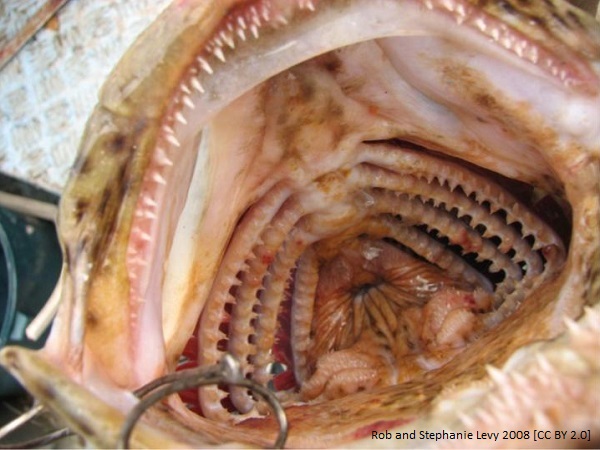
Humboldt penguins- Cool swimmings

by Matthew Norton

Antarctica is bitterly cold. It’s the first thing that comes to mind when thinking about the continent, along with the isolation, perpetual darkness for months on end and its lack of polar bears. But where there is hostility, there can also be the opportunity for nature to thrive. And it just so happens that the Antarctic Ocean (also known as the Southern Ocean) is teeming with life. Even beyond its border, the influence of those polar waters can be felt and utilised wherever the environment and evolution of a species deems it so. Such is the case with the Humboldt penguin, native to the coasts of Chile and Peru, which are furnished with nutrients from the Humboldt Current. 

Humboldt penguins can be recognised (at least as adults) from the distinctive patch of pink flesh around their face.
The geographical range of wild Humboldt penguins highlighted in red (left) and the path of the Humboldt current (also known as the Peru current) as it travels north from Antarctica and along the eastern coast of South America (right).The upwelling of the current’s cold waters up to the surface brings with it a bonanza of nutrients that effectively fertilises the ocean, encouraging the growth of phytoplankton. Through the numerous food chains and food webs these microscopic algae support, the Humboldt current plays a crucial role in supporting populations of commercial fish, with catches in the region accounting for around  20% of all marine fish caught globally.

These penguins mainly dive (usually no more than 30 metres down) and partake in small, schooling fish like anchovies, herring, sardines, hake, smelt as well as the occasional squid. The nutrient rich waters keep these prey relatively abundant, but since natural selection is rarely kind to the complacent, Humboldt penguins will happily switch between prey types and/or travel long distances in search of profitable feeding grounds. Their sense of smell might indicate such areas while their eyes are tuned to the hunt itself. Nevertheless, both strategies hold the inherent risk of starvation, a risk that can be exacerbated if they have an egg to incubate, or a chick to feed. 

Both parents take turns caring for their babies and feeding out at sea. The incubation period for each egg is typically 40-42 days, while the born the chicks are fed until they reach the fledgling stage at 10-12 weeks old.
If all goes well, then a single breeding pair will meet up twice a year to raise of clutch of young and ultimately form a strong, lifetime bonds. 

Similar to other penguins, Humboldt penguins need to nest and raise their young on land, their preferred breeding spots being on high slopes near the shore, ideally where there are rocky crevices to wedge their eggs, or guano deposits to burrow into. Surface nests can be made in a pinch, but even if the breeding colony is free from terrestrial predators (e.g. rodents, snakes, feral cats and dogs) there is still the  risk of wind chill and overexposure to solar radiation (i.e. sunlight). To manage all that, just to keep those boisterous and demanding chicks out of trouble and hunt for food, the existence of predictable food sources nearby might just be the secret between life and death.  

Guano (left) is basically the excrement of birds, bats and other animals (depending on where you find it) that has accumulated over time. It’s the preferred material for Humboldt penguins to dig their nests, but it was also a valuable fertiliser, causing it to be heavily mined (right), depriving these penguins of their nests and causing significant habitat destruction. Fortunately, by the early 20th century, alternative methods of sourcing fertiliser drastically reduced the demand for guano.

In theory, Humboldt penguins can breed at any time of the year and make extended foraging trips, alternating between daytime and night time feeds if necessary, to feed their chicks and meet their own nutritional needs. But a wise penguin would avoid going through the trouble of parenthood during an El Niño event. A naturally occurring phenomenon (though worsened by climate change) characterised by unusually high sea surface temperatures in a given stretch of ocean, more specifically an increase of 0.5°C for five successive three month seasons. An El Niño alone, or combined with the Southern Oscillation, an interannual fluctuation in atmospheric pressure, can have a devastating effect on the climate. 

What does this have to do with the Humboldt penguin you might ask. There are lots of steps involved and factors to consider, but the short version is that an El Niño event can interfere with the Humboldt Current, dramatically reducing the supply of nutrients to the surface. And with less nutrients comes less plankton for fish to feed on, the fish that those penguins feed on. During a particularly strong event, they may simply abandon their nests so that they can keep themselves alive for the sake of future offspring that will have a better chance during easier times. It’s a pretty brutal case of sibling rivalry, but I guess that’s nature for you. 

An example of how the sea surface temperatures (blue and red areas) and currents (blue and red arrows) around South America can change from July (Julio) to January (Enero). Especially with an El Niño (C. del Niño) current pushing warm water further south during the latter month, bringing the reach and influence of the Humboldt Current to a premature end.  
There are means by which the occurrence and severity of El Niño events can be gauged and predicted, such as the Oceanic Niño Index (ONI). A useful, if foreboding early warning system that can predict major hits on commercial fish stocks while the altered climate affects the weather and agriculture on land.

Alas, one can only account for so much in this cruel, unpredictable world. Just last year (2023), an outbreak of avian flu caused the death of around 3,000 Humboldt penguins according to the Chilean Fisheries National Service. And then there’s the human factor to consider. Even when our intentions are benign, the mere sight of a human being can be distracting, stressful even to a penguin who can’t leave their nest. The effect might not even be that obvious according to one study, which found that a penguin’s heartbeat, specifically a penguin incubating an egg, can change if they see us from 150 metres away. A one-off incident might not do much, but in places that attract tourists, such as the Humboldt Penguin National Reserve in Chile, they could be stressed out on a regular basis, leading to harmful disturbances in their behaviour. 

Such disturbances can be avoided, at least with wild populations, by visiting Humboldt penguins in zoos and aquariums instead. This obviously goes hand in hand with providing them with adequate care and enrichment so that the penguins can enjoy a good quality of life and engage in some of their natural behaviours, even within unnatural surroundings. This in turn requires extensive research to work out what chemicals to use, or not use, to clean their enclosures, whether they should be kept in single-species enclosures or be encouraged to mingle, whether live food is necessary to keep them stimulated, whether visitor viewing areas should be out in the open or restricted to ‘hides’ where they can be observed in secret and so on. 

Humboldt penguins photographed at Schönbrunn Zoo, Austria (top left), Woodland Park Zoo, United States (top right), Dublin Zoo, Ireland (bottom right) and Parc de Beauval Zoo, France (bottom left). They all look happy enough, but they can still stage the occasional escape and explore the wider world that is beyond both the confines of their enclosure and their native range in the wild. 
Back in March 2012 a one year old Humboldt penguin managed to escape from Tokyo Sea Life Park and eluded capture for over two months. Fortunately, “Penguin 337” seemed to be in good health upon their return, despite their lengthy stay into what was, for them, uncharted waters.

Interestingly, one study conducted at Fota Wildlife Park, Ireland, reported that their Humboldt penguins exhibited an increase in their feeding behaviour, preening behaviour, interactions with visitors and overall movement around their enclosure with the number of visitors watching them. It’s tempting to assume they actually enjoy the presence of their adoring fans, but the study could only report a positive correlation, which means that each measure increased with the number of visitors, which is not the same as suggesting that one causes the other. Science in general tends to be based on possibilities, probabilities and probably nots (depending on the available evidence), meaning you can only ever be 99.99999% sure a ‘fact’ is actually correct. This might explain why so many scientists go mad and turn into supervillains. 

Nevertheless, the idea of encouraging contact between humans and (trained) Humboldt penguins has been tested by bringing them into care homes and hospices, something that would be inconceivable with wild penguins. In the United Kingdom, there are numerous news articles online covering such experiences with Pringle, Widget and Charlie from Heythrop Zoological Gardens. The benefits for the residents practically speak for themselves, with the animals bringing joy and wonder to those going through a difficult time. And the interactions appear to be well managed, assuming the articles are accurate, with keepers providing clear instructions on how to handle them. 

Encouraging interactions between humans and animals, be they in the wild on in captivity, has been a contentious issue, and will probably remain so for the foreseeable future. Some praise the idea of engaging people with nature as a means to encourage positive conservation action, while others believe that zoos and aquariums shouldn’t exist at all. And these are merely two ends of the spectrum, with many fitting somewhere in between. It’s doubtful we’ll find an easy solution that pleases everybody because just like the animals we like to watch, by whatever means, we are all different people with different experiences and views on the world. The best I can do is offer my own personal opinion, which is that zoos and aquariums fulfil a vital role in conservation by engaging the general public with nature. So long as we look after the physical and mental health of the animals in our care and stay clear of species that cannot adapt to living a long and happy life in such an environment.

From a human perspective

The name we give to a species can say quite a bit about them, where they come from, what they look like, what they do in their day to day lives and so on. But sometimes they’re named after inspirational people including , but not limited to, celebrities, fictional characters and renowned scientists and naturalists. David Attenborough has at least forty to his name (at the time of writing), but for the Humboldt penguin we need to go further back in time to the Prussian naturalist and explorer Alexander von Humboldt (1769-1859).  

Born into a wealthy Prussian family who lived near Berlin (now modern day Germany) Humboldt (left) considered a few career paths before developing the passionate interest for botany (the study of plants) that ultimately made him famous. One such interest, which occurred alongside his botany studies, was mineralogy and geology, as facilitated by three years of studies and a commission to supervise mining operations in the remote Fichtel Mountains. Where he even established a technical school for young miners at his own expense. He’d even suggested that the landmasses on both sides of the Atlantic Ocean had been joined at some point, a precursor of sorts to the theory of continental drift. 
It’s little surprise there’s a mineral name after him, Humboldtine, which is typically found as yellow crystals (right).

Humboldt achieved many extraordinary things during his life, starting with his five year expedition (1799-1804) around Central and South America, much of which was under Spanish colonial rule at the time. The data he collected, along with the fauna and flora he discovered and documented during his travels (over 6,000 miles worth) was so vast that it took years after his return to Europe to organise his research and field notes and publish it all. But during this time, he came to realise that every part of the natural world, including the living and non-living elements, was all connected. Even humans were not exempt from this interconnected world view, with Humboldt noticing how the draining of wetlands and clearing of forests was altering the landscape, making it arid and unproductive. This might seem obvious now (save for a select ignorant few), but compared to much of the prevailing scientific theory in the early 19th century, Humboldt really was ahead of his time. 

Two marine species named after Humboldt, Bathybembix humboldti (top left) and the Humboldt squid (bottom left) along with the Humboldt Current (right). The latter was named after him because he was the first to measure it (at least scientifically) whilst sailing from Lima to Guayaquil around three years into his Central and South American expedition.
A few of the plants found in South and Central America (though not always exclusively) and which were named after Humboldt, the Humboldt’s willow (top left), Quercus humboldtii, also known as the Andean oak (bottom left) and the carnivorous plant Utricularia humboldtii (right). Though the Spanish botanist José Celestino Mutis was the first to explore these (at the time) Spanish colonies and describe the plant species in the region, Humboldt was the first to make comparisons with European plants.

His travels through the Spanish colonies also brought Humboldt’s attention to  the damage colonialism was having on the indigenous population with ‘cash crops’ like sugar and indigo replacing food crops like maize. Meanwhile, trees were felled and dams were built, causing major problems for the rivers and lakes that farms relied on for irrigation. The treatment of indigenous labourers wasn’t much better, made to mine for precious metals and stones for little pay, made even more meagre by the overpriced goods they were forced to buy. Humboldt was also very much against slavery, which was reportedly the only point of contention when he made a detour to meet US president Thomas Jefferson at the White House. Nevertheless, Humboldt would later play a role in passing a law that granted freedom to any slave who entered Prussia’s borders.  

Pico Humboldt in Venezuela (top left), Alejandro de Humboldt National Park in Cuba (top right), Alexander von Humboldt German School in Mexico (bottom right) and Humboldt Sink, a dry lake bed in Nevada, USA (bottom left) are just a few examples of places named after Humboldt in the Americas.

Humboldt was also keen on sharing his theories and ideas, not to mention his efforts to support the science and popularise them across a wide range of social classes. This was evident during the time he spent living in Paris (1804-1827), where he delivered public lectures, collaborated with French scientists and illustrators and involved himself in salons, which in this specific context were centres of intellectual conversation. He was also known to use his experience, insight, influence, connections and even his (dwindling) fortune to support young, aspiring scientists.

This advocacy for science continued even after the threat of financial ruin forced Humboldt to return to Berlin at the behest of the Prussian King. There he continued  to deliver public lectures as well as courses on physical geography at the University of Berlin. In the few years before his death, he also served as tutor to the crown prince of Prussia (among other royal duties), a position he used to introduce members of the royal family to the scientific methods and ideas of the time. And let us not forget the many letters of correspondence he sent and received during his lifetime, of which around 8,000 still exist. These included the letters he exchanged with a young Charles Darwin, one of Humboldt’s many admirers. 

Even more detailed than his letters were the many books, essay and travel volumes Humboldt had published on botany, zoology, geology, mineralogy, astronomy, politics and so on. But perhaps his greatest work was also his last, a book to bring his concept of an interconnected natural world full circle. He said as much in writing: “I have the extravagant idea of describing in one and the same work the whole material world. All that we know today of celestial bodies and of life upon earth, from the nebular stars to the mosses on the granite rock.”

That work was ‘Kosmos’, also known as ‘Cosmos: A Sketch of the Physical Description of the Universe’. It started life as just one book, but ultimately swelled into five volumes, the last of which was incomplete at the time of Humboldt’s death. The first volume alone, which was finally published in 1845, was a sensational bestseller across Europe and translated into multiple languages. A fantastic outcome considering that his intention was for knowledge to be “the common property of mankind”. Would the popular science genre be what it is today without the contribution of Alexander von Humboldt?

Though he never lived to see the Space Age, Humboldt’s contributions to science still earned him a spot on the moon in the form of the Mare Humboldtianum (the dark patch on this image), an old impact crater that would have been flooded with basalt billions of years ago.

Alas, even a connection to a legacy like this might not be enough to keep a species safe these days. The latest assessment by the IUCN classified the Humboldt penguin as ‘Vulnerable’ to extinction. Not ‘Endangered’ or ‘Critically Endangered’, yet, but in a modern world that threatens them with climate change, pollution, conflict with the fishing industry, invasive species and so on, we cannot afford to be complacent either. So as important as it is to look back on the past, it cannot be at the expense of the present. How else are we going to protect our planet, and our heritage, for the future?

Thanks for reading

Sources

Wikipedia. 2024a. Southern Ocean. https://en.wikipedia.org/wiki/Southern_Ocean. Last accessed 08/09/2024

Center for Biological Diveristy. HUMBOLDT PENGUIN. https://www.biologicaldiversity.org/species/birds/penguins/Humboldt_penguin.html. Last accessed 12/07/2024

Wikipedia. 2024b. Humboldt penguin. https://en.wikipedia.org/wiki/Humboldt_penguin. Last accessed 12/07/2024

IUCN. 2020. Humboldt Penguin. https://www.iucnredlist.org/species/22697817/182714418. Last accessed 08/09/2024

Britannica. 2020. Humboldt penguin. https://www.britannica.com/animal/Humboldt-penguin. Last accessed 08/09/2024

Oceana. Humboldt Penguin. https://oceana.org/marine-life/humboldt-penguin/. Last accessed 08/09/2024

Owuor. 2018. What Is The Humboldt Current?. https://www.worldatlas.com/articles/what-is-the-humboldt-current.html. Last accessed 09/08/2024

Culik. 2001. Finding food in the open ocean: foraging strategies in Humboldt penguins

Hennicke and Culik. 2005. Foraging performance and reproductive success of Humboldt penguins in relation to prey availability

De La Puente et al. 2013. Humboldt Penguin

Taylor et al. 2002. Foraging by Humboldt penguins (Spheniscus humboldti) during the chick-rearing period: general patterns, sex differences, and recommendations to reduce incidental catches in fishing nets

Coffin et al. 2011. Odor-Based Recognition of Familiar and Related Conspecifics: A First Test Conducted on Captive Humboldt Penguins (Spheniscus humboldti)

Britannica. 2024. Guano. https://www.britannica.com/science/guano. Last accessed 09/08/2024

Wikipedia. 2024c. Guano. https://en.wikipedia.org/wiki/Guano. Last accessed 09/08/2024

Enfield. 2024. El Niño. https://www.britannica.com/science/El-Nino. Last accessed 09/08/2024

Britannica. 2012. Southern Oscillation. https://www.britannica.com/science/wind. Last accessed 09/08/2024

Ellenberg et al. 2006. Physiological and reproductive consequences of human disturbance in Humboldt penguins: the need for species-specific visitor management

Merco Press. 2023. Avian flu has caused the death of some 3,000 Humboldt penguins in Chilean coasts. https://en.mercopress.com/2023/10/23/avian-flu-has-caused-the-death-of-some-3-000-humboldt-penguins-in-chilean-coasts. Last accessed 12/07/2024

Tenikytė. 2024. 11 Adorable Humboldt Penguin Chicks Are Melting Hearts All Over The Internet. https://www.boredpanda.com/chester-zoo-celebrating-humboldt-penguin-chicks/. Last accessed 12/07/2024

Blay and Côté. 2002. Optimal conditions for breeding of captive humboldt penguins (Spheniscus humboldti): A survey of British zoos

Fernandez et al. 2021. The Effects of Live Feeding on Swimming Activity and Exhibit Use in Zoo Humboldt Penguins (Spheniscus humboldti)

Chiew et al. 2021. Effects of the presence of zoo visitors on zoo-housed little penguins (Eudyptula minor)

Smith et al. 2024. Effects of Enclosure Complexity and Design on Behaviour and Physiology in Captive Animals

Zhang et al. 2021. Impact of weather changes and human visitation on the behavior and activity level of captive humboldt penguins

Källström. 2020. Hägnutnyttjande och besökarpåverkan på Humboldtpingviner (Spheniscus humboldti)

Caston. 2024. Two Humboldt penguins bringing smiles to residents at a Lincolnshire care home. https://hellorayo.co.uk/hits-radio/lincolnshire/news/two-humboldt-penguins-bringing-smiles-at-lincolnshire-care-home/. Last accessed 09/08/2024

Jefford. 2024. Penguins visit care home for a flipping good time. https://www.bbc.co.uk/news/articles/c720z69vekwo#:~:text=Care%20home%20residents%20were%20treated,at%20Cedar%20Mews%20in%20Leicester. Last accessed 09/08/2024

Heythrop Zoological Gardens. Care Home and Hospice Visits. https://www.heythropzoologicalgardens.org/care-home-and-hospice-visits. Last accessed 09/08/2024

Mills. 2021. Penguins waddle into care home ahead of new rules on visitor limits. https://metro.co.uk/2021/12/13/penguins-waddle-into-care-home-ahead-of-new-rules-on-visitor-limits-15766685/. Last accessed 09/08/2024

Jones. 2021. Penguins delight residents at Oxfordshire care home with Christmas visit. https://www.independent.co.uk/news/uk/penguins-oxfordshire-humboldt-one-chile-b1975163.html

BBC News. 2012. Tokyo keepers catch fugitive Penguin 337. https://www.bbc.co.uk/news/world-asia-18202053. Last accessed 28/08/2024

Fair and Shersby. 2022. Animals and plants named after Sir David Attenborough. https://www.discoverwildlife.com/people/species-named-after-sir-david-attenborough. Last accessed 24/07/2024

Wulf. 2015. The invention of nature: The adventures of Alexander von Humboldt: The lost hero of science. ISBN. 978-1-84854-900-5

Kellner. 2024. Alexander von Humboldt. https://www.britannica.com/biography/Alexander-von-Humboldt/Professional-life-in-Paris. Last accessed 24/07/2024

Nature Ecology & Evolution. 2019. Humboldt’s legacy. https://www.nature.com/articles/s41559-019-0980-5. Last accessed 24/07/2024

Harvey. 2020. Who Was Alexander von Humboldt?. https://www.smithsonianmag.com/smithsonian-institution/who-was-alexander-von-humboldt-180974473/. Last accessed 24/07/2024

Grupo Reforma. Colegio Alemán Alexander von Humboldt. https://gruporeforma.reforma.com/graficohtml5/club/colegiosemblematicos/alem%C3%A1n.html. Last accessed 28/08/2024

Mineralogy Database. Humboldtine Mineral Data. https://www.webmineral.com/data/Humboldtine.shtml. Last accessed 28/08/2024

Murphy and van Andel. 2024. Development of tectonic theory. https://www.britannica.com/science/plate-tectonics/Development-of-tectonic-theory. Last accessed 24/07/2024

Walls. 2016. Introducing Humboldt’s Cosmos. https://humansandnature.org/introducing-humboldts-cosmos/. Last accessed 24/07/2024

Rizk. 2010. Mare Humboldtianum Constellation region of interest. https://www.lroc.asu.edu/images/183. Last accessed 28/08/2024

Image sources

H. Zell. 2022. [CC BY-SA 3.0 (https://creativecommons.org/licenses/by-sa/3.0)]. https://commons.wikimedia.org/wiki/File:Spheniscus_humboldti_-_Zoo_am_Meer_-_Bremerhaven_01.jpg

Nrg800. 2010. [CC BY-SA 3.0 (https://creativecommons.org/licenses/by-sa/3.0)]. https://commons.wikimedia.org/wiki/File:Humboldt_Penguin.png

Muséum de Toulouse. 2018. [CC BY-SA 4.0 (https://creativecommons.org/licenses/by-sa/4.0)]. https://commons.wikimedia.org/wiki/File:Spheniscus_humboldti_MHNT.ZOO.2010.11.43.14.jpg

Acatenazzi. 2003. [CC BY-SA 3.0 (http://creativecommons.org/licenses/by-sa/3.0/)]. https://commons.wikimedia.org/wiki/File:Guano.jpg

Maulucioni. 2015. [CC BY-SA 4.0 (https://creativecommons.org/licenses/by-sa/4.0)]. https://commons.wikimedia.org/wiki/File:Corrientes_ecuatoriales_del_Pac%C3%ADfico.png

Johannes Maximilian. 2020. [CC BY-SA 4.0 (https://creativecommons.org/licenses/by-sa/4.0)]. https://commons.wikimedia.org/wiki/File:Spheniscus_humboldti_in_Tiergarten_Sch%C3%B6nbrunn_24_July_2020_JM_(1).jpg

Joe Mabel. 2012. [CC BY-SA 3.0 (https://creativecommons.org/licenses/by-sa/3.0)]. https://commons.wikimedia.org/wiki/File:WPZ_-_Humboldt_Penguin_group_01.jpg

Alan Daly. 2009. [CC BY 2.0 (https://creativecommons.org/licenses/by/2.0)]. https://commons.wikimedia.org/wiki/File:Spheniscus_humboldti_-Dublin_Zoo_-swimming-8a.jpg

Gzen92. 2019. [CC BY-SA 4.0 (https://creativecommons.org/licenses/by-sa/4.0)]. https://commons.wikimedia.org/wiki/File:Manchot_de_Humboldt_(Spheniscus_humboldti)_(3).jpg

Dick Culbert from Gibsons, B.C., Canada. 2013. [CC BY 2.0 (https://creativecommons.org/licenses/by/2.0)]. https://commons.wikimedia.org/wiki/File:Salix_humboldtiana_(8643642931).jpg

Petruss. 2012. [CC BY-SA 3.0 (https://creativecommons.org/licenses/by-sa/3.0)]. https://commons.wikimedia.org/wiki/File:Quercus_humboldtii_1.JPG

andresAzp from El valle de balas, Vzla. 2008. [CC BY-SA 2.0 (https://creativecommons.org/licenses/by-sa/2.0)]. https://commons.wikimedia.org/wiki/File:PicoHumboldt.png

Antonio Núñez Jiménez. Date unknown. [CC BY-SA 3.0 (http://creativecommons.org/licenses/by-sa/3.0/)]. https://commons.wikimedia.org/wiki/File:Alejandro_de_Humboldt_National_Park.jpg

Famartin. 2015. [CC BY-SA 4.0 (https://creativecommons.org/licenses/by-sa/4.0)]. https://commons.wikimedia.org/wiki/File:2015-04-18_15_36_28_Panorama_of_the_Humboldt_Sink_from_the_West_Humboldt_Range_in_Churchill_County,_Nevada.jpg

All other images are public domain and do not require attribution.
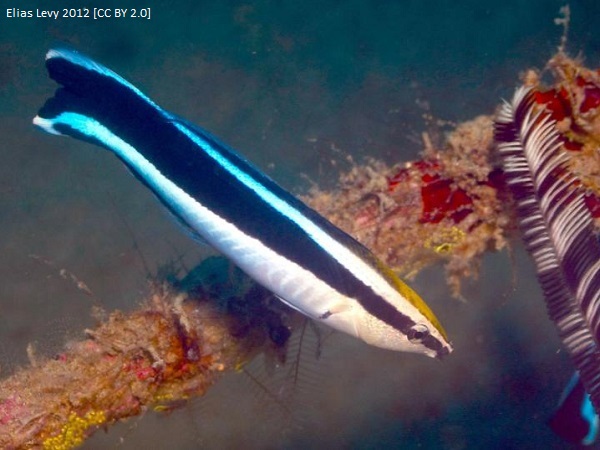
For more bitesize content and ocean stories why not follow ‘Our world under the waves’ on

🌊 Facebook 🌊 Bluesky 🌊 Instagram

Nudibranchs- Can I borrow this?

No creature of the sea lives in a vacuum, they are all part of a system of resources, a machine of stones and shells, seaweeds and corals, dead matter, living matter and an assortment of nutrients and minerals dissolved in the water itself.  A species is unlikely to survive or evolve unless it can be resourceful to some extent, from the hermit crabs who use empty snail shells to protect their soft abdomens to the corkring wrasse who use pieces of seaweed from various species to build their nests. Even the very act of hunting prey is a form of resource gathering, but, as always, there are some who go one step further and assume the abilities of their prey after consumption.

This can be found in nudibranchs, a group of gastropod molluscs that, unlike your typical sea snail or common garden snail (among others), are completely without an external shell, save for a temporary shell they only use as larvae. This should make them extremely vulnerable to predators and encourage them to hide away or make themselves inconspicuous by other means. Instead, many species have brightly coloured bodies to advertise their presence and, more importantly, advertise that they are toxic or extremely unpleasant to eat (a phenomenon is called ‘aposematism’). There’s a chance that the animal, nudibranch or otherwise, is bluffing about its toxic potential, but personally I wouldn’t risk it. 

The lack of a shell in nudibranchs (also known as sea slugs) has not gone unnoticed, the very name literally means ‘naked gills’. Most species can be assigned to one of two groups. The Dorids (left) have a plume of gills around their backside and a digestive system that is (relatively) straightforward, while the Aeolids (right) have a branched digestive system and no gills at all, instead using special appendages (cerata) to perform the necessary gas exchange.
Their next most recognisable feature (in either nudibranch group) is the pair of rhinophores on their head, which they use to find food and mates, evade predators and other perceive their environment through chemical signals and cues.

Nudibranchs are capable of producing their own defensive chemicals and storing them in various bumps, pockets or other specialised appendages depending on the species. But there is also evidence of them stealing toxins from sponges and the stinging cells of hydroids (cousins of jellyfish) after consumption. One particularly dramatic example involves the blue glaucus nudibranch (Glaucus atlanticus), also known as blue angels and blue dragons (among other common names). These stunning sea slugs dare to feed on probably the most dangerous hydroid of them all, the Portuguese man o’ war, and incorporate their deadly stings into their arsenal. Sometimes, these ‘blue dragons’ can travel together as ‘blue fleets’ which can end up washing ashore and stinging any swimmers and beachgoers who cross their path.  

A blue dragon nudibranch (Glaucus atlanticus; left) and the Portuguese man o’ war they dare to attack for their lethal stingers (right). The latter may look like a jellyfish with a sail on its back, but that body is actually a colony of hydroids that have adopted the shape of a singular organism (a bit like ‘Muppet man’).

Some species also acquire the symbiotic zooxanthellae from their prey and then use their photosynthetic abilities as an extra food source. This was briefly mentioned in a previous article, but just to recap these zooxanthellae are tiny dinoflagellate algae which live inside the bodies of corals, anemones and other host animals, trading a portion of the food they produce via photosynthesis in exchange for protection and essential nutrients. But if their original host is consumed by a nudibranch, they may be invited to resume the account as before, just with a different benefactor.

One such species that farms zooxanthellae in this manner is Pteraeolidia ianthina, also known as blue dragons (not to be confused with Glaucus atlanticus and Glaucus marginatus). They have even evolved branches in their gut and body wall for keeping the captured zooxanthellae alive and functioning in ‘photosynthesising factories’. And the results speak for themselves, with one study recording their ability to survive for over 200 days without eating, while laden with stores of zooxanthellae. 

A blue dragon nudibranch (Pteraeolidia ianthina) without (left) and with the zooxanthellae symbionts (right), as demonstrated by the green and brown pigments they bring out. The bright colours of most corals is also produced by the zooxanthellae, not the coral itself, which is why they turn white (i.e. bleach) when they are stressed into expelling their microscopic partners by rising ocean temperatures.

These blue dragon nudibranchs (P. ianthina) mainly use Symbiodinium zooxanthellae to get the job done, but the exact species they use appears to vary, depending on where exactly in the Indo-Pacific region they are found. The simplest explanation would suggest that they are flexible, with different populations using whatever zooxanthellae are available to them and/or best suited to their environment. But there is an alternative, and somewhat more interesting explanation that some studies have alluded to, which suggests that the species P. ianthina may actually be a collection of species that look so similar that it’s very difficult to tell them apart. In biology, these are referred to as ‘cryptic species’ and, in this context, there are differences in their genetic makeup, the species of zooxanthellae they use and very slight differences in their morphology, such as the size and shape of some of their teeth. 

It’s worth mentioning that nudibranchs are not the only marine animals who ‘acquire’ their tools and tricks from others. The neurotoxin used by pufferfish to scare away predators can be acquired from cultures of bacteria inside their intestines, which they in turn acquire from the food chain. Shipworms are another great example, they may use their sharp bivalve shells to burrow and eat their way through submerged wood (natural or otherwise), but it is their symbiotic bacteria that digests the wood into usable sugars. Others are not so subtle about it, such as the blanket octopus, who is known to rip off the tentacles of jellyfish and Portuguese man o’ wars and use them as weapons. Sometimes, you have to wonder how much of a species’ success is achieved by standing over the shoulders of their peers.  

From a human perspective

Nudibranchs with zooxanthellae contained within their bodies are effectively, if temporarily, animal-plant hybrids. Something you’d expect to find in the realms of science fiction, DC comics characters like Poison Ivy and Swamp Thing come immediately to mind, yet it appears that fact can be just as strange as fiction. The sea slugs look otherworldly as it is, inspiring a host of creative common names including (but not limited to) spanish dancers, blue dragons, highland dancers, psychedelic hedgehogs, sea swallows, purple pineapples and living strawberries. Some of these names are associated with nudibranchs in general, sometimes in reference to a particular species. 

Our curiosity for nudibranchs has even stretched to our palate, with some sources suggesting that they are roasted, boiled or eaten raw in Chile, Russia and Alaska and that the experience is like “chewing an eraser”. While eating sea slugs might not sound very appealing to some, it’s worth bearing in mind that different cultures have different histories and tastes when it comes to seafood. And even when nudibranchs are not literally on the end, they have encouraged an adventurous style when it comes to restaurants and cuisine. This is evidenced in no uncertain terms by a restaurant in New York that is literally called ‘Nudibranch’. Jeff Kim, head chef and co-founder of the restaurant, explained to ‘The New Yorker’ back in 2022 that he had observed the creatures whilst diving in Indonesia and that they proved “symbolic” during the brainstorming phase. This ultimately led to some playful dishes (mimicking the inherent playfulness of a nudibranch’s appearance) such as an attempt at the “most cauliflowery of cauliflower dishes.”

Leaning back into the world of science, a curious report dating all the way back to 1884 detailed the observations of a ‘Professor Grant’ (possibly Robert Edmond Grant). These included his work with two species of nudibranch that were identified as Eolis punctata (now called Facelina annulicornis) and Tritonia arborescens (now called Dendronotus frondosus). Both species appeared to produce sounds that “resemble very much the clink of steel wire on the side of a jar” which Grant believed to originate from their mouths. An interesting idea for sure, but there doesn’t seem to be any other studies out there, with any species of nudibranch, to corroborate these findings. That’s not to say that these observations are incorrect, only that we should be cautious until the results have been replicated.

Facelina annulicornis (left) and Dendronotus frondosus (right), the two species that might be able to create sounds audible from around twelve metres away, according to ‘Professor Grant’.

So far we’ve covered examples of nudibranchs’ roles in science and human creativity, but the two don’t need to be polar opposites. Keeping to the 19th (and early 20th) century, these sea slugs were one of numerous groups of marine invertebrates to be replicated as glass models by Leopold and Rudolf Blaschka, a father-son duo who created over 10,000 models between them. They were likely useful for demonstrating the appearance and intricacies of such creatures, especially the soft and squidgy ones, given their tendency to lose their colour and sometimes their stability, when preserved in alcohol. It would go some way to explaining how Leopold Blaschka in particular secured commissions all over the world. That and the Blaschkas’ patient hands, something we can safely assume from the small size of some of the models, as well as the intricate appendages, extremities and other sticky out bits from the animals they were replicating. Not to mention the other materials they would sometimes incorporate into their designs, such as wire, paint, glue and pieces from the original animals themselves (e.g. snail shells). The results really speak for themselves, with the uncanny accuracy of their models, compared to other makers of the time, coming from existing illustrations, expert consultations and from their own observations in the wild and live subjects they kept and used for reference. Alas, the family business finished when Rudolf Blaschka retired in 1938, leaving behind no apprentices (related or otherwise) to carry on their work. 

A collection of sea creature glass models made by Leopold and Rudolf Blaschka. On display at the Harvard Museum of Natural History, Cambridge, Massachusetts, USA.
Some naturalist illustrations of nudibranchs, as drawn by Ernst Haeckel.

Naturally, the best way to see nudibranchs, or any other sea creature for that matter, is alive and in their natural habitat. But if this isn’t an option, a Blashka model is a good second option. There’s also ‘Nudibranch Central’, a website and Facebook group run by Gary Cobb, a retired American expat living in Australia and who is arguably the biggest nudibranch fan on the planet. A reputation that is well founded based on his involvement in writing a nudibranch field guide back in 2006 and the six apps he designed for identifying nudibranchs in different regions of the world. 

Not specifically related to anything in this article, but this Nudibranch Recliner sculpture, photographed on the seafront of Hokitika, New Zealand, was too good not to include.

The common theme here is that nudibranchs can be such a great inspiration when encountered and observed in the right circumstances. It’s something the creatures of the ocean do very well with all their different colours and forms and functions within the interconnected web that is the natural world. It’s little surprise that there are people out there who have had their entire lives shaped by the ocean on their doorstep.  

Thanks for reading

Sources

Wikipedia. 2024. Nudibranch. https://en.wikipedia.org/wiki/Nudibranch. Last accessed 17/05/2024

Geary. 2015. 10 things you did not know about Nudibranchs. https://atmosphereresorts.com/10-things-you-did-not-know-about-nudibranchs/#:~:text=At%20least%20two%20species%20of,a%20mate%2C%20or%20other%20reasons. Last accessed 10/05/2024

California Academy of Sciences. 2012. Sea Slug Senses Part I. https://www.calacademy.org/blogs/project-lab/sea-slug-senses-part-i. Last accessed 05/06/2024

McCullagh et al. One rhinophore probably provides sufficient sensory input for odour-based navigation by the nudibranch mollusc Tritonia diomedea

Dean and Prinsep. 2017. The chemistry and chemical ecology of nudibranchs

Oceana. Blue Glaucus. https://oceana.org/marine-life/blue-glaucus/. Last accessed 17/05/2024

Osterloff. Nudibranchs: How sea slugs steal venom. https://www.nhm.ac.uk/discover/nudibranchs-psychedelic-thieves-of-the-sea.html. Last accessed 16/06/2024

Mares. 2017. The secret beauty of Nudibranchs. https://blog.mares.com/the-secret-beauty-of-nudibranchs-5221.html. Last accessed 10/05/2024

Rudman. 2000. Zooxanthellae in nudibranchs. http://www.seaslugforum.net/find/zoox3. Last accessed 10/05/2024

Animalia. PTERAEOLIDIA IANTHINA. https://animalia.bio/pteraeolidia-ianthina. Last accessed 10/05/2024

Wikipedia. 2024. Pteraeolidia ianthina. https://en.wikipedia.org/wiki/Pteraeolidia_ianthina. Last accessed 10/05/2024

Salleh. 2021. Bizarre ‘blue fleet’ blows onto Australia’s east coast. https://www.abc.net.au/news/science/2021-02-13/bizarre-blue-fleet-blows-onto-australias-east-coast/13139456. Last accessed 10/05/2024

Rudman. 1998. Pteraeolidia ianthina (Angas,1864). http://www.seaslugforum.net/pteriant.htm. Last accessed 10/05/2024

Rudman. 1998. Solar-powered sea slugs. http://www.seaslugforum.net/factsheet/solarpow. Last accessed 10/05/2024

Hoegh-Guldberg and Hinde. 1986. Studies on a nudibranch that contains zooxanthellae. I. Photosynthesis, respiration and the translocation of newly fixed carbon by zooxanthellae in Pteraeolidia ianthina

Cella et al. 2016. A radical solution: the phylogeny of the nudibranch family Fionidae

Loh et al. 2006. Diversity of Symbiodinium dinoflagellate symbionts from the Indo-Pacific sea slug Pteraeolidia ianthina (Gastropoda: Mollusca)

Wilson and Burghardt. 2015. Here be dragons – phylogeography of Pteraeolidia ianthina (Angas, 1864) reveals multiple species of photosynthetic nudibranchs (Aeolidina: Nudibranchia)

Yorifuji et al. 2012. Hidden diversity in a reef-dwelling sea slug, Pteraeolidia ianthina (Nudibranchia, Aeolidina), in the Northwestern Pacific

Mizobata et al. 2023. The highly developed symbiotic system between the solar-powered nudibranch Pteraeolidia semperi and Symbiodiniacean algae

Burghardt et al. 2008. Symbiosis between Symbiodinium (Dinophyceae) and various taxa of Nudibranchia (Mollusca: Gastropoda), with analyses of long-term retention

Korshunova et al. 2019. Multilevel fine-scale diversity challenges the ‘cryptic species’ concept

Noguchi et al. 2006. TTX accumulation in pufferfish

Lee et al. 2000. A Tetrodotoxin-Producing Vibrio Strain, LM-1, from the Puffer Fish Fugu vermicularis radiatus

Waterbury et al. 1983. A cellulolytic nitrogen-fixing bacterium cultured from the gland of Deshayes in shipworms (Bivalvia: Teredinidae)

Yang et al. 2009. The complete genome of Teredinibacter turnerae T7901: an intracellular endosymbiont of marine wood-boring bivalves (shipworms)

Great Barrier Reef Foundation. Blanket Octopus. https://www.barrierreef.org/the-reef/animals/blanket-octopus#:~:text=These%20graceful%20creatures%20can%20adapt,toxic%20jellyfish%20as%20a%20weapon. Last accessed 15/06//2024

Frey. 2023. Meet the Blanket Octopus. https://oceanconservancy.org/blog/2023/01/05/meet-the-blanket-octopus/. Last accessed 15/06/2024

Gosse. 1884. Evenings at the microscope. Page 57-58. https://archive.org/details/eveningsatmicros00goss/page/56/mode/2up?view=theater&q=Professor+Grant. Last accessed 15/06/2024

Fan. 2022. Intrepid Playfulness at Nudibranch. https://www.newyorker.com/magazine/2022/06/20/intrepid-playfulness-at-nudibranch. Last accessed 15/06/2024

National Museums Scotland. Blaschka models. https://www.nms.ac.uk/explore-our-collections/stories/natural-sciences/blaschka-models/. Last accessed 18/06/2024

Robitzski. 2023. Slideshow: The Lifelike Glass Models of Leopold and Rudolf Blaschka. https://www.the-scientist.com/slideshow-the-lifelike-glass-models-of-leopold-and-rudolf-blaschka-70911. Last accessed 18/06/2024

Sullivan. 2024. Dive Into the Exotic World of Nudibranchs, the Spectacular Slugs of the Sea. https://www.smithsonianmag.com/science-nature/dive-exotic-world-nudibranchs-spectacular-slugs-sea-180984013/. Last accessed 17/05/2024

Nudibranch Central. 2024. Species List: 2024-06-14 Toilet Block, Mooloolah River, La Balsa Park, Buddina, Sunshine Coast, Queensland, Australia. https://nudibranchcentral.blogspot.com/2024/06/species-list-2024-06-14-toilet-block.html. Last accessed 15/06/2024

Image sources

Heavydpj. 2021. [CC BY-SA 4.0 (https://creativecommons.org/licenses/by-sa/4.0)]. https://commons.wikimedia.org/wiki/File:Goniobranchus_Kuniei.jpg

Alexander R. Jenner. 2009. [CC BY-SA 3.0 (https://creativecommons.org/licenses/by-sa/3.0)]. https://commons.wikimedia.org/wiki/File:Nembrotha_chamberlaini_(AA1).jpg

Brocken Inaglory. 2007. [CC BY-SA 3.0 (http://creativecommons.org/licenses/by-sa/3.0/)]. https://commons.wikimedia.org/wiki/File:Nudi_from_tidepool.jpg

Sylke Rohrlach from Sydney. 2013. [CC BY-SA 2.0 (https://creativecommons.org/licenses/by-sa/2.0)]. https://commons.wikimedia.org/wiki/File:Blue_dragon-glaucus_atlanticus_(8599051974).jpg

Brett Ortler. 2012. [CC BY 4.0 (https://creativecommons.org/licenses/by/4.0)]. https://commons.wikimedia.org/wiki/File:Physalia_physalis_182283768.jpg

Sylke Rohrlach from Sydney. 2015. [CC BY-SA 2.0 (https://creativecommons.org/licenses/by-sa/2.0)]. https://commons.wikimedia.org/wiki/File:Blue_Dragon_Nudibranch-Pteraeolidia_ianthina_(16101797460).jpg

Bernard DUPONT from FRANCE. 2009. [CC BY-SA 2.0 (https://creativecommons.org/licenses/by-sa/2.0)]. https://commons.wikimedia.org/wiki/File:Sea_Slug_(Pteraeolidia_ianthina)_(6061874251).jpg

TanguyLoïs. 2023. [CC BY-SA 4.0 (https://creativecommons.org/licenses/by-sa/4.0)]. https://commons.wikimedia.org/wiki/File:Facinela_(2)_-_Copie.jpg

Chichvarkhin A. 2016. [CC BY 4.0 (https://creativecommons.org/licenses/by/4.0)]. https://commons.wikimedia.org/wiki/File:Dendronotus_frondosus_(10.7717-peerj.2774)_Figure_7_(cropped).png

Bard Cadarn. 2016. [CC BY-SA 4.0 (https://creativecommons.org/licenses/by-sa/4.0)]. https://commons.wikimedia.org/wiki/File:Sea_Creatures_in_Glass.jpg

Mike Dickison. 2021. [CC BY 4.0 (https://creativecommons.org/licenses/by/4.0)]. https://commons.wikimedia.org/wiki/File:Nudibranch_Recliner_MRD_WCWPAL_07.jpg

For more bitesize content and ocean stories why not follow ‘Our world under the waves’ on

🌊 Facebook 🌊 Bluesky 🌊 Instagram

Cape fur seals- Parting ways

by Matthew Norton

The ocean has many features, but one of its most defining is how absolutely massive it is, covering around 70% of the Earth’s surface and making up 97% of the planet’s water supply. Some of the longest known animal migrations would not be possible without this great vastness, yet there are species who keep to a much smaller geographic range, despite being undoubtedly strong swimmers. Sometimes, the clue is even in the name, as is the case with Cape fur seals, who don’t typically venture more than a 100 miles away from the shores of South Africa and Namibia. Assuming their needs are comfortably met, why travel any further?  

The name cape fur seal eludes to their two layers of hair (i.e. fur) that keep them warm in the ocean, as well as the layer of insulating blubber under the skin. Look closely at the photo above and you should notice the external ear flaps, a key feature that sets them apart from the ‘true seals’.

Their diet often consists of small fish, crabs, cephalopods and the occasional seabird, such as a fledgling cape gannet attempting their maiden flight. That’s not to say they exploit more unusual prey if the opportunity presents itself. Back in 2012, they were even documented catching and dining on blue sharks off the coast of Cape Point, South Africa. A gutsy move, considering how they themselves are targeted by great white sharks, of which there is usually a well-known abundance in those waters. 

Cape gannets (left) and blue sharks (right) have both been preyed on by cape fur seals. The former is an endangered species and so cape fur seal predation is an issue that has been used to justify culling the species in the past. 

Naturally, the cape fur seal is well adapted for both catching tricky prey and dodging formidable predators. For example, their limb bones are almost fully withdrawn into their body for fast and effective swimming while their large eyes offer good visibility head on and at the sides, useful against hunters who need the element of surprise. And should they need to make a quick getaway out of the water, they have ridges in the soles of their flippers that make it easier to clamber up wet and slippery rocks. This added grip might also prove useful for hauling out onto the beach, where they can breed and pass on their survivalist genes to the next generation? 

The males make landfall first, usually around mid-October, ready to use their big, blubbery mass to establish breeding colonies. They may hope for it to be a peaceful and civilised process, but more likely than not they will have to use overwhelming size and threatening displays to warn away potential rivals. And if this doesn’t do the trick, then the two bulls will get violent and use their bulk and their bite to try and force each other into submission. 

By early November, the females start arriving on those same beaches, many of whom will be carrying babies that were conceived during the previous breeding season. They too, may have to compete among themselves for their preferred space within a bull’s given territory. And that’s assuming the bulls have finished among themselves prior to their arrival. But if all goes well, the pregnant females will give birth within a couple of days and then mate again several days after that. 

Cape fur seal breeding colonies on a rocky beach in South Africa (left) and a sandy beach in Namibia (right).
Even between male and female cape fur seals, it seems that things can get pretty heated during the breeding season, and not always in the way the males are hoping for (left). The resulting fur seal pups (right) are suckled by their mothers for nine months. Every time the mother heads to sea to feed, usually a few days at a time, there is a risk of the baby being taken by jackals or hyenas, or having their eyes pecked out by kelp gulls. But these are better odds than failing to produce enough milk and letting the pup starve.

Pretty standard so far for any given species of seal or fur seal. But across an ocean, the Indian Ocean to be specific, there is the Australian fur seal, a species that looks and behaves in almost exactly the same way as the cape fur seal. This is no coincidence either, because they are so closely related that they’re actually considered to be two subspecies of the Brown fur seal. But if they go generation to generation without meeting and cross breeding then their genes will grow more and more different from each other over time and, eventually, they will become two different species in their own right. This is a process called speciation.  

An Australian fur seal.
Distributions of the Brown Fur seal around the world. Dark blue indicates where we expect to find breeding colonies while light blue indicates where non-breeding individuals have been spotted (perhaps exploring far away feeding grounds, ready to bulk up before the next breeding season).

It doesn’t even need to end at just two different species. Give it enough time (probably another few hundred thousand years at least) and a third brown fur seal subspecies might emerge. And recent history has already given us an idea for how this process might start, if it hasn’t already, with a paper from 1983 reporting the discovery of a cape fur seal on Marion Island, a subantarctic spit of land that’s almost 1,200 miles southeast of Cape Town. The island’s beaches were no strangers to fur seals with both the Antarctic and Subantarctic fur seal already in residence, but this was still very far from the warm waters where cape fur seals usually roam. But if this one individual found its way there, then it’s possible (however improbable) that others will follow and leave their native shores behind. 

The mystery fur seal on Marion Island was culled and once its skull (not the exact one pictured above) and dentition was examined it was confirmed to be a cape fur seal. Incidentally, the skulls of cape fur seals and australian fur seals are slightly different, making it one of the few means by which we can tell the two subspecies apart.

It would be nice if nature stayed still and straightforward enough for us to work out what goes where and who does what. The job of most naturalists would probably be less stressful if this was the case. But on the other hand, life in the ocean (and beyond) only got to where it is today through change. The planet itself has gone through a plethora of extreme changes during its history, each time giving the lifeforms of that particular time period two choices, evolve or die. That said, the one thing that we, and every other species around today, could do without is climate change speeding up the process to the point where it all becomes an uncontrollable mess.

From a human perspective

Both ‘true’ seals and fur seals have endured plenty of interference to their everyday lives as a consequence of human activity (pollution, habitat destruction, climate change etc). Worse still, they have been directly and violently hunted in the past, with many countries having a history of exploiting them for their meat and to remove them as competitors for other natural resources. For example, grey seals around the UK were culled between 1977 and 1982 in an effort to keep them from consuming commercial fish species such as salmon. Putting aside the ethical arguments for a moment, substantial though they are, these culls never seemed to actually benefit the fisheries they were supposedly protecting. Nevertheless, there are probably still people out there who believe that the only good seal is a dead seal. 

In the case of the cape fur seal, hunting has persisted well into the present day, especially in Namibia where both adults and pups are hunted annually between August and November. In South Africa, the practice was suspended in 1990, though some limited culls have been carried out since. Fortunately, the whole species (combining the populations of cape fur seals and australian fur seals) is still classified as ‘Least Concern’ by the IUCN Red List. This assessment was last updated in 2015 and a lot can happen in nine years, but the overall picture still appears promising, though this could be swayed by public perception (among other factors).

Even when our intentions are benign, cape fur seals won’t always respond well to a human’s presence in what should be their natural habitat. Just last year (2023) papers reported on a series of attacks on bathers around Cape Town. The fact that an attack happened isn’t particulalry noteworthy since there’s bound to be the odd isolated incident, especially when entitled and/or ignorant fools are involved. But it was the sudden surge of the attacks that drew media attention, a surge that was soon attributed to a toxic algae concealed within the fish that the cape fur seals were eating. The resulting effects on their brain caused them to be unusually aggressive in the face of potential danger. Even the world of reality TV was affected with the aggressive fur seals disrupting the production of that year’s season of Love Island (so it’s not all bad news).

Despite the cute appearance and (sort of) resemblance to aquatic dogs, cape fur seals are wild animals, not household pets. This is easy to forget when they jump on boats, chill out around harbours and willingly take food when offered to them. It’s probably ill advised to make a habit out of that latter and people should always remember to give these animals a respectful distance.

In all seriousness, after everything that humanity has, and continues to put them through, you’d think that cape fur seals would only see us as the enemy, something to be avoided if possible, or fought off if necessary. But back in 1969, a very different relationship was presented on our TV screens through an episode of ‘The Undersea World of Jacques Cousteau’. 

Jacques Cousteau (in the red beanie) on board the Calypso. Born in 1910, he was a pioneer of underwater exploration, having co-invented the very first scuba tank, written 50 book and produced 115 films (including TV episodes and stand alone films). 
Having also founded the Cousteau Society in 1973 and launched a worldwide, and successful, petition to protect Antarctica from mineral exploitation in 1990, his conservation credentials are also in good order (probably the biggest understatement I’ve ever written in an article).

‘The Unexpected Voyage of Pepito and Cristobal’ focussed almost entirely on an experiment to determine if the titular cape fur seals could form an affectionate bond with the crew of the Calypso (Cousteau’s research vessel), similar to that between a dog and their owner. To achieve this end, the Calypso team ‘acquired’ Pepito and Cristobal as two young fur seals (not pups) from a colony on the appropriately named ‘Seal Island’ in False Bay, near the southwestern edge of South Africa. During the Calypso’s subsequent crossing of the Atlantic Ocean, food was used to train the fur seals into trusting and interacting with their new human companions. This was first done on board the ship in a purpose built training pen and then in the ocean with two of Calypso’s divers.

For its time, the episode, and the series as a whole, would have been ground breaking. One particular review on the episode’s IMDb page argues that it’s “The sort of nature documentary you’d never see today!”, but this was an argument against taking Pepito and Cristobal away in the first place and then habituating them to the extent that, if anything, they became too friendly with people. This was particularly evident with Cristobal who wandered away from the Calypso whilst they were in Caribbean water, and then acquainted himself with a fisherman in Puerto Rico. After eating a large portion of the fisherman’s catch, he was sold to a family, who then agreed to return Cristobal to the Calypso team once the story reached them. All things considered, he was lucky to be treated with such kindness and reunited with Pepito. His fate could have been a lot worse. 

Skimming over the scientific value of the Pepito and Cristobal experiment (which feels like a debate for another day), the ethical concerns raised by the IMDb review do, in my opinion, have merit. Disturbing an animal’s natural behaviour, even to a relatively minor extent, can cause them avoidable stress, injury and, if repeated enough times, changes to their behaviour that can put them at risk from other dangers (natural or otherwise). This was even mentioned in my last article on whale sharks. But this is all based on what we know now, meaning we can probably explain the whole affair as a product of late 1960s thinking. So long as we don’t forget why perspectives have changed over time. 

Jacques Cousteau himself was a testament to this with one of his earliest forays into underwater filmmaking with the 1956 documentary ‘The Silent World’. It was widely celebrated at the time, winning five awards, including the Oscar for best documentary and the Palme d’Or award at the Cannes Film Festival. But there are some segments of the film that have not aged well, particularly (but limited to) the crew of the Calypso slaughtering multiple sharks for nothing more than scavenging on an already dead whale, which had been mortally wounded by the ship’s propellers. 

“For us divers, sharks are mortal enemies.”

“A dead whale or a man in the sea, it is the same thing to sharks.”

Jacques Cousteau (1956)

But over a decade later, another episode of his undersea world series, simply titled ‘Sharks’, presented a far more nuanced appreciation for these large fish. 

“The shark is said to be a fearsome brute, but this is not always true.”

“The shark is a splendid beast, one of the sea’s most magnificent creatures.” 

Jacques Cousteau (1968)

Also, if you were to watch the 2021 documentary ‘Becoming Cousteau’, you would see footage from a television interview where he specifically reflects on the shark sequence from ‘The Silent World’. “I couldn’t agree. I cannot show it anymore… we couldn’t handle the shark the same way today.” Regretfully, I couldn’t find out what year that interview took place (though it was probably in the 1970s), but it is clear that his view of sharks had changed dramatically and for the better. 

In the interest of being inescapably clear, I am not drawing attention to the unflattering parts of Cousteau’s legacy for the sake of it. Without claiming to be an expert on the man, it’s still an undeniable fact that he was a pioneer in exploring the underwater world and raising awareness of its beautiful mystery. His was a life of incredible achievements that came with more than a few mistakes along the way (the treatment of Pepito and Cristobal could be considered one of them). But he acknowledged many of these mistakes, not just with his words, but with his actions as he campaigned tirelessly to protect the underwater world (for more details I recommend visiting the Cousteau Society website). Better that, then keeping yourself stuck in the past, clinging to a way of thinking that only used to make sense. 

Thanks for reading

Sources

National Oceanic and Atmospheric Administration. 2023. How much water is in the ocean?. https://oceanservice.noaa.gov/facts/oceanwater.html#:~:text=About%2097%20percent%20of%20Earth’s,in%20glaciers%20and%20ice%20caps. Last accessed 11/03/2024

Seal Conservation Society. South African and Australian Fur Seals (Arctocephalus pusillus). https://www.pinnipeds.org/seal-information/species-information-pages/sea-lions-and-fur-seals/south-african-fur-seal. Last accessed 28/01/2024

Wikipedia. 2024. Brown fur seal. https://en.wikipedia.org/wiki/Brown_fur_seal. Last accessed 28/01/2024

Gondwana Collection Namibia. CAPE FUR SEAL. https://namibian.org/nature/marine-life/seals/cape-fur-seals. Last accessed 28/01/2024

Strydom et al. 2022. Factors that influence Cape fur seal predation on Cape gannets at Lambert’s Bay, South Africa

Nuwer. 2015. Fur Seals Caught Preying on Sharks Off South Africa. https://www.smithsonianmag.com/science-nature/fur-seals-caught-preying-sharks-south-africa-180954779/. Last accessed 28/01/2024

Peterson. 2015. Gruesome Meal: Seagulls Snack on Baby Seals’ Eyeballs. https://www.livescience.com/51944-seagulls-eats-seal-eyeballs.html. Last accessed 28/01/2024

De Simone. 2023. South Africa’s shark spotters back in action as great whites return. https://www.bbc.co.uk/news/world-africa-67771596. Last accessed 11/03/2024

MARINEBIO. South African / Australian Fur Seals, Arctocephalus pusillus. https://www.marinebio.org/species/south-african-australian-fur-seals/arctocephalus-pusillus/. Last accessed 04/02/2024

Australian Museum. 2022. Australian Fur Seal. https://australian.museum/learn/animals/mammals/australian-fur-seal/. Last accessed 04/02/2024

Kirkman and Arnould. 2018. Cape and Australian fur seals: Arctocephalus pusillus pusillus and A. p. Doriferus

Malan et al. 2022. Palaeoclimatic changes resulted in range expansion and subsequent divergence in brown fur seals, Arctocephalus pusillus

Britannica. Subspecies. https://www.britannica.com/science/subspecies. Last accessed 04/02/2024

Whale and Dolphin Conservation. CLYMENE DOLPHIN. https://uk.whales.org/whales-dolphins/species-guide/clymene-dolphin/. Last accessed 04/02/2024

Kerley. 1983. Record for the Cape fur seal Arctocephalus pusillus pusillus from subantarctic Marion Island

Britannica. Marion Island. https://www.britannica.com/place/Marion-Island. Last accessed 20/03/2024

Balmelli and Wickens. 1994. Estimates of daily ration for the South African (Cape) fur seal

Punt et al. 1995. The effects of future consumption by the Cape fur seal on catches and catch rates of the Cape hakes. 2. Feeding and diet of the Cape fur seal Arctocephalus pusillus pusillus

Arnould et al. 2003. Historical dynamics of the Australian fur seal population: evidence of regulation by man?

IUCN Red List. 2015. Afro-Australian Fur Seal. https://www.iucnredlist.org/species/2060/45224212. Last accessed 28/01/2024

Wilson. 2020. Seal-Fisheries Interactions: PROBLEMS, SCIENCE AND SOLUTIONS. https://bdmlr.org.uk/wp-content/uploads/2020/04/Resources-seal-fisheries-interactions.pdf. Last accessed 11/03/2024

France 24 English. 2023. What’s behind South Africa’s rise in seal attacks? • FRANCE 24 English. https://www.youtube.com/watch?v=46dvA3ZDR30. Last accessed 28/01/2024

NEWKEY-BURDEN. 2023. Brain-damaged seals attack bathers. https://theweek.com/news/world-news/959266/seals-driven-mad-by-acid-attack-bathers. Last accessed 28/01/2024

Rainbird. 2023. Love Island bosses warned over dates due to ‘dangerous’ seals attacking in South Africa. https://www.mirror.co.uk/tv/tv-news/love-island-bosses-warned-over-28992708. Last accessed 28/01/2024

The Undersea World of Jacques Cousteau: The unexpected voyage of Pepito and Cristobal. 1969. Produced by David L. Wolper Productions and Metromedia Productions

World Cat. The unexpected voyage of Pepito and Cristobal. https://search.worldcat.org/title/unexpected-voyage-of-pepito-and-cristobal/oclc/85975001. Last accessed 28/01/2024

IMDb. The Unexpected Voyage of Pepito and Cristobal. https://www.imdb.com/title/tt0868919/. Last accessed 28/03/2024

Cornwall Wildlife Trust. 2021. Marine and Coastal Wildlife Disturbance in Cornwall. https://www.cornwallwildlifetrust.org.uk/sites/default/files/2021-10/Marine%20Wildlife%20Disturbance%20in%20Cornwall%20Summary%20Report%202021%20final.pdf. Last accessed 05/04/2024

Police Service of Northern Ireland. MARINE WILDLIFE DISTURBANCE. https://www.psni.police.uk/sites/default/files/2022-09/Partnership%20for%20Action%20Against%20Wildlife%20Crime%20NI%20%28PAW%20NI%29%20-%20Marine%20Wildlife.pdf. Last accessed 05/04/2024

NOAA Fisheries. Viewing Marine Life. https://www.fisheries.noaa.gov/insight/viewing-marine-life. Last accessed 05/04/2024

The Silent World. 1956. [DVD]. Directed by Jacques-Yves Cousteau and Louis Malle. Produced by FSJYC Production; Requins Associés; Société Filmad; Titanus

IMDb. The Silent World. https://www.imdb.com/title/tt0049518/. Last accessed 28/03/2024

The Undersea World of Jacques Cousteau: Sharks. 1968. Directed by Philippe Cousteau and Jack Kaufman. Produced by David L. Wolper Productions, Les Réquins Associés, Metromedia Productions

Becoming Cousteau. 2021. Directed by Liz Garbus. Produced by Story Syndicate, ACE Content, National Geographic Documentary Films, National Geographic

The Cousteau Society. ABOUT THE COUSTEAU SOCIETY. https://www.cousteau.org/about-us/#cousteau. Last accessed 28/03/2024 

Image sources

Avitopia www.avitopia.net. 2017. [CC BY-SA 3.0 (https://creativecommons.org/licenses/by-sa/3.0)]. https://commons.wikimedia.org/wiki/File:Cape_Gannet_-_Morus_capensis.JPG

Diego Delso. 2020. [CC BY-SA 4.0 (https://creativecommons.org/licenses/by-sa/4.0)]. https://commons.wikimedia.org/wiki/File:Tibur%C3%B3n_azul_(Prionace_glauca),_canal_Fayal-Pico,_islas_Azores,_Portugal,_2020-07-27,_DD_21.jpg

Robur.q. 2015. [CC BY-SA 4.0 (https://creativecommons.org/licenses/by-sa/4.0)]. https://commons.wikimedia.org/wiki/File:Arctocephalus_pusillus_5_-_Cape_fur_seal.JPG

Bernard DUPONT from FRANCE. 2018. [CC BY-SA 2.0 (https://creativecommons.org/licenses/by-sa/2.0)]. https://commons.wikimedia.org/wiki/File:Cape_Fur_Seals_(Arctocephalus_pusillus)_male_quarrelling_with_a_female_…_(32628709318).jpg

Hans Hillewaert. 2007. [CC BY-SA 3.0 (https://creativecommons.org/licenses/by-sa/3.0)]. https://commons.wikimedia.org/wiki/File:Arctocephalus_pusillus_(Cape_fur_seal_pup).jpg

Charles J. Sharp. 2023. [CC BY-SA 4.0 (https://creativecommons.org/licenses/by-sa/4.0)]. https://commons.wikimedia.org/wiki/File:Australian_fur_seal_(Arctocephalus_pusillus_doriferus)_female_Bruny.jpg

Mirko Thiessen. 2005. [CC BY-SA 3.0 (http://creativecommons.org/licenses/by-sa/3.0/)]. https://commons.wikimedia.org/wiki/File:Arctocephalus_pusillus_distribution.png

Paul venter. 2011. [CC BY-SA 3.0 (https://creativecommons.org/licenses/by-sa/3.0)]. https://commons.wikimedia.org/wiki/File:Arctocephalus_pusillus01.jpg

David Stanley from Nanaimo, Canada. 2015. [CC BY 2.0 (https://creativecommons.org/licenses/by/2.0)]. https://commons.wikimedia.org/wiki/File:Atlantic_Cape_Fur_Seal_(19313884576).jpg

Sidheeq. 2018. [CC BY-SA 3.0 (https://creativecommons.org/licenses/by-sa/3.0)]. https://commons.wikimedia.org/wiki/File:Man_feeding_to_seal,_Cape_Town_harbour_.jpg

Joachim Huber. 2007. [CC BY-SA 2.0 (https://creativecommons.org/licenses/by-sa/2.0)]. https://commons.wikimedia.org/wiki/File:Seals_in_port_of_Cape_Town_(3236534613).jpg

ENRIQUE MARTINEZ CASTILLO. 1976. [CC BY-SA 4.0 (https://creativecommons.org/licenses/by-sa/4.0)]. https://commons.wikimedia.org/wiki/File:Jaques_Yvez_Cousteau_Ramon_Bravo_PBY_catalina_calypsoII_1976.jpg

All other images are public domain and do not require attribution.
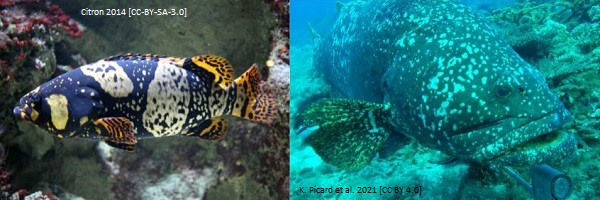
For more bitesize content and ocean stories why not follow ‘Our world under the waves’ on

🌊 Facebook 🌊 Bluesky 🌊 Instagram

Whale sharks- Starry sharks, hidden talents

by Matthew Norton

There are some very big fish out there, from giant groupers and colossal sunfish (not an actual species name) to the larger sharks such as Greenland sharks and great whites. Whatever species it is, there’s no shame in feeling even a little bit intimidated when meeting a fish substantially larger than you. But even these ocean giants pale in comparison to the largest fish of them all, the appropriately named whale shark. 

A whale shark photographed in the Maldives and accompanied by a group of remoras.

Like the namesake, these gentle giants can swim around large stretches of ocean and have been found in virtually every tropical ocean around the world. As for their maximum size there is some debate with claims of individuals surpassing 20 metres long, only to be disputed for one reason or another. Naturally, there is always the potential for new evidence to come to light, but for now an 18.8 metre long female, caught and recorded off the coast of India, remains the largest confirmed whale shark.   

Measuring such large animals is inherently difficult, partly due to the fact we can’t ask them to stay still long enough to stretch out a tape measure in the water. There are other methods at our disposal, such as lines of rope with knots at regular intervals, visual comparisons next to objects of known length (e.g. divers, boats) and high tech methods like laser photogrammetry. And then there’s the challenge of finding them in the first place which, even with the best information to hand, doesn’t always happen.   

As well as visual comparisons with a human being of (presumably) known height (left), measurements from whale sharks washed up on the beach or caught in fishing nets (right) can also provide valuable data on their populations. But the latter comes with major ethical issues to say the least. 

Despite all this, there are things we have learnt about whale sharks, or at least things we have recorded with a reasonable degreee of confidence For example, we estimate that 75% of the species are found in the combined waters of the Indian and Pacific Oceans while the remaining 25% live in the Atlantic Ocean. 

As for the movements of an individual, whale sharks generally go where there’s enough plankton for them to feed on. To gather enough of this plentiful, but heavily spaced out food source, they sift through the water with arch-like structures in their gills called gill rakers. This can be achieved by simply swimming through the water or actively sucking in water through their mouth by beating their gills in a rhythm. Both methods pass water through the gills and allow the rakers to pick up food, but for such a large animal feeding, it pays to catch them by the tonne as efficiently as possible and conserve energy in general. 

Whale shark feeding in action with their open mouths and gill rakers sifting out the plankton. The quest to find enough of this food source can have them visiting coastal areas to capitalise on the rushes that come with plankton blooms and spawning events.
Despite relying entirely on their gill rakers to catch food, whale sharks still possess tiny teeth that are an evolutionary by-product that serves no actual purpose. Perhaps the changes required to remove them completely would invoke some costly side effect.

Other reports have detailed whale sharks hovering at the ocean’s surface and waiting for schooling small fish like sardines to, unintentionally, jump straight into their mouth. Footage released earlier this year (2023) also shows them scouring the seafloor, possibly foraging for isopods. But with any newly discovered behaviour, further study is needed to fully understand how it works and why the animal does it. For all we know, this could have been a one-off behaviour from an unusually ambitious whale shark. What is clear though, is that this species can adapt to the situation and experiment with new strategies to catch prey that may have been beyond their reach. 

Whale sharks also boast some beautifully distinctive patterns of white spots that can be found in fully grown adults as well as partially developed embryos, as found in a specimen trawled from the Gulf of Mexico in 1953. The patterns are also unique to each individual and allows us to identify them photographs and record repeated encounters. Combined with the previously mentioned methods for measuring their size, we can (if we haven’t already) gain a wealth of information about the whale sharks of the world and work out how fast they grow and where they go at different stages in their life. 

Studying such large sea creatures in their natural environment is always going to be a long and laborious process. Sometimes it can be made easier by having the perfect equipment for the job, or encountering an individual bearing some very distinctive markings or scars. But nothing can change the fact that they are wild animals with minds of their own and this rarely correlates with giving researchers exactly what they want. But it’s also important that we try, because the abundance of whale sharks (and other large filter feeders) tells us a lot about the abundance of the plankton they feed on and, by extension, the health of the ocean around them. 

From a human perspective

A long time ago, I was travelling by train, I can’t remember where to, or where from, but I do remember a couple, a man and a woman, sitting opposite to me discussing whether a whale shark is a shark or a whale. The woman decided to ask me for my opinion and I confirmed that it was a species of shark. And once I’d revealed that this stranger they had involved was a marine biology student at Plymouth university, the debate was settled instantly. I’m telling you this now because it’s easy to see where the confusion had come from. As well as the name “whale shark”, these animals are as large as some whales and attract just as much awe and fascination. 

In some parts of the world, there are people who have developed a warm familiarity with whale sharks and treat them in a similar way that we might treat a local neighbourhood cat. There are villages around Cendrawasih Bay, Papua, Indonesia, where these enormous fish will happily approach the local fishing boats and rub their bodies against them as an apparent show of affection. This is often reciprocated with offerings of fish while local swimmers are known to approach the shark with no fear whatsoever. In fact, their appearance is believed to be a sign of good luck and they are called “gurano babintang”, which means ‘sharks that have stars’ in the local dialect. And this is just one example of sharks ingratiating themselves into our history and culture by simply existing. 

Just a few examples of sharks in mythology. 
A- In the Marshall Islands, tribes would go to war if someone disrespected their sacred shark. In 2011, the Islands’ territories included the world’s largest shark sanctuary.
B- In Papua New Guinea, it’s believed that sharks are the embodiments of their ancestors. 
C- Oppian, a Greco-Roman poet who lived in the 2nd century AD spoke of blue shark who supposedly hid their young in their mouths or wombs to hide them from danger. 
D- In the Solomon Islands, they believed in sharks who would help fishermen and swimmers, but would also offer human sacrifices to appease them.
E- A tale from Zanzibar tells of a monkey who dreamt of swimming in the seas. He gets a ride on a shark’s back before the shark then tells of his intentions to eat the monkey’s heart. The monkey outwits the shark by claiming he left his heart back on the land. 
F- In Tlingit society, sharks and ravens are intertwined in both mythology and family hierarchies. How exactly a given tribe interprets this can be reflected in objects like crests or ‘dance rattles’.
G- Ancient Mayan sites have included fossilised megalodon shark teeth amongst the burial offerings.
H- In Hawaiian mythology there are nine shark gods and goddess. One such goddess was Ka’ahupahau, who once ordered the death of a local girl over an insult. But Ka’ahupahau later regretted her actions and declared that no shark should ever attack a human in the area that is now known as Pearl Harbour. 

Where there is a charming accord between people and nature, there are also those from further afield who are willing to see or experience it for themselves. This can be big business with some countries, like the Philippines and the Maldives, where you can find whale sharks printed on banknotes. On the surface, this seems to be a win-win scenario with local communities getting an economic boost along with a vested interest in keeping the sharks out of shark-fin soup. 

Alas, there can be ethical issues associated with shark ecotourism, especially in cases where tour operators get too close to the animals or try to entice them closer with food. Even if this doesn’t cause the shark to hurt themselves during the encounter, the disruption to their natural behaviour can lead to subtle, but long term harm. This may not be the intention of the operator, or the tourists who pay them, but ignorance is something to watch out for in any enterprise that involves live animals. 

Whale shark feeding (left) and a whale shark watching tour (right) off the coast of Oslob, part of the Cebu island in the Philippines. This particular operation has been labelled controversial since feeding the animals runs the risk of disrupting their natural behaviours.
It could be argued that these divers and snorkelers are getting far too close, especially since whale sharks usually swim slower than 5km per hour and may struggle to get away from a nuisance swimmer. But always remember that context is important.

But there is guidance out there, in the scientific literature and from organisations like the Shark Trust and the World Wildlife Fund (WWF), to encourage responsible shark ecotourism. For tourists, this advice can be as straightforward as researching the tour operator and looking out for things like their ethical practices (a dedicated page on their website is probably a good sign) and other indicators. The right information about whale shark behaviours and migration patterns can also help like-minded operators to avoid collisions and unintentional harassment of the animals. Sometimes, it can be as simple as adhering to a minimum distance that will keep people happy and keep the sharks from trying to swim away.

Basking sharks, the second largest shark species in the world, are found in colder waters, but they also survive on plankton and can draw just as much interest as their contemporaries in the tropics. Information on how to watch these sharks safely and responsibly can be found the on the Wildlife Trust website and from the Shark Trust’s basking shark code of conduct.

I’m certain there are people out there who would see the whole practice banned, and that would be a fair opinion based on the issues that can arise. But where would that leave the sharks? If you would indulge me in a moment of cynicism, humans will make money from whale sharks in one way or another. Ecotourism is not a perfect solution, but it’s the best we have for keeping that balance between conservation and making a living from this particular natural resource. And at least it shows that, in principle, there is more value in a shark than a piece of meat. 

Thanks for reading

Sources

World Wildlife Fund. WHALE SHARK. https://www.worldwildlife.org/species/whale-shark. Last accessed 25/10/2023

Osterloff. Whale sharks: Meet the world’s biggest shark. https://www.nhm.ac.uk/discover/whale-sharks-worlds-biggest-shark.html. Last accessed 02/10/2023

Shark Trust. 2022. CREATURE FEATURE: WHALE SHARK. https://www.sharktrust.org/Blog/creaturefeature-whale-shark. Last accessed 02/10/2023

IUCN Red List. 2016. Whale Shark. https://www.iucnredlist.org/species/19488/2365291. Last accessed 02/10/2023

Wikipedia. 2023. Whale shark. https://en.wikipedia.org/wiki/Whale_shark. Last accessed 02/10/2023

McClain. 2015. Sizing ocean giants: patterns of intraspecific size variation in marine megafauna

Stevens. 2007. Whale shark (Rhincodon typus) biology and ecology: A review of the primary literature

Gudger. 1941. The food and feeding habits of the whale shark, Rhineodon typus

Taylor. 2007. Ram filter-feeding and nocturnal feeding of whale sharks (Rhincodon typus) at Ningaloo Reef, Western Australia

Britiannica. Ovoviviparity. https://www.britannica.com/science/viviparity. Last accessed 22/10/2023

Garrick. 1964. Additional information on the morphology of an embryo whale shark

Graham and Roberts. 2007. Assessing the size, growth rate and structure of a seasonal population of whale sharks (Rhincodon typus Smith 1828) using conventional tagging and photo identification

Rohner et al. 2015. Laser photogrammetry improves size and demographic estimates for whale sharks

Wildbook for Sharks photo-identification library. HOW IT WORKS. https://www.sharkbook.ai/. Last accessed 25/10/2023

Freedman. 2023. Watch 1st-ever footage of whale shark eating from the bottom of the ocean. https://www.livescience.com/animals/sharks/watch-1st-ever-footage-of-whale-shark-eating-from-the-bottom-of-the-ocean. Last accessed 11/10/2023

Anderson. 2023. Whale Sharks Can Be Indicator Species. https://obdk.com/blogs/obdk-blog/whale-sharks-can-be-indicator-species. Last accessed 25/10/2023

Putri. 2017. These Fishermen in Indonesia Have a Heartwarming Relationship With Whale Sharks. https://theculturetrip.com/asia/indonesia/articles/these-fishermen-in-indonesia-have-a-heartwarming-relationship-with-whale-sharks. Last accessed 25/11/2023

Chen. 2017. Before sharks became movie villains, they were celebrated in myths across the world / Fear and fascination. https://www.theverge.com/2017/7/26/15998676/sharks-myths-history-culture. Last accessed 05/12/2023

Pew. 2011. World’s Largest Shark Sanctuary Declared in Central Pacific. https://www.pewtrusts.org/en/about/news-room/press-releases-and-statements/2011/10/02/worldand39s-largest-shark-sanctuary-declared-in-central-pacific. Last accessed 05/12/2023

Baughman. 1948. Sharks, sawfishes, and rays: their folklore

Wikipedia. 2023. Oppian. https://en.wikipedia.org/wiki/Oppian. Last accessed 05/12/2023

Irvine. 2020. The Monkey and the Shark: An African Folk Tale. https://www.wmoda.com/the-monkey-and-the-shark-an-african-folk-tale/. Last accessed 05/12/2023

Bruchac and Holmes. 2018. Tlingit Raven Rattle: Transformative Representations. https://www.penn.museum/blog/museum/tlingit-raven-rattle-transformative-representations/. Last accessed 10/12/2023

Metcalfe. 2016. In Photos: How Ancient Sharks and ‘Sea Monsters’ Inspired Mayan Myths. https://www.livescience.com/57110-megalodon-sharks-maya-myths-photos.html. Last accessed 10/12/2023

Cruising Indonesia. 2023. Where to find whale sharks Indonesia 2023. https://cruisingindonesia.com/news/where-to-find-whale-sharks-in-indonesia. Last accessed 25/11/2023

Oslob whale sharks.  Are you looking for a unique swimming experience with WHALE SHARKS with LESS HASSLE from booking to entire trip? https://www.oslobwhalesharks.com/. Last access 16/12/2023

Recio. Oslob Cebu Travel Guide: More Than Just Whale Sharks. https://guidetothephilippines.ph/articles/ultimate-guides/oslob-cebu-travel-guide. Last accessed 16/12/2023

Shark Trust. Experience Sharks. https://www.sharktrust.org/pages/category/experience-sharks. Last accessed 02/10/2023

Ziegler et al. 2018. A guilty pleasure: Tourist perspectives on the ethics of feeding whale sharks in Oslob, Philippines

Pierce et al. 2010. Developing a Code of Conduct for whale shark interactions in Mozambique

Australian Government: Department of Climate Change, Energy, the Environment and Water. 2021. CITES identification manual Whale Shark. https://www.dcceew.gov.au/environment/marine/publications/cites-identification-manual-whale-shark-rhincodon-typus-smith-1829-characteristics#:~:text=The%20colour%20of%20whale%20sharks,has%20a%20light%20white%20colouration. Last accessed 25/10/2023

Wildlife Trusts. Basking shark. https://www.wildlifetrusts.org/wildlife-explorer/marine/fish-including-sharks-skates-and-rays/basking-shark. Last accessed 16/12/2023

Shark Trust. BASKING SHARK CODE OF CONDUCT. https://www.sharktrust.org/Handlers/Download.ashx?IDMF=6137b1a1-8518-4327-9922-7b280acb8336. Last accessed 16/12/2023

Image sources

Fotografía propia tomada en Maldivas. 2018. [CC BY 4.0 (https://creativecommons.org/licenses/by/4.0)]. https://commons.wikimedia.org/wiki/File:Rhincodon_typus_.png

Feefiona123. 2014. [CC BY-SA 4.0 (https://creativecommons.org/licenses/by-sa/4.0)]. https://commons.wikimedia.org/wiki/File:Whale_Shark_and_Freediver.jpg

Arturo de Frias Marques. 2013. [CC BY-SA 4.0 (https://creativecommons.org/licenses/by-sa/4.0)]. https://commons.wikimedia.org/wiki/File:Whale_Shark_1_AdF.jpg

Jaontiveros. 2010. [CC BY-SA 4.0 (https://creativecommons.org/licenses/by-sa/4.0)]. https://commons.wikimedia.org/wiki/File:Branquias_de_tibur%C3%B3n_ballena.JPG

Jun V Lao Paparazsea. 2016 [CC BY-SA 4.0 (https://creativecommons.org/licenses/by-sa/4.0)]. https://commons.wikimedia.org/wiki/File:Whaleshark_in_Oslob_Philippines.png

Lakshmi Sawitri. 2014. [CC BY 2.0 (https://creativecommons.org/licenses/by/2.0)]. https://commons.wikimedia.org/wiki/File:2014_11_Moalboal_11_Sharkey_and_diver_(16049354522).jpg

Jaontiveros. 2010. [CC BY-SA 4.0 (https://creativecommons.org/licenses/by-sa/4.0)]. https://commons.wikimedia.org/wiki/File:Snorkeling_Whale_shark_3.JPG

Iszaid Bin Idris. 2018. [CC BY-SA 4.0 (https://creativecommons.org/licenses/by-sa/4.0)]. https://commons.wikimedia.org/wiki/File:A_Place_for_Adventure_in_Oslob.jpg

DolphinNews. 2018. [CC BY-SA 4.0 (https://creativecommons.org/licenses/by-sa/4.0)]. https://commons.wikimedia.org/wiki/File:Whale_shark_in_Koh_Chang.jpg

All other images are public domain and do not require attribution.
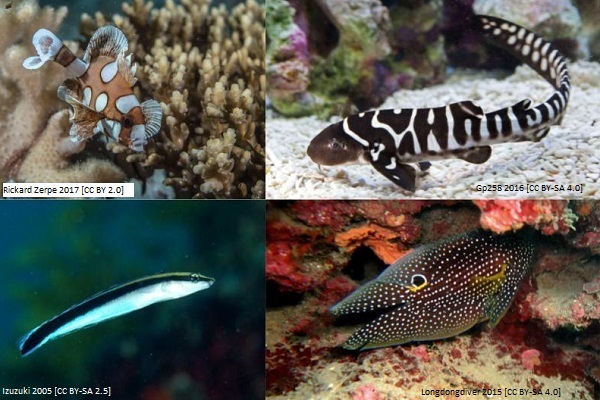
For more bitesize content and ocean stories why not follow ‘Our world under the waves’ on

🌊 Facebook 🌊 Bluesky 🌊 Instagram

Horseshoe crabs- Going their own way

by Matthew Norton

Life can be hard in the ocean. It’s a theme I’ve returned to multiple times while writing these articles, mainly because different species find different ways to meet the challenge, often through millions of years of innovation through evolution. And then you have certain animal groups who seem to have barely changed since the time of the dinosaurs, perhaps in their case natural selection decided that the old ways were the best. Horseshoe crabs are one such group who predate the dinosaurs (so far as we know) and, despite appearances, are more closely related to spiders and scorpions than ‘true’ crabs. That said, I’ll continue to call them crabs for the sake of clarity (which is probably why the name ‘horseshoe crab’ has persisted to this day).

An Atlantic horseshoe crab (Limulus polyphemus; left), a modern day species whose range extends along the east and gulf coasts of North America, compared to the fossil of an extinct species, Mesolimulus walchi (right). The overall body doesn’t seem to have changed much, but some of the finer details might have changed over the years. Sometimes evolution isn’t about making change, but rather taking what already works and making it better.

The ‘horseshoe’ part of their name comes from the round, U-shaped head that houses most of the precious organs under a single armour plate. On the underside, the crabs have five pairs of walking legs and in front of all that there is a sixth pair of claws, called chelicerae, that work like arms for grabbing food and directing it towards the mouth. Except they have no teeth, jaws or suitable mouthparts for breaking up their food into manageable chunks. Instead they use spines at the base of their legs, called gnathobases, to crush and tenderise their food before it’s collected by the chelicerae. Think of it like squeezing an orange between your thighs. 

The underside of an Atlantic horseshoe crab (left) and a close up of the base of the legs of another crab (right). The little claw-like appendages near the top are the chelicerae, ready to grab any food (e.g. worms and clams) once it has been crushed and processed by the spiky gnathobases below.

As for defending themselves from predators, horseshoe crabs don’t seem to have much of an arsenal. They may have spines along the sides of their body, but their intimidating looking tail is primarily used for flipping themselves upright when crawling along the seabed, or steering themselves whilst swimming. The shell does effectively cover their entire body, but from personal handling experience, this layer of armour appears to be paper thin. Although this particular horseshoe crab was long dead and dried out, which may have rendered it thinner and weaker than it would otherwise be. 

But if we look past the conventional methods of protection, we might just find that horseshoe crabs have some sly tricks up their sleeve. For example, they have ten eyes spread around their body which come in different sizes and are fitted out for different functions (see the box jellyfish article for another example). They’re mainly used for finding mates and tracking the lunar cycle, but they could also warn of approaching danger. There is also some evidence to suggest that mangrove horseshoe crabs and tri-spine horseshoe crabs possess an effective poison called tetrodotoxin to dissuade possible predators (see the pufferfish article). 

Horseshoe crabs have two compound eyes, the closest to what we would think of as eyes, that they can use for finding mates  All their other eyes, in addition to the light receptor cells around the tail, are built for detecting ultraviolet (UV) light emitted from the sun and reflected by the moon. Useful when your species uses the lunar cycle to get together for spawning. They also have ventral eyes on their underside (not shown on this diagram).

Whatever defences horseshoe crabs may or may not possess, they do at least have the sense to breed in large numbers. A wise strategy given how easily distracted and vulnerable many animals can be while they’re ‘on the job’. In the case of the Atlantic horseshoe crab, they tend to gather between late spring and early summer and during the high tides. From there the males can home in on a potential mate by using their large compound eyes (relative to their other eyes and receptors), or from pheromones released by the female. But when they do actually meet, the mating process becomes an arduous process that is prone to turning into a complete farce. 

The main source of contention, for the males at least, is that the eggs can only be fertilised after the female has laid them. So as far as establishing paternity is concerned, it’s a first come, first served basis with the first male endeavouring to keep his place in the queue by literally riding on the female’s back. Evolution appears somewhat skewed in the male’s favour by equipping them with specially modified claws to maintain their grip and making them only two thirds of the size of a female. Still, I’d imagine the females would tire of this burden rather quickly as they climbed up onto the beaches, ready to deposit their eggs. 

Even then, a male’s success is far from assured. Over eager males may attempt to knock off a riding male, which may be what brought about the aforementioned riding claws since natural selection is bound to favour males who can hold on for longer. At the nesting site itself, there is always the chance for a few sneaky ‘satellite’ males to make their ‘contribution’ to another couple’s brood. With up to around 4,000 eggs in a single cluster, possibly accumulating to 100,000 eggs over an entire breeding season from a single female, it’s probably worth giving it a go. The sheer number of eggs might seem like an excessive effort on the female’s part, but a large proportion will be eaten by coastal seabirds such as red knots, ruddy turnstones and sanderlings.

A single female-male pair of horseshoe crabs (top left). From top right to bottom right to bottom left, the gathering of crabs becomes more chaotic. Who knows how many potential usurpers and satellite males there are in the mix. Such scenes can be seen on the east coasts of North America with the Atlantic horseshoe crab, or on the beaches of Southeast Asia for the three remaining species the tri-spine horseshoe crab (Tachypleus tridentatus), the coastal horseshoe crab (Tachypleus gigas) and the mangrove horseshoe crab (Carcinoscorpius rotundicauda).
A small collection of horseshoe crab eggs (left) and a group of red knots feasting on we might assume to be freshly laid eggs (right). It seems like these red knots didn’t even show the courtesy of waiting for the parents to leave before consuming their young.

Between their prehistoric appearance and the difficulties they face, horseshoe crabs might seem out of place in the modern world. An assumption that is unlikely to be helped by the fact that the group has only four living species to its name. And yet they persist, still able to hold their own like an ageing action hero returning to a franchise that was long thought finished. They’re still here so they must be doing something right. 

From a human perspective

Like many other animals from the ocean, horseshoe crabs have been harvested for centuries to fulfil a number of our needs. Delaware Bay, on the Eastern coast of the United States, where hundreds of thousands of Atlantic horseshoe crabs come to breed, has a particularly long history of this enterprise. Reports from early European settlers state how Native Americans would catch them for food and craft them into tools and soil fertiliser. The latter ultimately led to over a million horseshoe crabs being taken and utilised as cancerine fertiliser, an industry that thrived from the 1870s to the mid 20th century. But even as this came to an end, interest grew in using horseshoe crab meat as bait for whelk pots and American eel fishing. 

Delaware Bay, highlighted in turquoise and entering the Atlantic Ocean past the Capes of May and Henlopen, continues to be a major nesting area for Atlantic horseshoe crabs to this day.
A horseshoe crab served after being roasted inside its own shell. The meat can be scraped out with a fork or spoon.  

Moving further forward in time, horseshoe crabs have also proven useful in medicine, for within their bright blue blood there are incredibly effective immune cells called amoebocytes. Exceptionally sensitive to toxic bacteria, these amoebocytes react to their presence by creating a clot that immobilises the bacteria, isolating it from the rest of the crab’s body. This makes their blood ideal for testing vaccines, medicines and medical equipment for bacterial contamination. This is called the Limulus Amebocyte Lysate (LAL) test after the Atlantic horseshoe crab or the Tachypleus amebocyte lysate (TAL) test when the blood of an Asian species is used. 

This illustration is fairly accurate for the ‘milking’ of one horseshoe crab for their magical blue blood. But things get noticeably more controversial when you see whole farms set up for the process. Often, the goal is to return the crabs to the ocean, alive, after a small quantity of blood is taken. But sometimes, the crabs may be slaughtered and used for other purposes, or otherwise succumb to the process.

The effectiveness of the LAL/TAL test is well documented, but as with all uses of horseshoe crabs, past and present, overexploitation is a serious concern. As it stands, the Tri-spine horseshoe crab is listed as “Endangered” by the IUCN, while the Atlantic horseshoe crab is “Vulnerable” and the other two species are “Data Deficient”. Proper regulation can help, but this can be difficult to achieve when you have competing interests, a lack of usable data and the interplay of fishing laws between different countries complicating matters. And let us not forget that direct fishing isn’t the only issue that horseshoe crabs have to deal with because of us humans. Climate change, pollution and habitat loss (especially on and around their nesting beaches) will pile on the pressure even more. 

Fortunately, there is a work around for some of these problems. In the 1990s, a group from the University of Singapore developed a synthetic alternative to the LAL/TAL test by cloning a molecule from horseshoe crab blood. This was called Recombinant Factor C (rFC) and, in theory, it should be the perfect solution. Yet these synthetic tests are yet to be widely used in some parts of the world, perhaps because the necessary ingredients aren’t widely available, or perhaps because some countries and organisations are slow to change their practices. The USA is a notable example since at least 700,000 crabs were bled to supply LAL tests in 2021 alone. 

But again, there are reasons to be optimistic. Returning to Delaware Bay, the area’s importance for nesting horseshoe crabs has not gone unnoticed. In 1999, the Ecological Research & Development Group (ERDG) launched a programme to encourage local communities to declare their beaches as horseshoe crab sanctuaries. One such sanctuary (among the 16 miles worth declared) is the colourfully named Slaughter Bay, which proudly displays its status on their official government website. If Atlantic horseshoe crabs are considered with such adoration and pride in an area so critical to their survival, then surely there is hope for the future of their species. 

The shores of Slaughter Beach, Delaware with what appears to be a pair of mating horseshoe crabs (left). Not all of them are lucky enough to survive the experience, with some flipped over by the waves and left to die in the hot sun. Hence, “Slaughter of the crabs”, which the the town seems to have embraced with its town flag (right). 

But the reason behind the name has long been debated between with a number of different origins. These stories include a postmaster with the surname “Slaughter” and nearby creeks and towns (from old maps) with Slaughter in their name. The most disturbing possibility involves the massacre of a group of Native Americans by cannon fire.

As marvellous as horseshoe crabs are, the protection they need isn’t just for their sake. There are plenty of animals that rely on them for food, from small fish and hermit crabs to sharks and loggerhead turtles. Their eggs are also a crucial food source for migrating birds like rufa red knots, who might not even make it to the Canadian Arctic tundra without this crucial fuel stop. Even the shell of a horseshoe crab can provide a hard surface for animal like barnacles and slipper limpets to hang on to while their digging activities can rework and refresh the seafloor to the benefit (or detriment) of other species. No species in this world can live in complete isolation, not even us. 

Thanks for reading

Sources

Wikipedia. 2023. Horseshoe crab. https://en.wikipedia.org/wiki/Horseshoe_crab#. Last accessed 11/07/2023

The National Wildlife Federation. Horseshoe Crab. https://www.nwf.org/Educational-Resources/Wildlife-Guide/Invertebrates/Horseshoe-Crab. Last accessed 11/07/2023

Smithsonian’s National Zoo & Conservation Biology Institute. 2022. 10 Incredible Horseshoe Crab Facts. https://nationalzoo.si.edu/animals/news/10-incredible-horseshoe-crab-facts. Last accessed 31/07/2023

Maryland Department of Natural Resources. Horseshoe Crab Anatomy. https://dnr.maryland.gov/ccs/Pages/horseshoecrab-anatomy.aspx. Last accessed 31/07/2023

Kungsuwan et al. 1987. Tetrodotoxin in the horseshoe crab Carcinoscorpius rotundicauda inhabiting Thailand.

Zhu et al. 2022. Tetrodotoxin in Asian horseshoe crabs Carcinoscorpius rotundicauda and Tachypleus tridentatus across different life stages from northern Beibu Gulf, China

Brockmann. 1990. Mating behavior of horseshoe crabs, Limulus polyphemus

NOAA. 2018. Horseshoe Crabs: Managing a Resource for Birds, Bait, and Blood. https://www.fisheries.noaa.gov/feature-story/horseshoe-crabs-managing-resource-birds-bait-and-blood. Last accessed 08/08/2023

Kreamer and Michels. 2009. History of horseshoe crab harvest on Delaware Bay

Krisfalusi-Gannon et al. 2018. The role of horseshoe crabs in the biomedical industry and recent trends impacting species sustainability

Pavid. 2021. Horseshoe crab blood: the miracle vaccine ingredient that’s saved millions of lives. https://www.nhm.ac.uk/discover/horseshoe-crab-blood-miracle-vaccine-ingredient.html. Last accessed 31/07/2023

Gauvry et al. 2022. LAL/TAL and Animal-Free rFC-Based Endotoxin Tests: Their Characteristics and Impact on the Horseshoe Crab Populations in the United States and Asia

Eisner. 2023. Coastal biomedical labs are bleeding more horseshoe crabs with little accountability. https://www.npr.org/2023/06/10/1180761446/coastal-biomedical-labs-are-bleeding-more-horseshoe-crabs-with-little-accountabi. Last accessed 31/07/2023

John et al. 2021. Conservation of Asian horseshoe crabs on spotlight

Wang et al. 2020. Future of Asian horseshoe crab conservation under explicit baseline gaps: A global perspective

IUCN Red List. https://www.iucnredlist.org/search?query=horseshoe%20crab&searchType=species. Last accessed 29/08/2023

Maloney et al. 2018. Saving the horseshoe crab: A synthetic alternative to horseshoe crab blood for endotoxin detection

Berkson and Shuster Jr. 1999. The horseshoe crab: the battle for a true multiple‐use resource

Delaware Government Information Centre. History. https://slaughterbeach.delaware.gov/history/. Last accessed 08/08/2023

Delaware.gov. 2022. FAQs about Delaware Bay Rufa Red Knots and Horseshoe Crabs. https://documents.dnrec.delaware.gov/fw/conservation/Del-Bay-Red-Knot-Horseshoe-Crab-FAQ.pdf. Last accessed 08/08/2023

The Ecological Research & Development Group (ERDG). Backyard Stewardship™: Coastal Communities Define Their Shared Habitat as a Horseshoe Crab Sanctuary. https://www.horseshoecrab.org/act/sanctuary.html. Last accessed 08/08/2023

ecoDelaware. Slaughter Beach, an official horseshoe crab sanctuary. http://www.ecodelaware.com/place.php?id=358#:~:text=Slaughter%20Beach%20is%20an%20ERDG,an%20official%20Community%20Wildlife%20Habitat. Last accessed 08/08/2023

Florida fish and wildlife conservation commission. Facts About Horseshoe Crabs and FAQ. https://myfwc.com/research/saltwater/crustaceans/horseshoe-crabs/facts/#:~:text=Many%20fish%20species%20as%20well,%2C%20horse%20conchs%2C%20and%20sharks. Last accessed 08/08/2023

Botton. 2009. The ecological importance of horseshoe crabs in estuarine and coastal communities: a review and speculative summary

Image sources

James St. John. 2013. [CC BY 2.0 (https://creativecommons.org/licenses/by/2.0)]. https://commons.wikimedia.org/wiki/File:Limulus_polyphemus_(Atlantic_horseshoe_crab)_(Sanibel_Island,_Florida,_USA)_2.jpg

Alexander Hüsing from Berlin, Deutschland. 2007. [CC BY 2.0 (https://creativecommons.org/licenses/by/2.0)]. https://commons.wikimedia.org/wiki/File:Mesolimulus_walchi.jpg

Rhododendrites. 2017. [CC BY-SA 4.0 (https://creativecommons.org/licenses/by-sa/4.0)]. https://commons.wikimedia.org/wiki/File:Horseshoe_crab_in_Silver_Sands_State_Park_(21090).jpg

Gee. 2017. [CC BY 2.0 (https://creativecommons.org/licenses/by/2.0)]. https://commons.wikimedia.org/wiki/File:Horseshoe_Crab_chelicerae_and_gnathobases.jpg

Rachel Oh. 2012. [CC BY-SA 3.0 (https://creativecommons.org/licenses/by-sa/3.0)]. https://commons.wikimedia.org/wiki/File:Horseshoe_crab_eyes.jpg

Rhododendrites. 2019. [CC BY-SA 4.0 (https://creativecommons.org/licenses/by-sa/4.0)]. https://commons.wikimedia.org/wiki/File:Horseshoe_crabs_mating_(57352).jpg

Marshall Astor from San Pedro, United States. 2007. [CC BY-SA 2.0 (https://creativecommons.org/licenses/by-sa/2.0)]. https://commons.wikimedia.org/wiki/File:Horseshoe_Crab_in_Si_Racha.jpg

Decumanus. 2004. [CC BY-SA 3.0 (http://creativecommons.org/licenses/by-sa/3.0/)]. https://commons.wikimedia.org/wiki/File:Delaware_bay_map.jpg

DataBase Center for Life Science (DBCLS). 2022. [CC BY 4.0 (https://creativecommons.org/licenses/by/4.0)]. https://commons.wikimedia.org/wiki/File:202210_Tri-spine_horseshoe_crab_donating_blood.svg

All other images are public domain and do not require attribution.
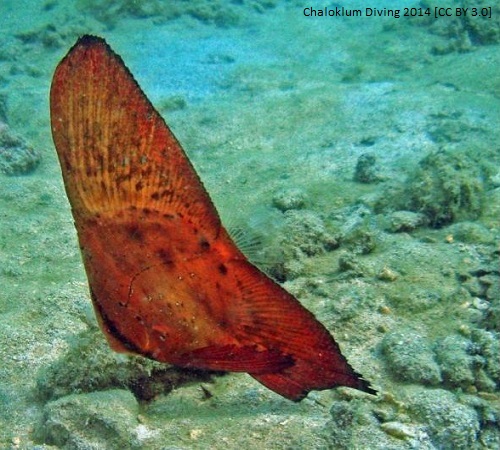
For more bitesize content and ocean stories why not follow ‘Our world under the waves’ on

🌊 Facebook 🌊 Bluesky 🌊 Instagram