Vampire squid- Ancient and blood thirsty (for oxygen)

by Matthew Norton

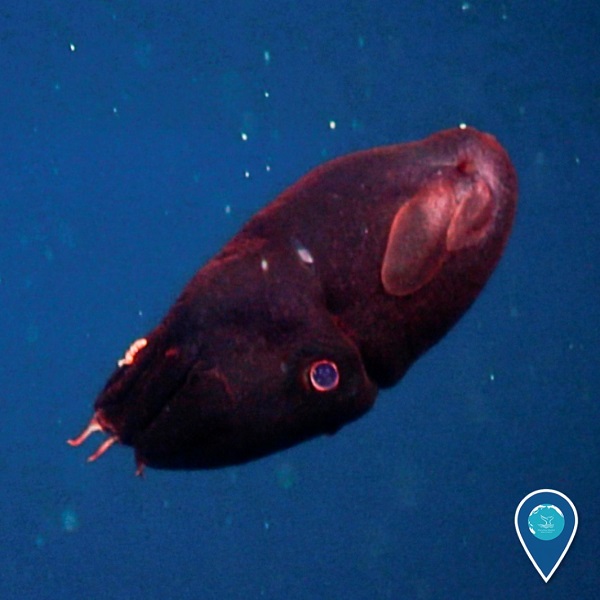
The vampire squid, Vampyroteuthis infernalis, is the only living species within the order Vampyromorpha. Their Latin name translates as the “vampire squid from hell”, but in reality this small squid does not inspire the dread that the name would suggest, with the exception of the smaller planktonic animals they feed on.

(Rev) vampire squid article image 1
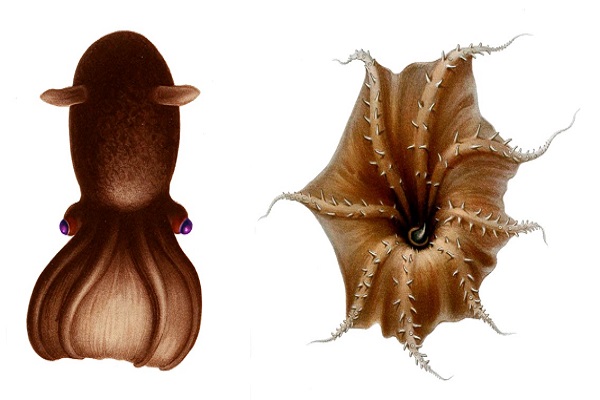
Vampire squid from above (left) and looking into the mouth (right).

However, these are still curious animals. They are often regarded as living fossils among the cephalopods, meaning they closely resemble the ancestor species of squid, cuttlefish and octopuses, although they are a sister group to the octopuses. This is reflected in certain features which appear to combine the features of octopuses and squids and cuttlefish.

A clear example is their feeding apparatus. Like squids they have 10 arms in total, 2 of which have been modified into extendible filaments, and like octopuses there is webbing between their arms, which is believed to the remnant of their shell. These components work together to bring food to the mouth, the extendible filaments detect and capture food which is then passed to the arms, which wrap the food in mucus. Finally the food is carried to the mouth along the web. Alternatively this web could be used to engulf larger prey, similar to how octopuses catch their prey.

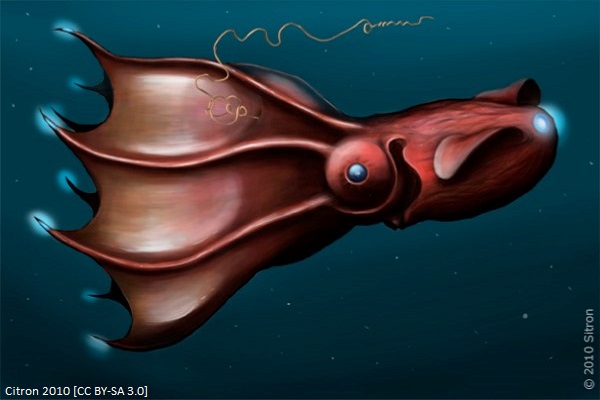
Other features which are unique, or at least more developed, in vampire squid are a consequence of the depth at which they live. At 600-1200m down there is a lack of light and oxygen, and so arises a need to compensate, and even make the most of these challenging conditions. They have the largest eyes, relative to body mass, of any animal, which no doubt allows them to see what little light is available. They can also produce light from bioluminescent organs at the tips of their arms and the release of bioluminescent particles to distract predators.

(Rev) vampire squid article image 2
A vampire squid illustrated with its bioluminescent organs.

To conserve their limited oxygen supply, vampire squid have resorted to a number of extreme measures. Similar to other squid that visit these oxygen poor depths, such as the Jumbo squid, they suppress their metabolism and use a stronger oxygen binding protein, haemocyanin instead of haemoglobin. However, in vampire squid their metabolic rate is especially low and the affinity of haemocyanin to oxygen is especially strong. They further reduce their energy expenditure from swimming through the neutral buoyancy of their bodies and, in adults, their use of fin propulsion, instead of jet propulsion . Females also invest relatively little in the production of their eggs.

(Rev) vampire squid article image 3
This young vampire squid seems to be doing okay despite the limited energy investment from its mother.

From a human perspective

Vampire squid do not provide us with any material gains, we do not fish them for food, nor do we harvest them for any other valuable substances. However this species has proven to be a source of artistic inspiration and features in an illustration, called “fight the vampire squid”, of the Occupy Wall Street protest movement against economic inequality. Specifically this illustration is targeted against individuals and corporations that participate in greed, corruption and undue influence on government.

(Rev) vampire squid article image 4
Occupy Wall Street protests in Washington DC, USA.

However, this illustrations portrays the vampire squid in a negative light that is disproportional to its nature, and has little in common with those that the Occupy movement targets in their protests. True, they do prey on smaller and weaker marine creatures, but this essential to their survival. Sadly this is not the only case of a marine animal being portrayed negatively to define a certain persons, or persons. A common example is of the use of the term “loan shark” to portray disreputable money lenders that exploit their ‘customers’, which exacerbates the undeserved reputation that sharks get.

Still, it is a testament to the creativity that the marine environment, and its inhabitants, can inspire, even for those who are unaware of most of its diversity. It goes without saying that this is especially true in coastal cities and communities, but some of the oceans’ influence can to nationwide, if not worldwide scales.

(Rev) vampire squid thanks for reading
Thanks for reading

Sources

Marine Bio. Vampire Squid, Vampyroteuthis infernalis. https://marinebio.org/species/vampire-squid/vampyroteuthis-infernalis/. Laast accessed 15/11/2017

Hoving et al. 2012. Vampire squid: detritivores in the oxygen minimum zone

Robison et al. 2003. Light Production by the Arm Tips of the Deep-Sea Cephalopod Vampyroteuthis infernalis

Seibel et al. 1999. Vampire blood: respiratory physiology of the vampire squid (Cephalopoda: Vampyromorpha) in relation to the oxygen minimum layer

Rosa and Seibel. 2010.  Metabolic physiology of the Humboldt squid, Dosidicus gigas: implications for vertical migration in a pronounced oxygen minimum zone

Seibel. 2013. The jumbo squid, Dosidicus gigas (Ommastrephidae), living in oxygen minimum zones II: Blood–oxygen binding

Wikipedia. 2020. Occupy Wall Street. https://en.wikipedia.org/wiki/Occupy_Wall_Street. Last accessed 15/11/2017

Mason. 2012. Does Occupy signal the death of contemporary art? http://www.bbc.com/news/magazine-17872666. Last accessed 15/11/2017

Vecchione and Young. 1997. Aspects of the functional morphology of cirrate octopods: locomotion and feeding

Collins and Villanueva. 2006. Taxonomy, ecology and behaviour of the cirrate octopods

Hoving et al. 2015. Vampire squid reproductive strategy is unique among coleoid cephalopods

Seibel et al. 1997. Decline in pelagic cephalopod metabolism with habitat depth reflects differences in locomotory efficiency

Young et al. 1998. The evolution of coleoid cephalopods and their present biodiversity and ecology

Images sources

Citron. 2010. [CC BY-SA 3.0 (https://creativecommons.org/licenses/by-sa/3.0/)]. https://commons.wikimedia.org/wiki/File:Vampire_des_abysses.jpg

Bruno Sanchez-Andrade Nuño from Washington, DC, USA. 2011. [CC BY 2.0 (https://creativecommons.org/licenses/by/2.0)]. https://commons.wikimedia.org/wiki/File:Occupy_Wall_Street_(6174072544).jpg

All other images are public domain and do not require attribution

For more bitesize content and ocean stories why not follow ‘Our world under the waves’ on

🌊 Facebook 🌊 Bluesky 🌊 Instagram

Box Jellyfish- For your eyes only

by Matthew Norton

When we think of box jellyfish it is their deadly sting, easily fatal to humans if not treated quickly, that comes to mind. What is less well known is their remarkably complex visual system, for such a simple organism, with a grand total of 24 eyes arranged among four sensory clubs, called rhopalia.

(Rev) box jellyfish article image 1
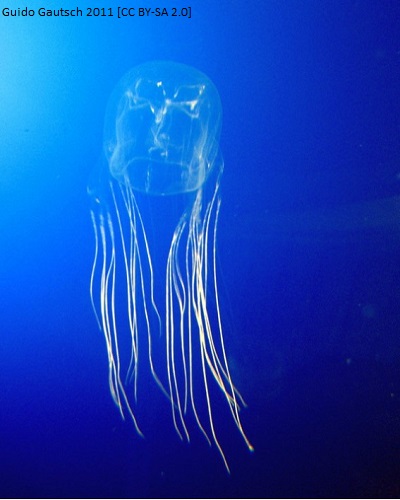
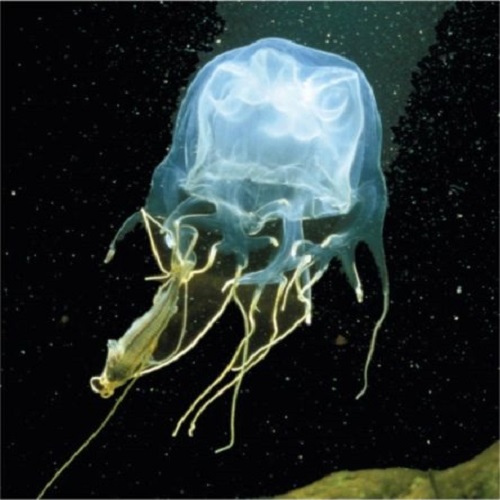
Box jellyfish (class Cubozoa) are characterised by their cube shaped bodies and like their fellow Cnidarian invertebrates (eg. corals, anemones and other jellyfish) they possess stinging cells.

Many organisms are able to detect light, even when they can’t actually ‘see’ the world around them, when it is absorbed by light sensitive pigments embedded. The chemical reaction that is triggered produces an electrical signal that tells the organism that light has been detected.

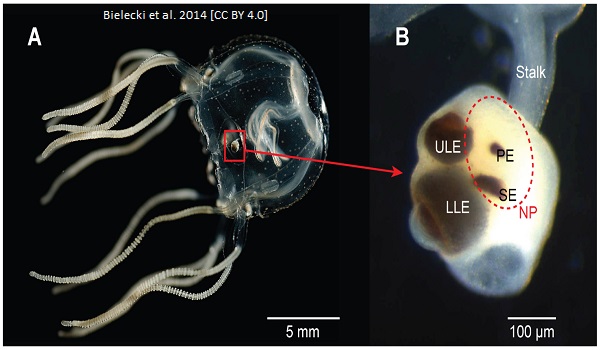
But within each rhopalium of a box jellyfish, there are distinct eye types that include a pair of eye pits and a pair of eye slits. Both of which contain light sensitive pigments, and an upper and lower camera lens eye. The simple structure of the pit and slit eyes suggest that their primary function is detecting and monitoring the level of light in their surroundings. However the discovery of a lens-like structure in the slit eyes may suggest that they may have some limited ability to interpret images of the world around them.

(Rev) box jellyfish article image 2
Box jellyfish, Tripedalia cystophora, and a single rhopalium with four labelled eye types. Eye pits (PE), eye slits (SE), upper camera lens eye (ULE) and lower camera lens eye (LLE).

Both camera lens eyes are similar in structure to the eyes of many vertebrate animals (including humans). Theoretically we could say that box jellyfish can ‘see’ the world around them, although the ‘quality’ of their sight is likely to be very limited compared to our own, for two very good reasons. Firstly, the lens is too close to the retina, thus inhibiting their ability to focus images, and secondly, it is doubtful that the box jellyfish’s simple nervous system has the processing power to produce a coherent image.

(Rev) box jellyfish article image 3
In the human eye light is absorbed by the retina, which contains many light sensitive pigments, the electrical signals are transmitted along the optic nerve and are processed by the visual cortex of the brain. Due to the small eye opening a lens is also required to alter the direction that the incoming light travel (light refraction) so that the whole retina can be exposed to light. The lens can also change shape, and thus change how much the light is refracted, so that the image can focused.

Despite these limitations the complex eye arrangement is still put to good use, helping box jellyfish perform visually guided behaviours such as avoiding obstacles and altering swimming speed and direction in response to changes in light intensity. Each rhopalium helps to guide these behaviours by transmitting electrical signals, nicknamed “swim pacemaker signals”, which directly control swimming contractions.

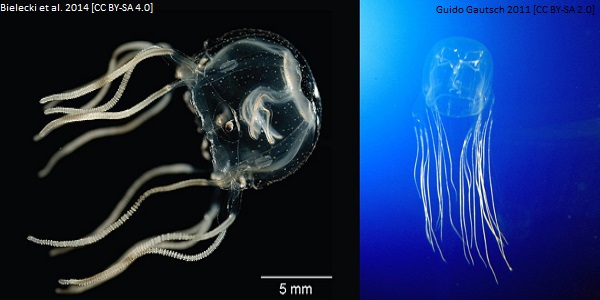
Furthermore observations from some species suggest that box jellyfish could also see in colour. For example the camera lens eyes of Tripedalia cystophora are especially sensitive to blue-green light, and Chironex fleckeri has shown a curious ‘figure eight’ swimming pattern in response to blue light. In theory colour vision would also be very useful to box jellyfish in shallow water as glare from the water surface could confuse any creature that relies on changes in light intensity to see, whereas the contrast between different colours would be unaffected.

(Rev) box jellyfish article image 4
Both Tripedalia cystophora (left) and Chironex fleckeri (right) are thought to be able to see in colour.

(Rev) box jellyfish article image 5
Colour vision requires multiple types of pigments that are sensitive to different colours of light, for example the human eye contains red, green and blue light sensitive pigments. The light absorbed by these three pigments combined allows us to perceive a wide variety of colours.

However, there are convincing counterarguments. In most species the camera lens eyes only possess one type of light sensitive pigment which, despite being sensitive to a particular colour of light, still leaves them colour blind. Also, the idea that it helps to overcome surface water glare is a very general theory on the evolution of colour vision and may be more applicable to other animals. Furthermore, the close proximity of the lens to the retina in the camera lens eyes has been speculated as a possible alternative to overcoming surface water glare.

From a human perspective

The arrangement and capabilities of the many eyes that box jellyfish possess is definitely fascinating, but there are at least two ways in which an understanding of how box jellyfish see the world may benefit us.

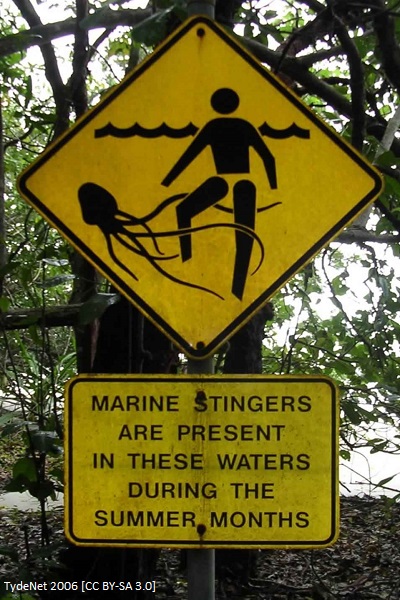
Firstly, existing measures to reduce contact with human swimmers (eg. protective clothing, beach warning signs) could be improved by exploiting the visually guided behaviours of box jellyfish. For example the use of dark coloured material in protective wetsuits may increase the likelihood of a box jellyfish perceiving the wearer as an obstacle, and actively avoid them.

(Rev) box jellyfish article image 6
A beach sign in Cape Tribulation, Queensland, Australia warning of box jellyfish.

Secondly the similarities between the human eye and the camera lens eyes of box jellyfish could, in theory, be used to develop treatments for malformations in the former. Some such malformations, such as displaced pupils, have been linked to mutations in a ‘master control gene’ in eye development, Pax6. PaxB, a gene which performs similar functions to Pax6, has been found in the camera lens eye of Tripedalia cystophora, which makes it a potentially useful ‘model species’ to test possible treatments. However, there are still some structural and developmental differences between human and box jellyfish eyes. Therefore Tripedalia cystophora should probably only be used in the early testing stages of such treatments.

(Rev) box jellyfish thanks for reading image
Thanks for reading

Continue reading Box Jellyfish- For your eyes only